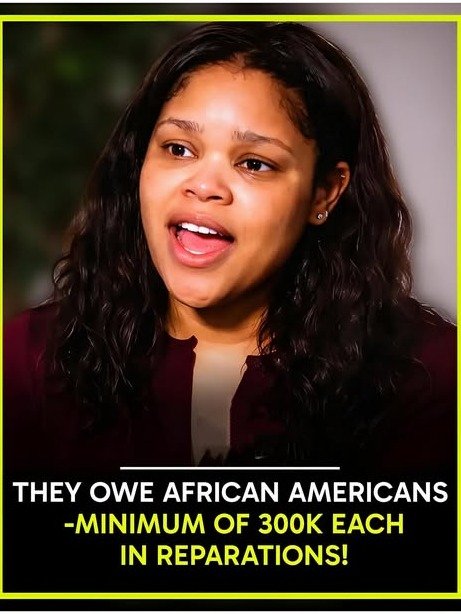
Did you think the conversation around reparations was a relic of the past? Think again. This deeply complex and often emotionally charged debate has roared back into public discourse, igniting passionate discussions across the nation. It’s not just a historical footnote; it’s a living, breathing issue with profound implications for justice, equity, and the very fabric of our society.
For many, the idea of reparations represents a long-overdue reckoning with centuries of systemic injustice, from slavery to Jim Crow laws and ongoing racial discrimination. For others, it raises thorny questions about feasibility, responsibility, and how to address historical wrongs in a contemporary context. But one thing is clear: you can no longer ignore this conversation.
The Enduring Legacy of Injustice: Why Reparations Matter
To truly understand the resurgence of the reparations debate, we must first confront the brutal legacy of slavery and its enduring aftermath. For over 250 years, millions of Africans were forcibly brought to American shores, subjected to unspeakable cruelty, and denied basic human rights. Their forced labor built much of the early American economy, yet they and their descendants were systematically excluded from wealth accumulation, education, and political power.
Even after emancipation, the promise of freedom was quickly undermined by a new era of racial oppression. Jim Crow laws, redlining, discriminatory lending practices, and targeted violence ensured that Black Americans continued to face immense barriers to economic and social advancement. These policies weren’t just isolated incidents; they were deliberate, institutionalized mechanisms designed to maintain racial hierarchy and economic disparity.
“We cannot fix what we refuse to acknowledge. The call for reparations is a demand to acknowledge the foundational injustices that shaped America and continue to reverberate today.” – Ta-Nehisi Coates
The wealth gap between Black and white Americans today is a stark testament to this history. Decades of denied opportunities, stolen labor, and state-sanctioned discrimination have created an intergenerational chasm that conventional policies have struggled to bridge. This historical context is the bedrock upon which the modern reparations movement stands.
Defining Reparations: More Than Just a Check
When most people hear the word “reparations,” they often immediately think of direct cash payments. While financial compensation is indeed a significant component, the concept of reparations is far broader and encompasses a range of potential remedies aimed at repairing historical harm. It’s about restoring, rehabilitating, and compensating for past injustices.
Advocates propose various forms of reparations, recognizing that a multi-faceted approach may be necessary to address the complex layers of harm. These can include:
- Direct Financial Payments: Monetary compensation to descendants of enslaved people.
- Land Redistribution: Returning land or providing land grants to communities dispossessed by discriminatory practices.
- Educational Programs: Funding for historically Black colleges and universities (HBCUs), scholarships, and curriculum development to accurately teach Black history.
- Healthcare Initiatives: Targeted investments in healthcare infrastructure and access in underserved Black communities.
- Economic Development: Programs designed to foster Black entrepreneurship, homeownership, and wealth creation.
- Apologies and Acknowledgment: Formal apologies from governmental bodies for past wrongs, often seen as a crucial first step toward reconciliation.
The specific mechanisms and beneficiaries are central to the ongoing debate, highlighting the practical challenges of implementing such a monumental undertaking. It’s not a simple one-size-fits-all solution, but a nuanced discussion about how to achieve comprehensive repair.
The Powerful Arguments FOR Reparations
Proponents of reparations articulate a compelling case rooted in moral justice, economic equity, and historical precedent. They argue that the United States has a moral obligation to rectify the profound damage inflicted upon Black Americans over centuries.
One of the strongest arguments centers on the concept of restorative justice. Just as individuals are compensated for damages in civil courts, nations, too, should be held accountable for state-sanctioned crimes. The immense wealth generated by enslaved labor and the subsequent economic exclusion of Black communities represent an unpaid debt that continues to manifest in present-day disparities.
Furthermore, advocates point to the intergenerational transfer of wealth and poverty. While white families historically benefited from policies like the GI Bill and accessible home loans, Black families were systematically denied these opportunities, leading to a persistent wealth gap. Reparations, in this view, are not about punishing current generations but about leveling a playing field that was deliberately tilted.
“Reparations are not just about the past; they are about addressing the ongoing economic and social disparities that are direct consequences of historical injustices.” – Dr. Sandy Darity, economist
Historical precedents also bolster the case for reparations. Germany paid reparations to Holocaust survivors, and the U.S. government paid reparations to Japanese Americans interned during World War II. These examples demonstrate that nations can and do acknowledge and compensate for state-sponsored injustices, suggesting a similar responsibility exists for the descendants of slavery.
Navigating the Opposition: Key Arguments AGAINST Reparations
Despite the powerful arguments in favor, the concept of reparations faces significant opposition and raises complex questions. Critics often voice concerns about the practicality, fairness, and potential societal impacts of such policies.
A primary concern revolves around identification and logistics. How would beneficiaries be precisely identified, given the passage of centuries? How would the specific amount of compensation be determined, and who would bear the financial burden? These questions highlight the immense administrative and ethical challenges involved in implementation.
Many also argue that current generations should not be held responsible for the actions of past generations. They contend that it’s unfair to ask today’s taxpayers, many of whom have no direct connection to slavery, to pay for historical wrongs. This perspective often emphasizes individual responsibility and the idea that focusing on current issues is more productive than dwelling on the past.
“We must address present-day inequalities, but doing so through the lens of reparations for centuries-old wrongs is a divisive and impractical approach.” – Mitch McConnell, former Senate Majority Leader
Another common argument is that various government programs, such as affirmative action, welfare, and civil rights legislation, have already served as a form of “de facto” reparations, aiming to address racial inequality. Opponents suggest that these existing mechanisms, or new programs focused on present-day needs, are more appropriate than direct reparations.
The Debate’s Resurgence: Local Initiatives and Federal Momentum
So, why is this debate resurfacing with such intensity now? Several factors contribute to its renewed prominence. The increased awareness of systemic racism following events like the murder of George Floyd, coupled with a deeper examination of American history, has pushed the conversation back into the mainstream.
At the local level, cities and states are taking proactive steps. Evanston, Illinois, for example, became the first U.S. city to offer reparations, using cannabis sales tax revenue to fund housing and economic development initiatives for Black residents. California’s state-level task force on reparations is another significant development, meticulously studying the issue and proposing comprehensive recommendations.
- Evanston, IL: Housing and economic development for Black residents.
- California Task Force: In-depth study and policy recommendations.
- H.R. 40: Federal bill to study reparations, gaining renewed attention.
Federally, H.R. 40, a bill to establish a commission to study and develop reparations proposals, has gained unprecedented support in Congress. While still far from becoming law, its increased visibility signals a growing willingness among policymakers to seriously consider the issue, moving it beyond academic circles and into the political arena.
Economic Implications and Societal Impact
The economic implications of reparations are vast and widely debated. Estimates for the cost of reparations vary wildly, ranging from hundreds of billions to trillions of dollars, depending on the scope and form they take. Critics raise concerns about the potential impact on the national debt, inflation, and the broader economy.
However, proponents argue that the cost of *not* addressing historical injustice is even greater. The economic disparities stemming from slavery and discrimination continue to cost the U.S. economy billions annually in lost productivity and innovation. Investing in reparations, they contend, could stimulate economic growth in underserved communities, reduce inequality, and ultimately benefit the entire nation.
Beyond economics, the societal impact of reparations is a central focus. For supporters, reparations offer a path toward healing, reconciliation, and a more just society. They believe it could foster a deeper understanding of shared history and build trust between communities.
Conversely, opponents worry that reparations could exacerbate racial divisions, creating resentment among those who feel unfairly burdened. They fear it could lead to further societal fragmentation rather than unity. These concerns highlight the profound emotional and social stakes involved in this monumental discussion.
A Global Perspective: Lessons from Other Nations
The United States is not alone in grappling with the legacy of historical injustices. Other nations have confronted similar challenges and implemented various forms of reparations, offering valuable insights and lessons.
Germany’s payments to Holocaust survivors and Israel stand as a prominent example of a nation acknowledging and compensating for state-sponsored atrocities. These payments, while not erasing the horror, were seen as a moral imperative and a step toward reconciliation.
In Canada, the government has provided financial compensation and apologies to Indigenous peoples for the trauma inflicted by residential schools. Similarly, Australia has engaged in dialogues and apologies regarding the Stolen Generations of Aboriginal children.
These international examples demonstrate that while the context and specifics differ, the principle of addressing historical wrongs through reparative measures is not unprecedented. They offer a framework for how complex, multi-faceted reparations programs can be conceived and implemented, even if not without challenges.
The Path Forward: A Dialogue That Cannot Be Silenced
The resurgence of the reparations debate signals a critical moment in American history. It forces a national reckoning with uncomfortable truths about our past and present. While the path forward is fraught with challenges and disagreements, the conversation itself is undeniably important.
Whether through direct payments, targeted investments, or a combination of approaches, the demand for reparations forces us to confront fundamental questions of justice, equity, and responsibility. It asks us to consider what it truly means to heal from historical wounds and build a more inclusive future.
As this debate continues to unfold in legislatures, communities, and living rooms across the country, one thing is certain: it will continue to shape our understanding of American history and identity for generations to come. The time to engage, understand, and participate in this vital discussion is now.
About the Author




