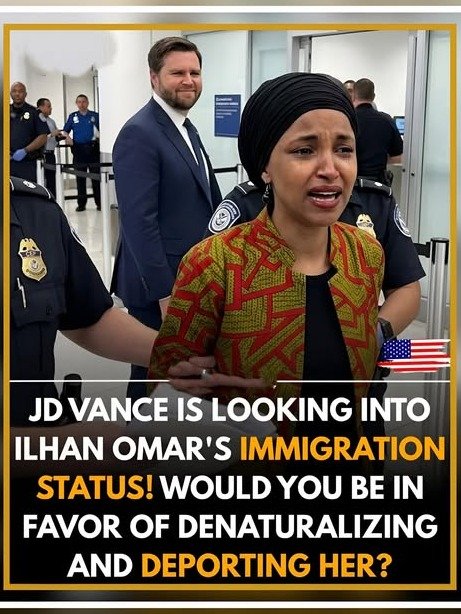
In an age saturated with information, distinguishing between fact and fiction has become an increasingly daunting challenge, especially when it comes to public figures. Representative Ilhan Omar, a prominent and often controversial voice in American politics, has frequently found herself at the epicenter of swirling online claims and accusations. From her personal life to her political stances, misinformation about her has spread like wildfire, shaping public perception and fueling intense debates.
But how much of what you’ve seen or heard about Representative Omar is actually true? The digital landscape, rife with partisan narratives and outright fabrications, makes it easy to fall prey to sensational headlines and unverified rumors. This article aims to cut through the noise, meticulously examining some of the most persistent claims circulating online and presenting the documented facts.
The Avalanche of Online Claims: Why Misinformation Thrives
The speed at which information (and disinformation) travels today is unprecedented. A single social media post, regardless of its accuracy, can reach millions within hours, influencing opinions and solidifying biases. For high-profile politicians like Ilhan Omar, who represents Minnesota’s 5th congressional district, this phenomenon is amplified. Her background as a Somali refugee, her Muslim faith, and her progressive political views have made her a frequent target for both legitimate criticism and unfounded attacks.
Understanding the origins and propagation of these claims is crucial. Often, they stem from a kernel of truth, twisted and exaggerated, or are entirely fabricated to discredit or demonize. Our goal here is not to defend or condemn any politician, but to empower readers with accurate information, allowing them to form their own conclusions based on evidence, not conjecture.
Claim 1: Allegations of Marriage Fraud and Immigration Status
One of the most enduring and damaging claims against Ilhan Omar revolves around her marital history and alleged immigration fraud. Rumors have persistently suggested that she married her own brother, Ahmed Nur Said Elmi, to facilitate his immigration to the United States. These claims often imply a deliberate scheme to circumvent immigration laws and question the legitimacy of her own status.
“These allegations have been thoroughly investigated by reputable journalistic outlets and have consistently failed to produce any credible evidence to support the claims of marriage to a sibling or immigration fraud.” – An Investigative Journalist’s Report.
The core of this accusation dates back to a complex period in Omar’s personal life. She married Ahmed Hirsi in a faith-based ceremony in 2002, had two children, and then separated. She later legally married Ahmed Nur Said Elmi in 2009, divorcing him in 2017, and then legally remarried Hirsi. Critics seized upon the legal marriage to Elmi, alleging he was her brother, despite a lack of concrete evidence.
Unpacking the Marriage Controversy
Multiple fact-checking organizations, including PolitiFact, Snopes, and the Star Tribune, have delved deeply into these allegations. While Omar’s marital history is indeed complicated, no credible evidence has ever emerged to substantiate the claim that Elmi is her brother or that the marriage was for fraudulent immigration purposes. The Minnesota Campaign Finance and Public Disclosure Board launched an investigation into her campaign spending but explicitly stated it did not investigate her marital history or immigration status, as those fall outside its jurisdiction.
Furthermore, official records, where accessible, do not support the fraternal relationship. Omar herself has strongly denied the accusations, calling them “disgusting lies.” The consistent failure of these claims to withstand scrutiny, despite widespread efforts by critics to prove them, points to their baseless nature. It’s a classic example of how a complex personal situation can be weaponized for political attacks.
Claim 2: Accusations of Anti-Semitism and Controversial Israel Comments
Another significant category of claims against Representative Omar pertains to accusations of anti-Semitism and her critical stance on Israeli policy. She has been criticized for comments perceived as invoking anti-Semitic tropes, particularly regarding money and influence in politics, and for her strong advocacy for Palestinian rights.
For instance, in 2019, Omar tweeted, “It’s all about the Benjamins baby,” in response to a tweet about American support for Israel. This comment was widely condemned for echoing the anti-Semitic trope that Jewish people use money to control politics. She later apologized, stating, “I unequivocally apologize. Anti-Semitism is real and I am grateful for Jewish allies and organizations who are educating me on the painful history of anti-Semitic tropes.”
Decoding Omar’s Stance on Israel
It’s crucial to differentiate between legitimate criticism of a government’s policies and anti-Semitism. While some of Omar’s statements have been widely interpreted as crossing that line, and she has issued apologies and clarifications, her broader criticism of Israeli policies often aligns with a progressive viewpoint on the Israeli-Palestinian conflict. She has been a vocal supporter of the Boycott, Divestment, and Sanctions (BDS) movement, which seeks to pressure Israel through economic means.
Critics argue that her support for BDS and other statements inherently demonstrate anti-Semitism, while supporters contend she is merely exercising her right to criticize foreign policy, a right afforded to all elected officials. The debate often centers on whether her critiques target the Israeli government or Jewish people as a whole, a distinction that is often blurred in heated political discourse. Understanding the context of her statements and her subsequent clarifications is vital for an informed perspective.
Claim 3: Financial Misconduct and Campaign Irregularities
Claims of financial impropriety and misuse of campaign funds have also been leveled against Ilhan Omar. These often suggest she has personally benefited from campaign donations or improperly allocated funds, leading to questions about her ethical conduct and adherence to campaign finance laws.
One such instance involved payments made by her campaign to a political consulting firm, E Street Group, co-owned by her husband, Tim Mynett. Critics alleged this constituted an improper use of campaign funds, suggesting she was enriching her spouse through her campaign. These concerns led to media scrutiny and calls for investigation.
Scrutinizing the Financial Records
The Federal Election Commission (FEC) is the primary body responsible for overseeing federal campaign finance laws. While the FEC has a history of gridlock, preventing definitive rulings on many complaints, the Minnesota Campaign Finance and Public Disclosure Board did investigate some of Omar’s past campaign finance practices. In 2019, the board ordered her to reimburse her campaign committee nearly $3,500 and pay a $500 civil penalty for using campaign funds for out-of-state travel and personal tax preparation services, which are prohibited.
Regarding the payments to E Street Group, Omar’s campaign defended the expenditures as legitimate payments for campaign services rendered, arguing that her husband’s firm provided essential strategic and fundraising support. While the optics of a candidate paying a spouse’s firm can raise questions, such arrangements are not inherently illegal under federal law, provided the services are legitimate and compensated at market rates. The issue highlights the complexities and often blurry lines in campaign finance regulations.
Claim 4: Questioning Her Loyalty and Alleged Radical Ties
Beyond personal and financial matters, Representative Omar has faced accusations questioning her loyalty to the United States and implying ties to radical ideologies or foreign interests. These claims often play into xenophobic narratives, suggesting that her background as a refugee makes her inherently untrustworthy or that she harbors anti-American sentiments.
For example, some critics have attempted to link her to extremist organizations or suggest that her policy positions are not aligned with American interests, particularly concerning foreign policy. These broad accusations often lack specific evidence and rely heavily on innuendo and guilt-by-association tactics.
Separating Policy from Personal Attacks
It is a common tactic in political discourse to demonize opponents by questioning their patriotism or suggesting nefarious allegiances. For a figure like Ilhan Omar, who is a visible minority and has a unique life story, these attacks can be particularly potent. Her voting record and public statements, however, reflect those of a progressive Democrat. She has consistently advocated for policies aimed at improving healthcare, addressing climate change, and promoting social justice within the American framework.
While her policy positions are certainly open to debate and criticism – as are those of any elected official – transforming policy disagreements into accusations of disloyalty or radicalism often serves to shut down legitimate discussion and foster division. It’s essential to evaluate a politician’s actions and policies based on facts, rather than succumbing to fear-mongering and baseless character assassinations.
The Broader Implications of Misinformation
The persistent circulation of unverified claims about public figures like Ilhan Omar has far-reaching consequences. It erodes public trust in institutions, polarizes society, and makes it increasingly difficult for citizens to engage in informed civic discourse. When false narratives take hold, they can unfairly damage reputations, distract from substantive policy debates, and even incite real-world harassment and threats.
In a healthy democracy, accountability and transparency are paramount. However, this accountability must be built on a foundation of truth. Allowing unsubstantiated rumors to dictate public opinion undermines the very principles of democratic engagement. It encourages an environment where sensationalism triumphs over substance, and emotional reactions override critical thought.
How to Spot Disinformation: A Quick Guide
- Check the Source: Is it a reputable news organization or an unknown blog?
- Look for Evidence: Do claims come with verifiable facts, quotes, or links to primary sources?
- Consider the Agenda: Does the information seem designed to evoke a strong emotional reaction or confirm a bias?
- Fact-Checkers are Your Friends: Utilize sites like Snopes, PolitiFact, or FactCheck.org.
- Read Beyond the Headline: Sensational headlines often don’t reflect the article’s content.
Conclusion: Empowering Informed Citizenship
The claims circulating about Representative Ilhan Omar are a stark reminder of the challenges posed by misinformation in our digital age. While legitimate criticism of any politician is a cornerstone of democracy, the spread of unfounded accusations serves only to muddy the waters and deepen societal divides. By taking the time to fact-check, question sources, and seek out verified information, we can collectively push back against the tide of disinformation.
Ultimately, an informed citizenry is the strongest defense against those who seek to manipulate public opinion with falsehoods. It is our collective responsibility to demand truth, scrutinize claims, and engage with political discourse based on evidence, fostering a more thoughtful and resilient democratic process.
About the Author




