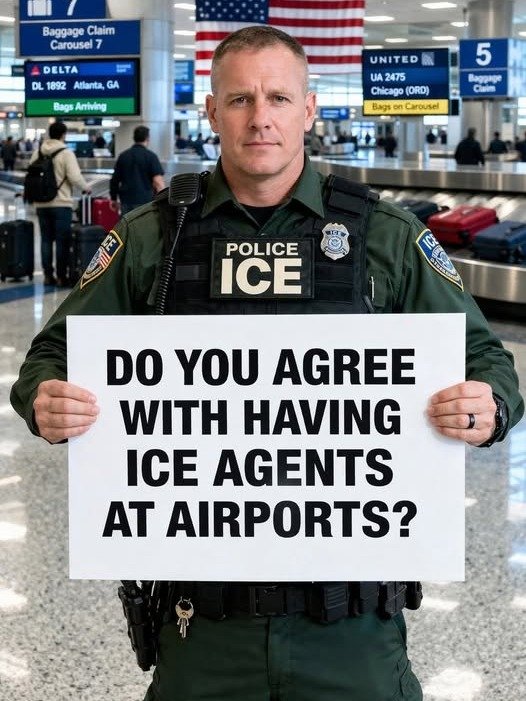
Imagine endless lines, missed connections, and the sheer frustration of airport delays reaching a breaking point. Now, picture an unexpected solution stepping in: federal immigration agents. A new, highly debated proposal suggests deploying U.S. Immigration and Customs Enforcement (ICE) agents to U.S. airports during periods of severe disruption, sparking a nationwide conversation about security, efficiency, and civil liberties.
This isn’t just a theoretical discussion; it’s a direct response to the persistent challenges plaguing air travel. From chronic staffing shortages across various airport roles to an unpredictable surge in travel demand, American airports have been struggling to maintain smooth operations. The idea of bringing in ICE agents as a form of emergency assistance has ignited a fierce debate, with proponents touting enhanced security and efficiency, while critics voice grave concerns over mission creep and civil rights.
The Growing Crisis at America’s Airports
For years, travelers have faced a litany of frustrations at airports nationwide. Staffing shortages are a primary culprit, impacting everything from Transportation Security Administration (TSA) checkpoints and airline ground crews to air traffic control. These critical gaps lead directly to longer security lines, delayed baggage handling, and even flight cancellations, creating a ripple effect that snarls the entire air travel system.
The post-pandemic travel boom has only exacerbated these issues. Airports, still recovering from widespread layoffs and reduced operations, are struggling to scale up fast enough to meet the renewed demand. This perfect storm of increased passenger volume and insufficient personnel has left many wondering if there’s a sustainable solution to prevent future meltdowns.
“The current state of air travel is unsustainable. We need innovative solutions to ensure passenger safety and operational efficiency, especially during peak travel periods or unforeseen disruptions. The idea of leveraging federal resources like ICE, while controversial, highlights the depth of the challenge we face.” – An aviation industry analyst.
Unpacking the ICE Deployment Proposal
The proposal itself centers on the deployment of ICE agents to assist during significant airport disruptions. These disruptions could range from severe weather events that ground flights and strand passengers, to major technical outages, or even heightened security threats. The core idea is to augment existing airport personnel with trained federal agents who can provide additional support.
While specific roles have not been definitively outlined, the discussion suggests ICE agents could potentially assist with tasks such as crowd management, perimeter security, identification verification, or providing general assistance to overwhelmed airport staff. The underlying premise is that ICE agents, as federal law enforcement, possess a unique skill set and authority that could be beneficial in crisis situations.
Arguments For: Enhanced Security and Efficiency
Proponents of deploying ICE agents at airports argue that such a measure could bring several significant benefits. Firstly, the presence of additional federal law enforcement officers could undeniably enhance overall airport security. ICE agents are trained in law enforcement procedures, threat assessment, and crisis response, skills that could be invaluable during an emergency.
- Increased Manpower: Provides a much-needed surge capacity to alleviate staffing shortages during critical periods.
- Federal Authority: Agents possess federal authority, which could streamline certain processes or responses in a multi-agency environment.
- Deterrent Effect: An increased law enforcement presence might deter illicit activities or improve compliance with airport regulations.
- Crisis Response: Their training could be vital in managing large-scale incidents, maintaining order, and assisting passengers.
Many believe that, in a true crisis, all available resources should be considered.
About the Author




