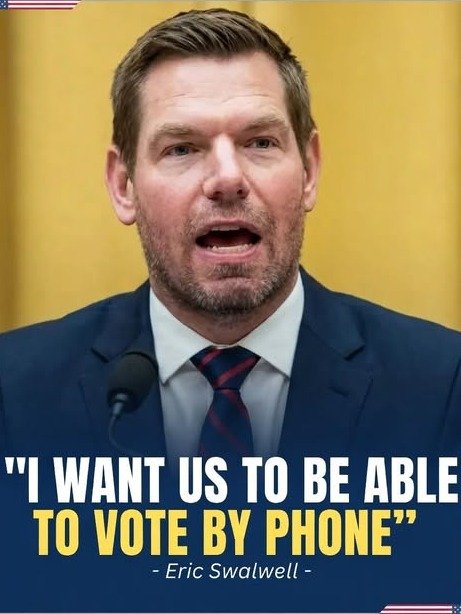
Imagine a world where the ballot box is no further than your pocket. Picture casting your vote for the President of the United States, your local mayor, or even a crucial ballot measure, all from the comfort of your couch, during your lunch break, or while waiting for your coffee – simply using the smartphone you already hold in your hand. This isn’t science fiction anymore; it’s the heart of a groundbreaking discussion that could fundamentally reshape American democracy.
On April 6, 2026, Representative Eric Swalwell ignited this pivotal conversation by introducing a visionary idea aimed at radically modernizing the U.S. voting system. His proposal centers on leveraging the pervasive technology of our smartphones to facilitate a more accessible, convenient, and potentially more participatory electoral process. The very notion has sparked a fervent debate, polarizing opinions between those who see it as an inevitable leap forward and those who view it with profound skepticism and concern.
The Vision: What Phone-Based Voting Entails
At its core, Swalwell’s concept isn’t just about tapping a screen; it envisions a sophisticated, secure digital infrastructure. This system would likely involve highly encrypted mobile applications, designed to authenticate voters through robust multi-factor verification methods – potentially incorporating biometrics like fingerprint scans or facial recognition, alongside traditional PINs or passwords. The goal is to create a seamless yet ironclad process that mirrors the privacy and integrity of physical polling booths.
The allure is undeniable. Advocates point to the sheer convenience and the potential for a dramatic surge in voter turnout, especially among younger demographics and those with mobility challenges or demanding schedules. For millions of Americans, traditional polling places present logistical hurdles: long lines, specific hours, transportation issues, or the simple difficulty of taking time off work. A phone-based system promises to dismantle many of these barriers, making voting as easy as online banking or ordering groceries.
A New Era of Accessibility and Engagement?
One of the most compelling arguments for phone-based voting revolves around accessibility. Think of military personnel stationed overseas, individuals with disabilities who find physical polling places difficult to navigate, or even busy parents juggling work and childcare. For these groups, a mobile voting option could transform a challenging civic duty into an effortless act of participation. It could truly democratize the voting process, ensuring every eligible voice can be heard.
Furthermore, proponents argue that such a system could significantly boost overall voter engagement. In an increasingly digital world, where information and transactions are often just a tap away, an outdated, cumbersome voting process can feel alienating. By integrating voting into the digital landscape that dominates daily life, we might inspire a new generation of voters and re-energize civic participation across the board, leading to a more representative democracy.
“The time has come to bring our voting system into the 21st century. We have the technology to make voting more secure and accessible than ever before.” – A hypothetical quote reflecting Swalwell’s stance.
The Elephant in the Room: Security Concerns
However, the enthusiasm for modernization is tempered by significant and legitimate concerns, primarily centered on security. The integrity of elections is paramount, and any digital system, no matter how robust, faces the specter of cyberattacks. Critics immediately raise alarms about the potential for hacking, data breaches, foreign interference, and the sophisticated manipulation of election results.
Imagine the catastrophic consequences of a widespread cyberattack on a national election system: votes being altered, voter identities stolen, or the entire process grinding to a halt. The trust in democratic institutions could be irrevocably shattered. Experts warn that even with advanced encryption and biometric safeguards, no system is entirely unhackable, and the stakes in an election are astronomically high.
Addressing the Digital Divide and Equity
Beyond security, another critical challenge lies in the digital divide. While smartphone ownership is incredibly high in the U.S., it is not universal. Significant disparities exist based on age, income, and geographic location. Implementing a phone-based voting system could inadvertently disenfranchise segments of the population who lack access to smartphones, reliable internet, or the technological literacy required to navigate such an app.
Ensuring equitable access and preventing the creation of a two-tiered voting system – one for the tech-savvy and another for everyone else – would be a monumental undertaking. This would require substantial investment in public education, providing devices, and ensuring robust alternative voting methods remain available and equally promoted. The goal must be to expand access, not inadvertently restrict it for others.
The Challenge of Verification and Coercion
Traditional in-person voting booths offer a crucial element of privacy and prevention against coercion. When you vote at home, the potential for undue influence from family members, employers, or even political operatives becomes a more pressing concern. How can a system guarantee that a voter is making their choice freely and without pressure if they are not in a private, secure polling environment?
Furthermore, the fundamental principle of “one person, one vote” relies on stringent identity verification. While biometrics offer strong authentication, the challenges of ensuring a unique, verified vote from a personal device are complex. Preventing duplicate votes, ensuring the person using the phone is indeed the registered voter, and protecting against identity fraud at scale requires an unprecedented level of digital security and legal framework.
Lessons from Around the Globe
While the U.S. deliberates, some countries have experimented with various forms of electronic or internet voting. Estonia, for example, is often cited for its successful implementation of internet voting, allowing citizens to cast ballots from anywhere with an internet connection. However, it’s crucial to note that Estonia’s system operates within a smaller population, a unique digital identity infrastructure, and a different geopolitical context.
Many other nations have explored and subsequently abandoned or heavily restricted online voting due to security concerns. The scale and complexity of a U.S. national election, with its diverse population, numerous jurisdictions, and deeply entrenched political divisions, present a unique set of challenges that cannot be easily extrapolated from smaller-scale international examples.
The Road Ahead: Building Trust and Consensus
For phone-based voting to ever become a reality in the U.S., several monumental hurdles must be cleared. First and foremost is the development of an impeccably secure, transparent, and auditable system that can withstand the most sophisticated cyber threats. This would require an unprecedented collaboration between cybersecurity experts, election officials, and technology innovators.
Secondly, public trust is paramount. A massive, non-partisan public education campaign would be necessary to explain the technology, demonstrate its security, and address voter concerns. Without broad public confidence across the political spectrum, any such system would be doomed to fail. This means moving beyond partisan rhetoric and focusing on objective security and accessibility benefits.
- Rigorous Security Audits: Independent, continuous auditing by top cybersecurity firms.
- Pilot Programs: Small-scale, controlled trials to identify and fix vulnerabilities before widespread deployment.
- Bi-Partisan Buy-in: Consensus from both major political parties to ensure legitimacy and sustained support.
- Legal Framework: Comprehensive federal and state laws to govern digital voting, addressing everything from data privacy to dispute resolution.
- Digital Literacy Initiatives: Programs to ensure all citizens have the skills and access needed to participate.
The Future of Democracy: A Necessary Discussion
Representative Swalwell’s proposal, while ambitious and fraught with challenges, forces a critical national conversation about the future of our democracy. As technology continues to evolve at an exponential rate, it is imperative that our civic processes keep pace. The discussion isn’t merely about if we can vote by phone, but how we can ensure our electoral system remains secure, accessible, and truly representative in the digital age.
Whether phone-based voting becomes a widespread reality by 2026 or much later, the debate it has sparked is invaluable. It compels us to rigorously examine the strengths and weaknesses of our current system, explore innovative solutions, and ultimately strive for an electoral process that empowers every eligible American to participate fully and confidently in the shaping of their nation’s future. The stakes are too high to ignore this conversation.
About the Author




