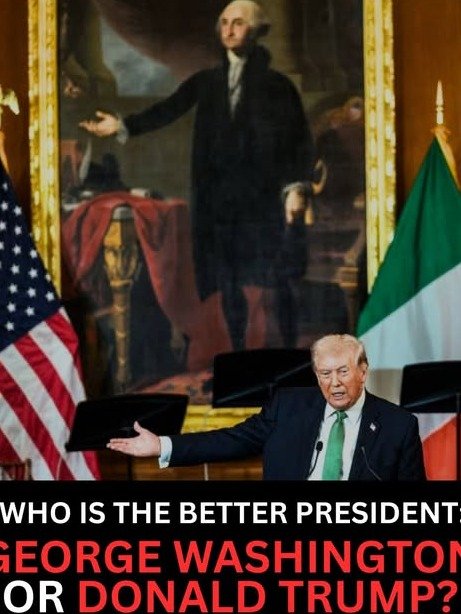
Ever wondered if the challenges faced by America’s first president truly compare to those confronting leaders today? It might seem like ancient history, but the profound decisions made by George Washington during the nation’s infancy laid a blueprint for governance that still echoes in the highest office. Yet, the world has transformed dramatically, presenting modern presidents with an entirely different set of global complexities and domestic pressures.
This isn’t just a historical comparison; it’s a vital exploration into the very essence of leadership, resilience, and the enduring weight of the American presidency. From the raw, uncharted territory of nation-building to the hyper-connected, volatile landscape of the 21st century, the stakes have always been impossibly high, demanding vision, courage, and an unwavering commitment to the republic. Prepare to uncover the surprising parallels and stark differences that define these two monumental eras.
The Crucible of Creation: George Washington’s Defining Era
Imagine being the very first leader of a fledgling nation, fresh from a brutal war for independence, with no established precedents, no clear path forward, and a deeply skeptical world watching your every move. This was the daunting reality for George Washington. His presidency wasn’t just about governing; it was about inventing governance itself, forging unity from diverse, often squabbling states, and earning international respect for a radical experiment in democracy.
Washington faced an almost unimaginable array of foundational challenges. Domestically, he grappled with a massive war debt, a fragile economy, and the immense task of uniting thirteen disparate colonies into a coherent nation. The Whiskey Rebellion, for instance, tested the very authority of the federal government, forcing Washington to demonstrate the power and legitimacy of the newly formed union.
On the international front, the young United States was a vulnerable entity caught between powerful European empires. Navigating neutrality amidst conflicts between Great Britain and France was a delicate balancing act, crucial for the nation’s survival and economic stability. Washington’s Farewell Address, a timeless piece of political wisdom, warned against the dangers of partisan divisions and foreign entanglements – advice that resonates even today.
“The very idea of the power and the right of the people to establish government presupposes the duty of every individual to obey the established government.” – George Washington
His leadership was characterized by prudence, a profound sense of duty, and an understanding that every action would set a precedent. He meticulously built the institutions of government, established the cabinet system, and carefully defined the role of the executive branch. Washington’s voluntary relinquishing of power after two terms, a radical act for his time, solidified the democratic principle of peaceful transitions and limited government.
Navigating the Modern Labyrinth: Today’s Presidential Gauntlet
Fast forward to today, and the modern presidency operates in a world Washington could scarcely have imagined. While the foundational principles of the office remain, the context has exploded in complexity. Contemporary leaders inherit a globalized stage where problems transcend borders and solutions demand unprecedented international cooperation.
Consider the sheer scale of modern global challenges: climate change, pandemics, cyber warfare, intricate geopolitical rivalries, and the rapid pace of technological disruption. A decision made in Washington D.C. can ripple through global markets, impact international alliances, and affect billions of lives almost instantaneously. The speed of information, driven by 24/7 news cycles and social media, means presidents operate under constant, intense scrutiny, with every word and action dissected in real-time.
- Global Interconnectedness: Economic crises in one region can trigger recessions worldwide.
- Technological Revolution: AI, automation, and cybersecurity present both immense opportunities and existential threats.
- Polarized Politics: Deep ideological divides and the challenge of building consensus in a fractured society.
- Instant Communication: The constant demand for immediate responses and the struggle against misinformation.
The modern president isn’t just a national leader; they are a global figurehead, expected to command respect on the world stage, negotiate complex treaties, and respond to crises that erupt anywhere on the planet. The domestic landscape is equally demanding, marked by intense partisan battles, economic inequalities, and a constant struggle to address the evolving needs of a diverse population.
Echoes Across Centuries: The Enduring Qualities of Leadership
Despite the vastly different backdrops, the core qualities required for effective presidential leadership remain strikingly similar. Both Washington and today’s leaders must possess an unwavering vision for the nation, a deep well of resilience, and the courage to make incredibly difficult decisions that will shape generations.
A president, whether in 1789 or 2024, must be a unifying force, capable of inspiring confidence and rallying a nation behind a common purpose. They must navigate intense political opposition, often from within their own ranks, and maintain a steady hand amidst chaos. The burden of ultimate responsibility, the knowledge that the buck stops with them, is a constant companion for any occupant of the Oval Office.
“To be prepared for war is one of the most effective means of preserving peace.” – George Washington (a principle still debated and acted upon today)
Both eras demand a leader who can effectively communicate their vision, build strong teams, and adapt to unforeseen circumstances. Washington, through his actions, established the very idea of American leadership; modern presidents must continually redefine and uphold that image in an ever-changing world.
The Shifting Sands of Context: Key Differences
While the essence of leadership persists, the tools, scale, and societal expectations have undergone a seismic shift. Washington operated in a nascent republic with a relatively small, agrarian population. His communications were slow, often taking weeks to reach distant parts of the country. Public opinion, while important, was not shaped by instantaneous media or social media algorithms.
Today, the president commands the world’s most powerful military, oversees a multi-trillion-dollar economy, and leads a highly diverse population of over 330 million people. Information travels at the speed of light, and public sentiment can turn on a dime. The sheer volume of data, intelligence, and legislative demands is exponentially greater, requiring a vast bureaucracy and an army of advisors to manage.
- Scale of Government: From a small federal apparatus to an immense, complex bureaucratic machine.
- Information Flow: Weeks for news vs. instantaneous global communication.
- Global Reach: Isolationist tendencies vs. deep international entanglement.
- Societal Expectations: Reverence for foundational figures vs. intense scrutiny and often harsh criticism.
The very nature of warfare has evolved from muskets and cavalry to drones and cyberattacks. Economic policy now involves global supply chains, complex financial instruments, and intricate trade agreements. The challenges, while different in their manifestation, still test the leader’s ability to protect the nation’s interests and secure its future.
The Enduring Legacy of the Presidential Office
The comparison between George Washington’s era and the present day highlights not just the evolution of the world, but the enduring and critical role of the American presidency. It is an office that demands a unique blend of strategic foresight, moral courage, and practical acumen, regardless of the century.
Washington’s leadership was about laying the bedrock – defining the very essence of what it meant to be an American republic. He had to invent the rules as he went, guided by Enlightenment ideals and his own profound sense of duty. Modern presidents, by contrast, must operate within an established, albeit constantly evolving, framework, tasked with protecting and advancing that legacy amidst unprecedented global pressures.
Ultimately, both leaders, separated by centuries, share a common thread: the immense responsibility of guiding a nation through its most defining moments. They are entrusted with the hopes, dreams, and security of millions, and their decisions reverberate far beyond their terms in office. The challenges may change, but the need for exceptional leadership remains the constant heartbeat of the republic.
What do you think are the most significant differences, or surprising similarities, between the leadership demands of Washington’s time and today’s?
About the Author




