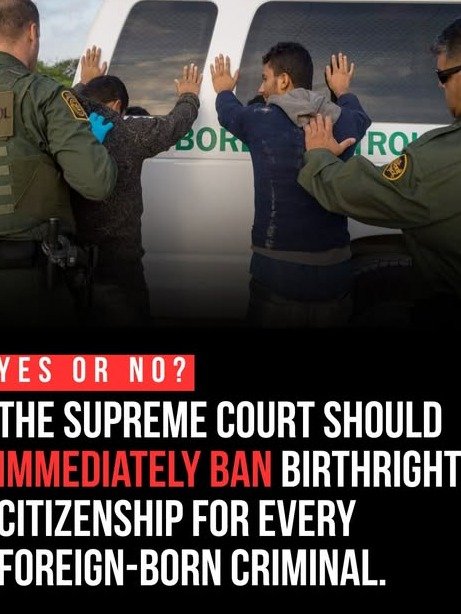
What if a single, powerful line in the 14th Amendment, once intended to grant fundamental rights, is now seen by many as the biggest loophole in America’s immigration system? This isn’t just a legal debate; it’s a fierce battle for the future of national identity and a cornerstone of the America First agenda, threatening to redefine who truly belongs.
For decades, a quiet but potent argument has simmered beneath the surface of American politics, questioning a foundational principle of citizenship. Now, that argument has exploded into a full-blown national discussion, demanding immediate attention from every American who cares about the nation’s borders, sovereignty, and the very fabric of its society.
Understanding Birthright Citizenship: A Constitutional Cornerstone
At its core, birthright citizenship in the United States is rooted in the first sentence of the 14th Amendment to the Constitution, ratified in 1868. It unequivocally states:
“All persons born or naturalized in the United States and subject to the jurisdiction thereof, are citizens of the United States and of the State wherein they reside.”
This seemingly straightforward declaration has been the bedrock of American citizenship for over a century and a half.
Historically, this amendment was primarily enacted post-Civil War to grant citizenship to formerly enslaved people, ensuring their rights and preventing states from denying them. It was a revolutionary concept for its time, designed to establish a clear, national standard for who was considered an American citizen, overriding discriminatory state laws.
The “America First” Stance: Why This Issue Is Pivotal
For proponents of the America First agenda, the fight to end birthright citizenship for children of undocumented immigrants or those visiting on temporary visas is not merely a policy preference; it’s a fundamental principle. They argue that the current interpretation of the 14th Amendment inadvertently incentivizes illegal immigration and undermines national sovereignty.
This perspective posits that a nation cannot truly control its borders if citizenship is automatically granted to anyone born within its geographical limits, regardless of their parents’ legal status. They believe that this practice creates a magnet effect, encouraging individuals to enter the country unlawfully with the expectation that their children will secure a pathway to residency, citizenship, and access to social services.
The “Anchor Baby” Controversy: Unpacking Claims of Exploitation
A significant point of contention revolves around the controversial term “anchor baby” tourism. Critics of the current system allege that some individuals deliberately enter the U.S. – often illegally or on short-term visas – with the express purpose of giving birth on American soil. Their goal, it is argued, is to secure U.S. citizenship for their child, who can then potentially act as an “anchor” for the family’s future immigration status.
The narrative suggests that this practice exploits a perceived loophole in the law, allowing families to circumvent traditional immigration processes. Proponents of ending birthright citizenship often highlight cases where individuals are believed to have engaged in “birth tourism,” traveling to the U.S. specifically to give birth, which they view as a direct abuse of the nation’s generosity and legal framework.
Border Security and National Sovereignty: A Direct Link?
The debate over birthright citizenship is deeply intertwined with concerns about border security and national sovereignty. Those advocating for change argue that robust border enforcement is rendered less effective if the children of those who cross illegally are automatically granted citizenship. This, they contend, creates an enduring challenge to the integrity of the nation’s borders.
From this viewpoint, true national sovereignty requires a country to have complete control over who becomes a citizen, rather than having that decision be a byproduct of geographical location alone. They believe that allowing birthright citizenship to apply universally, regardless of parental legal status, undermines the rule of law and the very concept of a sovereign nation with defined borders.
Economic Impact and Fairness: A Question of Resources and Equity
Another key argument against the current interpretation of birthright citizenship centers on its economic implications and perceived unfairness to those who follow legal immigration channels. Critics argue that automatically granting citizenship to children born to undocumented parents places a significant strain on public services and taxpayer resources.
- Healthcare: Increased demand on emergency rooms and public health facilities.
- Education: Higher enrollment in public schools, potentially straining budgets.
- Social Services: Access to various welfare programs and benefits through citizen children.
Moreover, many feel it is unjust to individuals who spend years, often decades, navigating the complex and expensive legal immigration process. They question the fairness of a system that seemingly rewards those who enter the country unlawfully while legal immigrants wait patiently in line, adhering to all regulations and requirements.
The Constitutional Conundrum: Reinterpreting the 14th Amendment
At the heart of this legal battle is the precise interpretation of the phrase “subject to the jurisdiction thereof” within the 14th Amendment. While the prevailing legal consensus, supported by the Supreme Court’s 1898 ruling in United States v. Wong Kim Ark, has been that this phrase includes virtually everyone born on U.S. soil, critics argue for a narrower reading.
Those who wish to end birthright citizenship contend that “subject to the jurisdiction thereof” was intended to exclude individuals who were not fully subject to U.S. law, such as foreign diplomats or members of invading armies. They argue that undocumented immigrants, by definition, are not fully subject to U.S. jurisdiction in the same way citizens or legal residents are, and thus their children should not automatically qualify for citizenship.
“The original intent of the 14th Amendment was to grant citizenship to former slaves, not to incentivize illegal immigration. The phrase ‘subject to the jurisdiction thereof’ has been misinterpreted for too long.” – A common argument from proponents of change.
This reinterpretation would require either a new Supreme Court ruling or a constitutional amendment, both incredibly challenging legal and political undertakings. However, the intensity of the debate underscores the deep divisions over this foundational legal principle.
Historical Context: The 14th Amendment’s Original Intent Revisited
To fully grasp the current debate, it’s essential to revisit the historical context of the 14th Amendment. Drafted in the wake of the Civil War, its primary aim was to ensure that newly freed slaves were recognized as citizens and protected under federal law, preventing Southern states from stripping them of their rights.
The concept of birthright citizenship, as applied to children of non-citizens, was not the central focus of the debates surrounding the 14th Amendment’s ratification. However, the broad language of the amendment has been consistently interpreted by courts to include nearly all individuals born on U.S. soil, regardless of parental status, with the exception of children of foreign diplomats or invading forces.
Potential Consequences of Ending Birthright Citizenship
Should the United States move to end birthright citizenship for children of undocumented immigrants, the potential consequences would be far-reaching and complex. Advocates against such a change warn of several significant impacts:
- Creation of a Permanent Underclass: Millions of children born in the U.S. would be rendered stateless or without clear legal status, creating a marginalized population with limited opportunities and rights.
- Administrative Nightmare: Determining citizenship based on parental status at the time of birth would create immense bureaucratic challenges for government agencies.
- Humanitarian Concerns: Critics argue it would be inhumane to deny citizenship to children who know no other home than the U.S., potentially separating families and creating immense social instability.
- Economic Disruption: A large, undocumented population could lead to a shadow economy and further social stratification.
These concerns highlight the profound societal and ethical dilemmas inherent in any attempt to alter such a fundamental aspect of American law. The ripple effects could touch every corner of society, from schools and healthcare to law enforcement and community cohesion.
The Path Forward: Legal and Political Hurdles
Changing birthright citizenship would be an immense undertaking, facing formidable legal and political hurdles. The most direct path would be a constitutional amendment, requiring a two-thirds vote in both the House and Senate, followed by ratification by three-fourths of the states. This is a notoriously difficult process, rarely achieved in modern American history.
Alternatively, the Supreme Court could revisit its interpretation of the 14th Amendment, potentially overturning or narrowing the scope of Wong Kim Ark. This would require a case to make its way through the federal court system, presenting a direct challenge to existing precedent. Another approach could involve Congress passing legislation that redefines “subject to the jurisdiction thereof,” though such a law would almost certainly face immediate constitutional challenges.
Conclusion: A Debate That Defines America’s Future
The fight to end birthright citizenship is far more than a niche legal discussion; it is a profound debate about national identity, sovereignty, and the future of America. As a cornerstone of the America First agenda, it challenges a long-held interpretation of the Constitution and proposes a radical shift in who can claim to be an American citizen.
Whether you agree with the arguments for change or staunchly defend the current system, one thing is clear: this issue is not going away. It demands careful consideration, robust public discourse, and a deep understanding of its historical roots, legal complexities, and potential societal impacts. The outcome of this battle could truly redefine America forever.
About the Author




