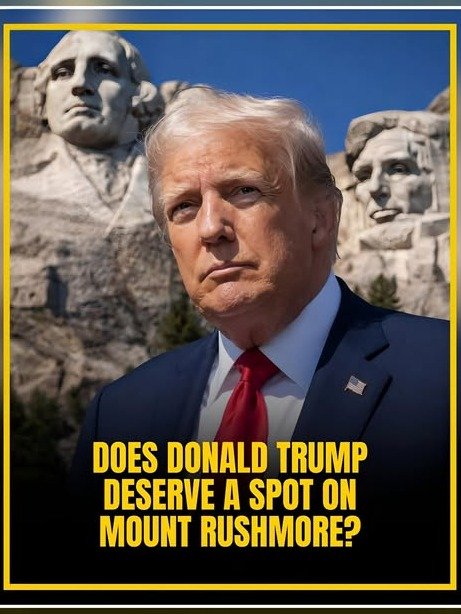
Prepare to have your perception of one of America’s most iconic landmarks completely transformed. You know the sight: four colossal presidential faces carved into a mountain, a symbol of American ingenuity and history.
But what if we told you that behind those stoic gazes lies a saga far more complex, controversial, and awe-inspiring than any textbook ever revealed? Get ready to dive deep into the untold stories and surprising secrets of Mount Rushmore.
The Audacious Vision: Gutzon Borglum’s Monumental Dream
The idea for a grand sculpture in South Dakota’s Black Hills wasn’t initially Borglum’s. Doane Robinson, a South Dakota historian, first conceived of carving historical figures into the Needles, a collection of granite pillars, to attract tourism to the state. His original vision included legendary Western heroes like Lewis and Clark or Native American chiefs.
However, when sculptor Gutzon Borglum was brought into the project in 1927, his ambition soared far beyond local legends. Borglum, already famous for his Confederate Memorial carving at Stone Mountain, Georgia, envisioned something truly national in scope: a tribute to the birth, growth, preservation, and development of the United States. He insisted on carving the faces of U.S. presidents, believing their stories held universal appeal.
Choosing the Icons: A Pantheon of American Ideals
Borglum’s selection of the four presidents was deliberate, each chosen to embody a pivotal aspect of American history and democratic ideals. Their colossal visages, standing 60 feet tall, were to be eternal guardians of the nation’s narrative.
- George Washington: As the Father of His Country and the first president, Washington symbolizes the birth of the United States. His leadership during the Revolutionary War and his role in establishing the republic laid the foundational stones of American democracy.
- Thomas Jefferson: Representing the nation’s growth, Jefferson’s inclusion acknowledges his authorship of the Declaration of Independence, a cornerstone document of freedom, and his pivotal role in the Louisiana Purchase, which dramatically expanded the country’s territory.
- Theodore Roosevelt: Roosevelt embodies the development of the United States, particularly in the 20th century. His contributions to conservation, his efforts in building the Panama Canal, and his trust-busting policies showcased America’s rise as a global power and its commitment to progress.
- Abraham Lincoln: Lincoln signifies the preservation of the Union during its darkest hour, the Civil War. His leadership saved the nation from fragmentation and his Emancipation Proclamation was a monumental step towards liberty and equality for all, representing the enduring spirit of the American experiment.
Blasting into History: The Herculean Task of Carving a Mountain
The creation of Mount Rushmore was an engineering marvel, a testament to human perseverance against the raw power of nature. Construction began in 1927 and continued for 14 years, concluding in 1941. The sheer scale of the project was mind-boggling, requiring innovative techniques and immense courage from the workers.
Over 400 men and women, many of them miners, drillers, and laborers with little or no artistic training, worked on the mountain. They used a combination of dynamite, jackhammers, and intricate carving tools to shape the granite. Approximately 90% of the mountain’s 450,000 tons of rock was removed using dynamite, a precise art that required careful calculation to avoid damaging the delicate features of the faces.
Workers dangled from the mountain’s peak in bosun chairs, often suspended by thin steel cables hundreds of feet in the air. Despite the perilous conditions and the use of dangerous equipment, remarkably, no lives were lost during the entire carving process. This incredible safety record is a tribute to the strict protocols and the skill of the foremen and workers.
About the Author




