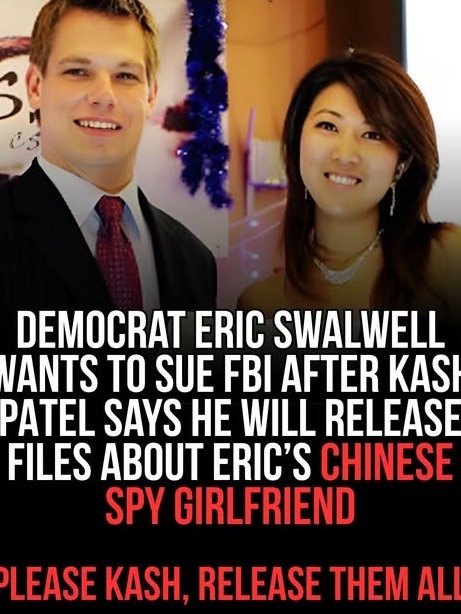
Just when you thought the shadow of the ‘Fang Fang’ scandal had faded into the annals of political history, it’s back – with a vengeance. The controversy surrounding Congressman Eric Swalwell and his alleged ties to suspected Chinese spy Christine Fang (also known as Fang Fang) has resurfaced, igniting fresh questions about national security and political transparency. This time, the spotlight is on Swalwell’s legal team, reportedly making aggressive moves to prevent the public disclosure of any information related to the original, chilling investigation.
The mere mention of the Swalwell-Fang saga sends shivers down the spine of anyone concerned with foreign influence in American politics. This isn’t just about a past indiscretion; it’s about the potential vulnerability of a sitting U.S. Congressman to a foreign adversary. The current legal maneuvers suggest there might be far more to this story than the public has ever been told, raising urgent questions about what secrets are being protected.
The Ghost of Fang Fang: A Quick Recap
For those who may have forgotten, the original scandal broke in late 2020, revealing that Christine Fang, a suspected Chinese intelligence operative, had reportedly developed extensive ties with U.S. politicians, including Eric Swalwell, between 2011 and 2015. Fang allegedly engaged in political fundraising, networking, and even romantic relationships with American officials, all while working on behalf of Beijing’s intelligence apparatus.
The FBI reportedly briefed Swalwell on Fang’s activities in 2015, after which he claims he cut off all ties. However, the exact nature and extent of their relationship, and what, if any, intelligence Fang may have gleaned from her interactions, has largely remained shrouded in secrecy. This lack of full transparency has fueled persistent speculation and concern among national security experts and the public alike.
The Legal Battle Heats Up: What’s at Stake?
Fast forward to today, and the controversy is once again making headlines. Reports indicate that lawyers representing Congressman Swalwell are actively working to block the release of any information linked to the FBI’s investigation into Christine Fang. This isn’t a quiet legal filing; it’s an assertive push to keep certain details under wraps, suggesting the stakes are incredibly high.
What kind of information could be so sensitive that a sitting Congressman’s legal team would go to such lengths to suppress it? It could include anything from detailed FBI findings, intelligence assessments, specific communications logs, or even witness testimonies that shed new light on the depth and breadth of Fang’s operations and her interactions with Swalwell.
“When public officials, especially those in positions of national security, fight tooth and nail to prevent the release of information about foreign influence, it naturally raises red flags. Transparency is paramount for public trust,” commented a legal analyst on the condition of anonymity, highlighting the gravity of the situation.
Why Now? Unpacking the Timing and Motivations
The timing of these renewed legal efforts is particularly intriguing. While the initial reports about Fang Fang surfaced years ago, the ongoing attempts to seal records indicate that the implications of that investigation are far from resolved. It suggests that the “old Fang investigation” still holds relevant, potentially damaging, or politically inconvenient information.
Motivations for blocking such a release could be multifaceted. On one hand, Swalwell’s team might argue that the information is politically motivated, a smear campaign, or that its release could compromise legitimate national security methods or ongoing investigations. They might cite privacy concerns or the potential for misinterpretation of sensitive intelligence.
On the other hand, proponents of transparency argue that the public has a right to know the full extent of foreign influence operations, especially when they involve elected representatives. The argument is that the potential for a U.S. Congressman to have been compromised by a foreign agent is a matter of profound public interest, transcending individual privacy concerns.
National Security Implications: A Deeper Dive
The core of this controversy lies in its national security implications. Christine Fang was not just a charming networker; she was identified as a suspected operative of the Ministry of State Security (MSS), China’s primary civilian intelligence agency. The MSS is known for its aggressive and sophisticated intelligence gathering, often targeting political figures, academics, and business leaders.
- Access to Classified Information: As a member of the House Intelligence Committee, Swalwell had access to some of the nation’s most sensitive classified information. Any potential compromise, however indirect or unwitting, could have devastating consequences for U.S. intelligence operations.
- Influence Operations: Beyond classified data, foreign adversaries seek to influence policy, legislation, and public opinion. An operative like Fang could have been used to gather insights into political strategy, cultivate relationships that could be exploited later, or even subtly steer policy discussions.
- Precedent and Deterrence: The way this case is handled sets a precedent. If information about potential foreign compromise of a high-ranking official remains hidden, it could embolden other adversaries to continue similar operations, believing they can evade full public scrutiny.
The fear is not just about what Fang might have learned, but how her interactions could have been leveraged by Beijing. Even if Swalwell was entirely unaware of her true intentions, the fact that a suspected spy had such proximity to a U.S. Congressman is a gaping hole in national security protocols that demands full understanding.
The Public’s Right to Know vs. Political Protection
This ongoing legal battle highlights a fundamental tension in a democratic society: the public’s right to full transparency regarding potential threats to national security, versus the desire of political figures to protect their reputations and careers. The argument for transparency is often rooted in accountability.
If a Congressman was potentially compromised, the public needs to understand the extent of that risk to ensure that similar vulnerabilities are addressed in the future. Keeping such information under wraps, critics argue, only breeds distrust and fuels conspiracy theories, ultimately eroding faith in government institutions.
Conversely, those advocating for limited disclosure often point to the potential for political weaponization of sensitive intelligence. They might argue that releasing partial or unverified information could be used to unfairly target political opponents, creating a chilling effect on legitimate political engagement.
What Could the Unreleased Information Reveal?
The very act of fighting to block information release suggests the content is significant. It could potentially reveal:
- Specific details of Fang’s activities: How she operated, who else she targeted, and the full scope of her influence network.
- The FBI’s assessment: A clearer picture of how seriously the FBI viewed the threat and their findings regarding Fang’s intelligence gathering.
- Swalwell’s interactions: A more comprehensive account of his communications and engagements with Fang, going beyond what has been publicly acknowledged.
- Potential vulnerabilities: Insights into systemic weaknesses that allowed a suspected foreign agent to get so close to U.S. political figures.
Each of these points holds critical importance for understanding the true impact of China’s influence operations and for safeguarding American democracy against future threats.
The Road Ahead: An Ongoing Saga
The legal fight to block the release of information related to the Fang investigation is a critical development in a controversy that refuses to die. It transforms what some might have dismissed as a historical footnote into a live, active battle over transparency and national security.
The outcome of these legal maneuvers will not only determine what the public learns about Eric Swalwell and Christine Fang but will also set a precedent for how similar cases of foreign influence are handled in the future. As the legal wrangling continues, the call for transparency grows louder, with many believing that the full truth must eventually come to light for the sake of national security and public trust.
This isn’t just a political skirmish; it’s a test of our commitment to safeguarding the integrity of our government against persistent and evolving foreign threats. The ‘China Shadow’ has indeed returned, and its implications are far-reaching.
About the Author




