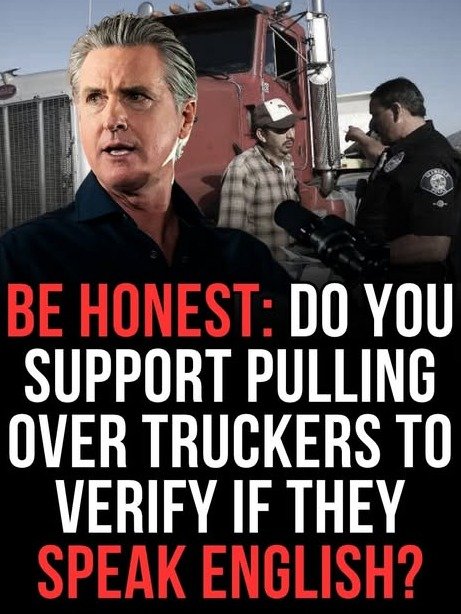
Imagine a critical situation on the highway: an emergency, a sudden road closure, or a complex instruction from traffic control. Now imagine the driver of an 80,000-pound commercial truck struggling to understand or communicate effectively in English. This isn’t a hypothetical scenario; it’s a pressing concern that has government officials and industry leaders re-evaluating the very bedrock of commercial driving safety.
For decades, commercial truck drivers have been the lifeblood of America’s economy, ensuring that goods reach every corner of the nation. Yet, a quiet but profound debate is now escalating: are the current English proficiency standards for Commercial Driver’s License (CDL) holders sufficient to guarantee public safety and maintain the seamless flow of interstate commerce?
This isn’t just about understanding basic commands; it’s about navigating complex regulations, communicating with law enforcement and emergency services, interpreting road signs under pressure, and safely interacting with other drivers. The Federal Motor Carrier Safety Administration (FMCSA) and other key stakeholders are once again putting this critical issue under the microscope, recognizing its far-reaching implications.
The Existing Framework: What Are the Current Rules?
Currently, federal regulations require CDL applicants to be able to read and speak English sufficiently to understand traffic signs and signals, converse with the public, and respond to official inquiries. This standard, outlined in 49 CFR Part 391.11(b)(2), aims to ensure a basic level of communication capability.
However, what constitutes ‘sufficiently’ has often been a point of contention and interpretation. The existing framework allows for some subjectivity in assessment, leading to questions about whether it truly prepares drivers for every scenario they might encounter on the demanding open road.
Why the Urgent Revisit? Unpacking the Concerns
The impetus behind this renewed scrutiny is multifaceted. Primarily, it stems from growing concerns over road safety. Accidents involving commercial vehicles can be devastating, and any factor that contributes to their likelihood demands serious attention.
Communication breakdowns are increasingly cited as potential contributing factors in incidents, ranging from minor traffic violations to severe collisions. When a driver cannot clearly understand dispatch instructions, navigate complex detours, or accurately describe an emergency to first responders, the risks escalate dramatically.
Furthermore, the increasing diversity of the trucking workforce, while a strength in many ways, also highlights the potential for language barriers. As the industry continues to rely on a global talent pool, ensuring universal safety standards becomes paramount.
The Unseen Dangers: Safety at Stake
The consequences of inadequate English proficiency extend far beyond mere inconvenience. They directly impact public safety. Imagine a driver unable to comprehend a ‘Hazardous Materials – Keep Clear’ sign, or struggling to follow instructions during a roadside inspection.
Consider scenarios where a driver needs to communicate effectively with other motorists about a road hazard, or explain their vehicle’s condition during a breakdown. These situations demand clear, concise, and immediate communication, often under high-stress conditions. A language barrier can turn a manageable situation into a dangerous one.
The ability to understand and articulate complex instructions is not just about passing a test; it’s about making split-second decisions that can prevent catastrophic outcomes. Road signs, electronic logging device (ELD) prompts, and even peer-to-peer communication at truck stops all rely on a common linguistic foundation.
Impact on Interstate Commerce and the Supply Chain
Beyond safety, the efficiency of interstate commerce itself hinges on effective communication. The trucking industry is the backbone of the American economy, responsible for moving over 70% of all freight in the U.S.
Delays caused by communication issues – whether it’s misinterpreting delivery instructions, struggling with border patrol, or failing to properly log hours – can ripple through the entire supply chain. This can lead to increased costs, spoiled goods, and significant economic disruption.
In a world increasingly reliant on just-in-time delivery and complex logistics, any impediment to smooth operations can have far-reaching economic consequences. Ensuring drivers can communicate effectively helps to maintain the fluidity and reliability that businesses and consumers depend on.
The Case for Stronger Standards: Arguments and Advocates
Proponents of stricter English proficiency standards argue that a clearer, more rigorous benchmark would significantly enhance road safety. They believe it would reduce the likelihood of misunderstandings that lead to accidents and improve overall operational efficiency. Key benefits highlighted include:
- Enhanced Road Safety: Reducing miscommunication in critical situations.
- Improved Operational Efficiency: Smoother logistics and fewer delays.
- Elevated Professionalism: Boosting the industry’s image and public trust.
- Reduced Accident Rates: Direct correlation between clear communication and fewer incidents.
Many safety advocacy groups and some segments of the trucking industry support this view, emphasizing that safety must always be the top priority. They suggest that clearer standards would also foster greater public trust.
A common argument is that if pilots and air traffic controllers require stringent language skills for safety, why should the standards be any less robust for those operating multi-ton vehicles on public roads? The stakes, they argue, are equally high.
“The ability to communicate clearly isn’t just a preference; it’s a fundamental safety requirement in an industry where seconds can mean the difference between life and death,” states one prominent safety advocate.
The Counter-Arguments: Challenges and Concerns
However, the debate is far from one-sided. Opponents of stricter standards raise valid concerns, primarily revolving around potential driver shortages and issues of fairness.
The trucking industry already faces a significant and persistent driver shortage. Imposing more stringent language requirements could potentially exacerbate this problem, making it even harder to recruit and retain qualified drivers, particularly from immigrant communities who are vital to the workforce.
There are also concerns about potential discrimination. Critics argue that overly strict or poorly implemented language tests could unfairly exclude competent drivers who, despite having an accent or less-than-perfect grammar, are perfectly capable of safely operating a commercial vehicle and understanding critical information.
The cost and logistics of implementing new, standardized testing, along with potential language training programs, also present considerable hurdles for both the government and trucking companies. Striking a balance between safety and practicality is a complex challenge.
Navigating the Path Forward: Potential Solutions and Next Steps
As officials revisit this critical issue, several potential solutions are being explored. One approach could involve developing more objective and standardized English proficiency tests specifically tailored to the demands of commercial driving, rather than general language assessments.
Another consideration is the implementation of phased approaches, perhaps with additional support and resources for drivers who need to improve their English skills. This could include subsidized language training programs or clear pathways for achieving higher proficiency.
The role of technology is also being discussed. While not a replacement for human communication, advancements in real-time translation tools or enhanced visual aids could potentially supplement drivers’ understanding in certain scenarios, though this is a complex area with its own set of challenges.
Ultimately, any changes would require careful consideration and collaboration among various stakeholders, including the FMCSA, trucking associations, labor unions, driver advocacy groups, and safety organizations. The goal is to forge a solution that enhances safety without unduly burdening the industry or discriminating against drivers.
What This Means for the Future of Trucking
The outcome of this re-evaluation could significantly reshape the trucking industry. Stronger standards could lead to a safer, more efficient transportation network, but they also carry the risk of impacting driver availability and increasing operational costs.
For current CDL holders, it might mean refreshing language skills or undergoing new assessments. For aspiring drivers, it could mean meeting more rigorous entry requirements. The entire industry will need to adapt to whatever new regulations emerge from this crucial discussion.
The debate underscores a fundamental truth: the trucking industry is dynamic, constantly evolving, and deeply interconnected with public safety and economic prosperity. Ensuring that all drivers can effectively communicate is not just a matter of compliance, but a cornerstone of a reliable and safe transportation system.
Conclusion: Balancing Safety, Commerce, and Fairness
The ongoing discussion about stronger English proficiency standards for CDL holders is a complex tapestry woven with threads of safety, economic necessity, and social equity. It’s a testament to the ever-present need to balance the demands of a critical industry with the paramount responsibility of protecting lives on our roads.
As officials continue to deliberate, one thing remains clear: the conversation is vital. It’s an opportunity to strengthen the foundations of an industry that literally drives our nation, ensuring that every journey, every delivery, and every interaction on the road is as safe and efficient as possible for everyone involved. Stay informed, as these potential changes could impact us all.
About the Author




