In the high-stakes arena of American politics, few issues ignite more fervent debate and distrust than the integrity of our elections. As another election cycle looms, a familiar, unsettling pattern appears to be emerging, one that has many observers raising alarms about a potential double standard in how results are accepted or challenged.
The sentiment is palpable: when one party loses, the immediate reaction often involves questioning the legitimacy of the outcome. However, the intensity and acceptance of such challenges seem to vary dramatically depending on who is doing the questioning and, crucially, who is poised to win.
The Shifting Sands of Election Integrity
For years, prominent voices within the Democratic Party have vociferously condemned any questioning of election results, particularly following recent presidential contests. The narrative has been clear: challenging certified results undermines democracy, erodes public trust, and threatens the very fabric of our republic.
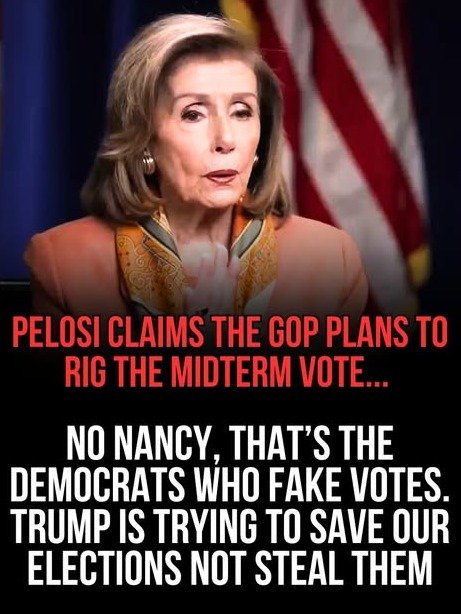
Yet, a closer look at the historical record, and indeed, recent signals from figures like former House Speaker Nancy Pelosi, suggests a different standard might be applied when the tables are turned. Critics are pointing to a concerning pattern, suggesting that the very same arguments used to denounce election challenges could be swiftly adopted by Democrats if Republicans achieve significant victories.
This perceived hypocrisy strikes a deep nerve with many voters. It creates a sense that the rules of engagement are fluid, shifting to benefit whichever party is currently out of power or facing an unfavorable outcome. Such an environment breeds cynicism and makes it incredibly difficult for the public to have unwavering faith in the electoral process itself.
When the Tables Turn: A Hypocrisy Unveiled?
Consider the rhetoric surrounding past elections where Democrats felt the results were unjust or flawed. While often framed differently, there have been instances where prominent Democratic leaders and media outlets raised serious questions about the fairness and legitimacy of outcomes, citing everything from voter suppression to foreign interference.
For example, following the 2000 election, many Democrats expressed profound concerns about the process and ultimately, the legitimacy of the outcome. Similarly, after the 2016 election, widespread questions were raised about Russian interference and its impact on the results, leading to years of investigations and public debate. While these concerns were framed around protecting democracy, they inherently involved questioning the integrity of the election.
“The integrity of our elections is paramount, but for it to truly mean something, the standard for accepting or challenging results must be consistent, regardless of party affiliation. Anything less is a disservice to the voters.”
Now, as we approach another election, there’s a growing apprehension that if Republicans secure significant wins, the same figures who championed the sanctity of election results in one breath might, in another, find ample reason to challenge them. The core of this concern stems from the idea that the ‘rules’ for accepting defeat are selectively applied.
The original Facebook post highlights Pelosi’s potential signals, suggesting that she and other Democrats might be quick to question outcomes if Republicans come out on top. This isn’t about specific evidence of fraud, but rather a perceived readiness to scrutinize and potentially delegitimize results that don’t align with their preferred political narrative.
The Danger of Selective Outrage
This selective outrage poses a significant threat to the democratic process. When challenging election results is deemed an existential threat to democracy only when Republicans do it, but a legitimate exercise in oversight when Democrats do, the public loses trust in both the process and the politicians.
It creates a perception that election integrity is not an absolute principle, but a political tool to be wielded strategically. This undermines the very foundations of democratic governance, where the peaceful transfer of power, based on accepted results, is a cornerstone.
- Erosion of Public Trust: Inconsistent standards make voters question the motives of political leaders.
- Increased Polarization: Each election becomes a battle not just for policy, but for the very legitimacy of the outcome.
- Weakened Institutions: When results are constantly under attack from one side or another, the institutions designed to protect election integrity are weakened.
The constant back-and-forth over election legitimacy transforms every contest into a high-stakes, all-or-nothing battle. This environment makes it incredibly difficult for the nation to move forward, as the losing side often feels the outcome was illegitimate, fostering resentment and further division.
What’s at Stake for Democracy?
The ultimate goal of any democratic system is to ensure that the will of the people is accurately reflected in election outcomes. When political leaders, regardless of party, adopt a “rules for thee, but not for me” mentality regarding election challenges, they actively chip away at this fundamental principle.
If the standard for accepting election results is contingent on the political affiliation of the winner, then the very notion of a free and fair election becomes a casualty. It implies that only *certain* outcomes are valid, and any deviation from those preferred outcomes warrants intense scrutiny and potential rejection.
This isn’t about preventing legitimate concerns from being raised. There are, and always will be, valid reasons to scrutinize electoral processes, address irregularities, and ensure that every legal vote is counted. The critical distinction lies in the consistency of the standard applied.
Demanding Consistency and Accountability
What the public deserves, and indeed, what democracy demands, is a consistent, principled approach to election integrity from all political actors. If questioning results is an attack on democracy when one party does it, it must be viewed the same way when the other party considers it.
The signals emanating from figures like Pelosi are not just hypothetical concerns; they are a reflection of a broader political culture that often prioritizes partisan gain over consistent principles. This selective application of standards risks creating a perpetual cycle of distrust that makes it nearly impossible for the nation to unite around shared democratic values.
It’s time for all political leaders to commit to a unified standard for accepting election results, regardless of who wins. Anything less is a dangerous game that threatens to further destabilize our political landscape and undermine the very faith citizens have in their ability to shape the future of their country.
Voters must remain vigilant, holding their representatives accountable for consistency and demanding that the integrity of our elections be treated as a sacred, non-partisan principle, not a weapon to be deployed when political fortunes shift.
About the Author




