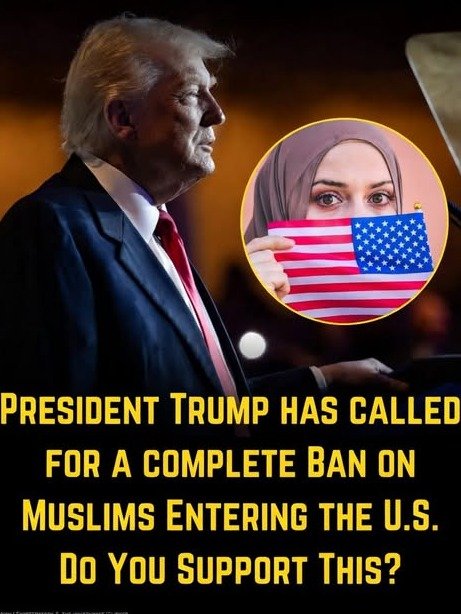
Remember the headlines that dominated every news cycle? The policy that sent shockwaves through airports and courtrooms alike, sparking protests and fierce debate across the globe? We’re diving deep into President Trump’s highly controversial temporary travel restriction, a measure he championed as vital for national security, but one that ignited a fierce discussion about civil liberties, immigration, and the true meaning of American values.
This policy, often referred to as the ‘travel ban,’ was presented by the Trump administration as an essential tool to protect the nation from foreign threats. But was it truly a necessary security measure, or an overreach with discriminatory undertones? Unpacking this complex issue requires a look at its origins, its tumultuous journey through the legal system, and its lasting impact on individuals and international relations.
The Genesis of a Controversial Policy
The concept of enhanced screening for individuals entering the United States was a cornerstone of Donald Trump’s presidential campaign. Fueled by concerns about global terrorism and the perceived inadequacies of existing vetting processes, his rhetoric often highlighted the need for ‘extreme vetting’ from certain regions deemed high-risk.
This campaign promise quickly translated into policy proposals upon his inauguration. The administration argued that intelligence gaps and the potential for radicalization in specific countries necessitated a temporary pause in travel to allow for a comprehensive review and strengthening of security protocols. The goal, they stated, was to prevent terrorists from entering American soil.
Executive Order 13769: The Initial Shockwave
On January 27, 2017, just a week after his inauguration, President Trump signed Executive Order 13769, titled ‘Protecting the Nation from Foreign Terrorist Entry into the United States.’ This order immediately halted the entry of refugees for 120 days, indefinitely banned Syrian refugees, and imposed a 90-day suspension on all entries from seven Muslim-majority countries: Iran, Iraq, Libya, Somalia, Sudan, Syria, and Yemen.
The rollout was swift and chaotic. Travelers already in transit were detained at airports, families were separated, and legal residents with green cards found themselves in limbo. This immediate disruption sparked widespread protests at airports across the nation and drew condemnation from civil liberties groups, international organizations, and several foreign governments.
The Legal Firestorm Begins
Almost immediately, legal challenges mounted against the first executive order. Civil liberties organizations, led by the American Civil Liberties Union (ACLU), alongside several state attorneys general, argued that the order was discriminatory, violated the Establishment Clause of the First Amendment (which prohibits government endorsement of religion), and exceeded the President’s statutory authority.
Federal courts swiftly issued temporary restraining orders and injunctions, halting the implementation of key provisions. These legal battles highlighted the tension between presidential power in matters of national security and the constitutional protections afforded to individuals, even those seeking to enter the country.
A Revised Approach: Executive Order 13780
Facing significant legal roadblocks, the Trump administration issued a revised order, Executive Order 13780, in March 2017. This new order sought to address some of the legal challenges by making several adjustments. Iraq was removed from the list of banned countries, citing improved cooperation with the U.S., and green card holders were explicitly exempted.
Furthermore, the indefinite ban on Syrian refugees was lifted, replaced by a 120-day suspension consistent with other refugee admissions. Despite these changes, the revised order still faced considerable legal scrutiny and was challenged in federal courts, which continued to block its implementation, albeit on slightly different grounds.
Presidential Proclamation 9645: The Supreme Court’s Verdict
The administration’s efforts culminated in Presidential Proclamation 9645, issued in September 2017. This proclamation was designed to be more targeted and country-specific, based on a review of information-sharing practices and security risks from various nations. The final list of countries included Chad, Iran, Libya, North Korea, Somalia, Syria, Venezuela, and Yemen.
This iteration of the policy ultimately reached the Supreme Court. In June 2018, in the landmark case of Trump v. Hawaii, the Supreme Court, in a 5-4 decision, upheld the proclamation. The majority opinion, written by Chief Justice John Roberts, largely deferred to the President’s broad authority on immigration and national security, finding that the proclamation was within the scope of presidential power.
“The Proclamation is squarely within the scope of Presidential authority under the INA [Immigration and Nationality Act],” Chief Justice Roberts wrote, adding that the Court “cannot substitute its policy judgment for that of the political branches.”
The dissenting justices, however, argued vehemently that the policy was still rooted in religious animus and constituted unlawful discrimination. Justice Sotomayor, in her dissent, stated that a reasonable observer would conclude that the proclamation was driven by anti-Muslim bias.
National Security vs. Civil Liberties: The Core Debate
The entire saga of the travel restriction ignited a profound debate about the balance between national security and civil liberties. Proponents of the policy argued that the President has an inherent constitutional duty to protect the nation, and that this duty includes regulating who enters the country, especially from regions deemed to pose a higher risk of terrorism.
They emphasized the importance of a robust vetting process and the potential catastrophic consequences of failing to prevent a terrorist attack. From this perspective, the temporary restriction was a pragmatic, necessary step to ensure the safety and security of American citizens, allowing time for the government to implement more secure procedures.
Conversely, opponents argued that the policy was a thinly veiled attempt at religious discrimination, violating the spirit, if not the letter, of the First Amendment. They pointed to President Trump’s campaign statements calling for a
About the Author




