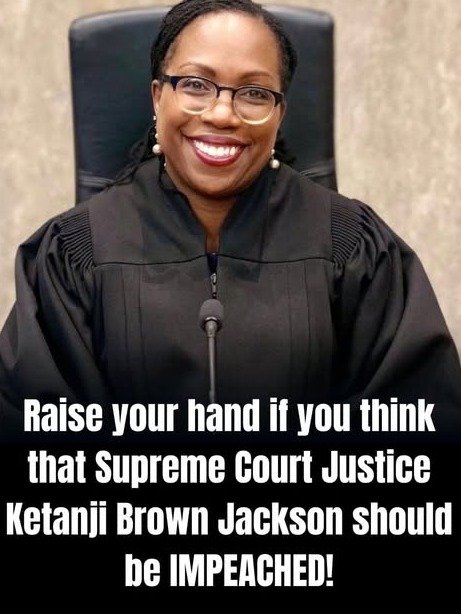
In an era of intense political polarization, the Supreme Court often finds itself at the epicenter of public debate. Recently, a powerful and provocative call emerged, suggesting that Justice Ketanji Brown Jackson should be impeached and removed from her esteemed position. But what does such a demand truly entail, and what are the constitutional realities behind removing a Supreme Court Justice?
While such a declaration might grab headlines and ignite passionate discussions, the process of impeaching a Supreme Court Justice is one of the most solemn, rare, and constitutionally rigorous actions imaginable within the American system of government. It’s a mechanism designed not for political disagreement, but for profound breaches of public trust.
The Weight of a Lifetime Appointment: Judicial Independence
The architects of the U.S. Constitution deliberately granted federal judges, including Supreme Court Justices, lifetime appointments. This critical provision, enshrined in Article III, Section 1, was intended to safeguard judicial independence. The framers understood that judges needed to make decisions based on the law and the Constitution, free from the pressures of political cycles, public opinion, or retribution from other branches of government.
This independence is a cornerstone of American democracy, ensuring that the judiciary can act as a check on both the legislative and executive branches. It allows justices to interpret the law impartially, without fear of losing their jobs for unpopular but legally sound rulings.
Constitutional Grounds: “High Crimes and Misdemeanors”
Despite lifetime tenure, judges are not entirely immune from removal. The Constitution outlines a specific, narrow path for impeachment. Article II, Section 4 states:
“The President, Vice President and all civil Officers of the United States, shall be removed from Office on Impeachment for, and Conviction of, Treason, Bribery, or other high Crimes and Misdemeanors.”
These grounds are intentionally vague, allowing Congress discretion, but legal scholars generally agree they refer to abuses of power, corruption, or serious criminal conduct, rather than mere policy disagreements or judicial philosophy.
About the Author




