Imagine a world where 20% of global oil supply suddenly halts, sending shockwaves through every market and household. That’s the terrifying reality constantly threatened in the Strait of Hormuz, a narrow waterway vital to the global economy. Yet, at a crucial G7 meeting, a stark truth emerged that sent ripples through diplomatic circles and highlighted a critical imbalance in international security efforts.
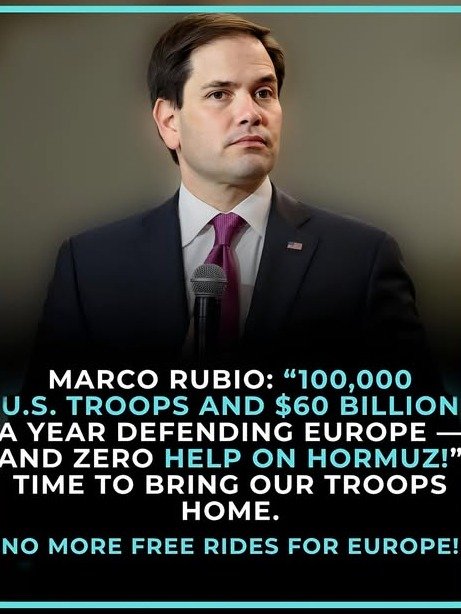
During a high-stakes gathering of G7 foreign ministers in France, then-Secretary of State Marco Rubio delivered a candid assessment, pointing out Europe’s notably limited assistance in safeguarding this indispensable maritime chokepoint. While the United States has consistently maintained a robust presence to deter aggression and ensure free passage, the expectation for a more collaborative, burden-sharing approach from its allies seemed largely unmet.
The Strait of Hormuz: A Global Economic Lifeline
To truly grasp the gravity of Rubio’s statement, one must understand the unparalleled strategic importance of the Strait of Hormuz. This slender waterway, just 21 nautical miles wide at its narrowest point, connects the Persian Gulf to the open ocean, serving as the sole maritime passage for a substantial portion of the world’s crude oil and liquefied natural gas (LNG). Tankers carrying precious cargo from major producers like Saudi Arabia, Iran, UAE, Kuwait, and Iraq must navigate its waters daily.
Estimates suggest that roughly 20% of the world’s total petroleum liquids consumption, or about 21 million barrels per day, transits through the Strait. This isn’t just about oil; it’s about the very lifeblood of global industry, transportation, and consumer prices. Any significant disruption here—whether from military conflict, piracy, or state-sponsored aggression—would trigger an immediate and catastrophic surge in energy costs, destabilize financial markets, and potentially plunge the global economy into crisis.
Rubio’s Frank Assessment at the G7 Summit
The G7 meeting, bringing together the world’s leading industrialized nations, was the perfect platform for such a direct diplomatic challenge. While discussions often revolve around shared economic and security interests, Rubio chose to highlight a specific area where collective action was clearly lacking. His message to his European counterparts was unequivocal: the burden of securing a global commons, especially one as critical as the Strait of Hormuz, cannot fall disproportionately on one nation.
“The security of the Strait of Hormuz is not solely an American responsibility. It is a global imperative. The limited assistance from our European partners in this critical situation raises serious questions about our collective commitment to international maritime security and the free flow of commerce,” Rubio reportedly stated, emphasizing the urgency of the matter.
This statement wasn’t merely a complaint; it was a strategic call for greater engagement and burden-sharing. The U.S. has long been the primary guarantor of security in the region, dedicating significant naval assets, personnel, and financial resources to maintaining stability. This commitment extends beyond its own direct interests, safeguarding the shipping lanes that power economies worldwide, including those of European nations.
Why the Hesitation? Europe’s Complex Position
Europe’s perceived reluctance to commit more robustly to Strait of Hormuz security is multi-faceted. One significant factor has been the ongoing diplomatic efforts to preserve the Iran nuclear deal (Joint Comprehensive Plan of Action, JCPOA) following the U.S. withdrawal. Many European nations prioritized maintaining channels with Tehran, fearing that a stronger military presence or confrontational stance could jeopardize diplomatic solutions and escalate tensions.
Furthermore, European nations have their own domestic political and economic challenges, often leading to a focus on regional security concerns closer to home. Budgetary constraints and differing strategic priorities can make it difficult to allocate significant military resources to distant operations. There’s also been a historical reliance on the U.S. to act as the primary security provider in such scenarios, fostering a degree of strategic complacency.
- Diplomatic Priorities: European nations often prioritize diplomacy with Iran, viewing military escalation as counterproductive to preserving the JCPOA.
- Economic Ties: Some European countries maintain significant economic ties with Iran, which could be jeopardized by increased military tensions.
- Resource Allocation: Limited defense budgets and a focus on internal or regional security issues (like Ukraine or the Sahel) make large-scale deployments challenging.
- Strategic Autonomy: A desire for greater strategic autonomy can sometimes lead to different approaches than those favored by the U.S., even if it means less direct involvement in U.S.-led initiatives.
The High Stakes: What’s at Risk?
The implications of insufficient international cooperation in the Strait of Hormuz are dire. A breakdown in security could lead to a cascade of negative consequences that would affect every corner of the globe. Economically, even minor disruptions can cause oil prices to spike, triggering inflation and hindering economic growth worldwide. Businesses reliant on global supply chains would face massive shipping delays and increased costs, ultimately passed on to consumers.
Beyond economics, there’s the looming threat of regional instability. An insecure Strait of Hormuz could embolden hostile actors, increase the risk of piracy, and potentially ignite broader conflicts. The Middle East is already a volatile region, and any further destabilization of this critical waterway could have devastating humanitarian and geopolitical repercussions. The free and open flow of commerce is not just an economic principle; it’s a cornerstone of global peace and stability.
The Path Forward: A Call for Unified Action
Rubio’s direct challenge at the G7 served as a crucial reminder that global security is a shared responsibility. While the U.S. has historically shouldered a significant portion of this burden, the complexity and interconnectedness of modern threats demand a truly multilateral approach. Effective security in critical maritime chokepoints like the Strait of Hormuz requires concerted efforts in intelligence sharing, joint patrols, and coordinated diplomatic pressure.
For Europe, this means re-evaluating its strategic priorities and considering a more robust contribution to international maritime security operations. This doesn’t necessarily imply direct military confrontation, but rather a spectrum of actions from enhanced surveillance and intelligence gathering to coordinated naval presence and diplomatic initiatives that reinforce the principle of freedom of navigation. The future stability of the global economy, and indeed international order, hinges on allies working together to protect shared interests.
Ultimately, the message from the G7 meeting was clear: the world cannot afford to be complacent about the security of the Strait of Hormuz. While the U.S. remains committed to its role, the call for greater European and international collaboration is not just a plea for help, but an urgent necessity for the collective well-being of all nations that rely on this vital artery of global trade.
About the Author




