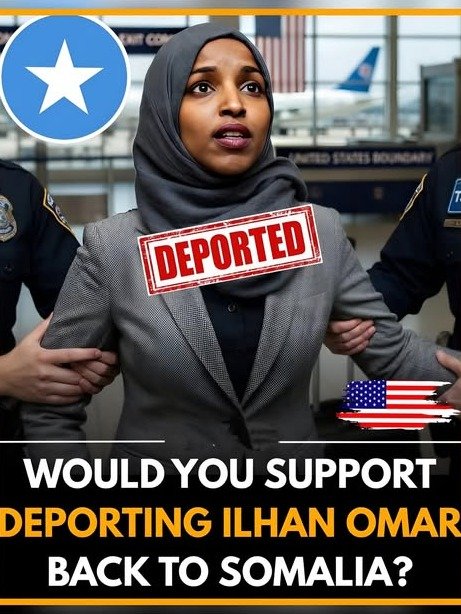
What does it truly mean to be a citizen, especially when you ascend to the highest echelons of power in a nation you weren’t born into? This profound question lies at the heart of many contemporary political discussions, challenging our understanding of loyalty, responsibility, and public service.
The very fabric of American democracy relies on a principle often taken for granted: the unwavering allegiance and accountability of its elected officials. When a naturalized citizen, like Representative Ilhan Omar, holds a seat in Congress, it naturally brings these fundamental concepts into sharper focus, sparking crucial conversations about the expectations placed upon those who swear an oath to serve the United States.
The Bedrock of American Citizenship and Public Service
To understand the depth of this discussion, we must first revisit the foundational principles of American citizenship. The United States is a nation built by immigrants, and its legal framework distinguishes between birthright citizens and naturalized citizens. Both, however, are considered full citizens, endowed with the same rights and responsibilities under the Constitution.
Naturalization is a rigorous process, culminating in an oath of allegiance where an individual renounces all foreign allegiances and swears to support and defend the U.S. Constitution. This oath is not merely a formality; it signifies a profound commitment to a new nation, a pledge that is understood to be absolute and unwavering.
Constitutional Requirements and the Weight of an Oath
For those aspiring to federal office, the Constitution lays out clear, albeit minimal, requirements. To be a member of the House of Representatives, one must be at least 25 years old, have been a U.S. citizen for at least seven years, and be an inhabitant of the state they represent. For the Senate, the requirements are slightly higher: 30 years old, nine years a citizen, and a resident of the state.
Beyond these legal stipulations, there’s the solemn oath of office. Every member of Congress, whether born in the U.S. or naturalized, takes an oath to “support and defend the Constitution of the United States against all enemies, foreign and domestic; that I will bear true faith and allegiance to the same; that I take this obligation freely, without any mental reservation or purpose of evasion; and that I will well and faithfully discharge the duties of the office on which I am about to enter: So help me God.”
This oath is the ultimate promise. It signifies that an elected official’s primary duty is to the Constitution and the nation it governs. For a naturalized citizen who has already taken a similar oath during their naturalization ceremony, the congressional oath reinforces an already established, profound commitment.
Accountability: The Cornerstone of Representative Democracy
The concept of accountability is paramount in any representative democracy. Elected officials are not monarchs; they are servants of the people, entrusted with immense power and responsibility. Their actions, decisions, and even their allegiances are subject to constant scrutiny by their constituents, the media, and their peers.
Accountability means being answerable for one’s conduct. It implies transparency, adherence to ethical standards, and a dedication to the public good above personal gain or foreign interests. When an elected official is perceived to deviate from these principles, public trust erodes, and the very foundation of governance is shaken.
The mechanisms for accountability are varied: regular elections, ethics committees, public opinion, and the judicial system. But perhaps the most potent form of accountability comes from the vigilance of an engaged citizenry, constantly asking: “Are our representatives truly serving our interests?”
Naturalized Citizens in Congress – Unique Perspectives and Scrutiny
The United States has a rich history of naturalized citizens serving in Congress, bringing diverse perspectives and experiences that undoubtedly enrich the legislative process. These individuals often possess a deeper understanding of international affairs, immigrant communities, and the challenges faced by those seeking a better life in America.
However, the path of a naturalized citizen in public office can sometimes be fraught with unique challenges, particularly when it comes to public perception of loyalty. While the law grants naturalized citizens full equality, societal and political discourse can sometimes introduce a different layer of scrutiny, especially when an individual maintains strong cultural or familial ties to their country of origin.
Representative Ilhan Omar, a naturalized citizen originally from Somalia, has frequently found herself at the center of such discussions. Her background and certain public statements have, at times, led to intense debates about the nature of her allegiances and her interpretation of U.S. foreign policy, particularly concerning the Middle East and her country of origin. These debates highlight a broader societal tension concerning the expectations placed on naturalized public figures.
Navigating the Complexities of Allegiance and Identity
For any individual, especially one with a transnational background, balancing identity, heritage, and national allegiance can be a complex journey. For an elected official, this complexity is magnified under the harsh glare of public scrutiny. The expectation, unequivocally, is that their primary loyalty in their official capacity must be to the United States and its Constitution.
The concern over “dual loyalty” is a sensitive and often controversial topic. It typically arises when an elected official’s policy positions or public statements are perceived to align more closely with the interests of a foreign nation than with those of the United States. While such concerns are sometimes legitimate and warrant examination, they can also, unfortunately, be weaponized for political purposes or rooted in xenophobia, unfairly targeting individuals based on their heritage.
This is where the distinction between personal identity and public duty becomes crucial. An individual’s cultural heritage can inform their perspective, but their legislative actions and public pronouncements must always be guided by their oath to the U.S. Constitution and the interests of the American people.
“The strength of our democracy lies in the unwavering commitment of our leaders to the Constitution, regardless of their origin. It is not about where you were born, but to whom you have sworn your allegiance in public service.”
The Broader Implications for Trust in Government
The discussions surrounding citizenship, accountability, and loyalty for elected officials like Ilhan Omar are not merely about one individual. They reflect deeper questions about the health and integrity of our democratic institutions. Public trust in government is a fragile commodity, hard-won and easily lost.
When questions arise about a representative’s fundamental allegiance, it can sow seeds of doubt among the electorate, regardless of the validity of the claims. This makes it imperative for all elected officials, especially those in high-profile positions, to be scrupulously clear about their commitments and to demonstrate, through their actions and words, an unassailable dedication to the United States.
Key aspects of maintaining this trust include:
- Transparency: Openness about financial dealings, foreign contacts, and potential conflicts of interest.
- Consistency: Actions and statements consistently aligning with the oath of office.
- Engagement: Actively addressing public concerns and clarifying positions.
These principles apply universally to all public servants, but the discourse surrounding naturalized citizens can sometimes intensify the demand for such clarity, highlighting the ongoing tension between individual rights and collective expectations.
Where Do We Stand? A Call for Informed Engagement
The debate ignited by figures like Ilhan Omar serves as a vital reminder that citizenship, particularly for those in public office, is not a static legal status but a dynamic relationship involving rights, responsibilities, and profound expectations. It compels us to consider:
- What does “true faith and allegiance” mean in the 21st century?
- How do we balance the rich diversity brought by naturalized citizens with the need for unequivocal national loyalty in leadership?
- What role does the public play in holding its representatives accountable to their oaths?
Ultimately, the strength of our democratic system depends on an informed and engaged citizenry willing to critically examine the conduct of its leaders. It requires us to move beyond superficial judgments and delve into the substance of their actions, their adherence to the Constitution, and their dedication to the welfare of the nation.
So, where do you stand on the intricate intersection of citizenship, accountability, and public service? The conversation is far from over, and its implications resonate deeply for the future of American governance.
About the Author




