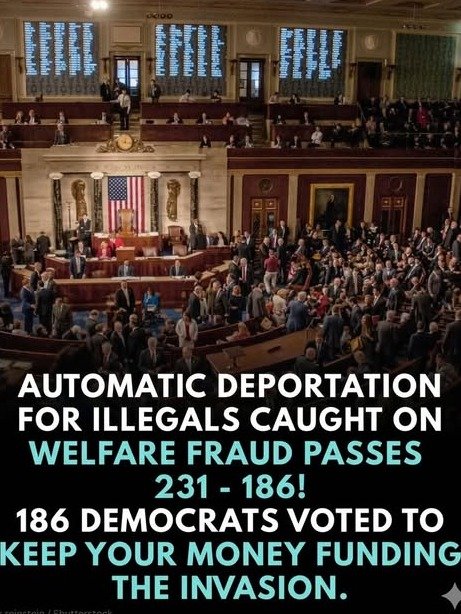
A seismic shift is underway in Washington, D.C., and it directly impacts your wallet, the future of social programs, and the very fabric of immigration policy in America. What if a single piece of legislation could redefine who receives taxpayer-funded benefits and how our borders are enforced? Get ready, because a groundbreaking bill just took a critical step forward, sparking intense debate and promising monumental changes.
The United States House of Representatives has officially advanced H.R. 1958, a bill that has quickly become a focal point in the ongoing national conversation about fiscal responsibility, program integrity, and immigration enforcement. This isn’t just another piece of legislation; it’s a bold statement, heavily championed by former President Donald Trump, signaling a renewed push to address what many perceive as systemic vulnerabilities in our welfare system and border security.
Understanding H.R. 1958: The Core of the Debate
H.R. 1958, often dubbed the ‘Welfare Integrity and Immigration Enforcement Act’ by its proponents, aims to fundamentally reform how federal welfare benefits are administered and to strengthen the link between benefit eligibility and legal immigration status. At its heart, the bill seeks to prevent individuals who are not legally authorized to reside in the United States from accessing taxpayer-funded assistance programs, while simultaneously cracking down on any instances of fraud within these systems.
This initiative comes at a time of heightened scrutiny over government spending and an intense national discussion about immigration policy. Supporters argue that the bill is a necessary measure to protect taxpayer dollars, ensure the integrity of vital social safety nets, and uphold the rule of law. They contend that resources intended for legal residents and citizens should not be diverted, whether through error or deliberate deception, to those without a legal claim.
Key Provisions: Unpacking the Bill’s Impact
The proposed legislation is comprehensive, introducing several key provisions designed to achieve its objectives. These measures are not merely superficial tweaks but represent significant operational changes for various government agencies and potential impacts on millions of individuals.
- Enhanced Data Matching and Verification: One of the central tenets of H.R. 1958 is the mandate for federal and state agencies to significantly improve their data-sharing capabilities. This would involve cross-referencing databases from agencies like the Department of Homeland Security (DHS), the Social Security Administration (SSA), and state welfare departments to verify the legal status of applicants for federal, state, and local public assistance programs. The goal is to create a seamless, robust verification system that flags discrepancies immediately.
- Increased Penalties for Fraud: The bill proposes stiffer penalties for individuals found to have fraudulently obtained welfare benefits, as well as for those who aid or abet such fraud. This includes not only monetary fines and restitution but also potential incarceration, sending a clear message that misuse of public funds will not be tolerated.
- Inter-Agency Cooperation Mandates: H.R. 1958 would compel greater cooperation between immigration enforcement agencies and welfare program administrators. This could mean more direct communication, shared training, and joint investigations to identify and address cases where non-citizens are allegedly receiving benefits for which they are ineligible.
- Strengthened Eligibility Requirements: The legislation would codify and, in some cases, expand existing requirements that link eligibility for certain welfare programs directly to an individual’s legal immigration status. This aims to close perceived loopholes and ensure that only those who meet strict legal criteria can access benefits.
The Rationale: Why Lawmakers Say It’s Needed
Proponents of H.R. 1958 articulate a clear and compelling case for its passage, rooted in principles of fiscal responsibility, fairness, and national sovereignty. They argue that the current system is vulnerable to exploitation, leading to significant financial waste and undermining public trust.
Protecting Taxpayer Dollars: At the forefront of the argument is the imperative to safeguard taxpayer money. Lawmakers supporting the bill emphasize that every dollar spent on ineligible recipients is a dollar diverted from deserving citizens and legal residents, or an additional burden on the tax base. They point to estimates suggesting billions of dollars are lost annually to fraud and improper payments.
Ensuring Program Integrity: Beyond monetary concerns, there’s a strong focus on maintaining the integrity of welfare programs themselves. Advocates believe that by tightening eligibility and enforcement, these programs can better serve their intended populations and regain public confidence. A system perceived as fair and efficient is more likely to garner public support.
“This isn’t about being anti-immigrant; it’s about being pro-taxpayer and pro-rule of law,” stated one Republican lawmaker during the House debate. “Our social safety net is designed for our citizens and legal residents. It is our duty to ensure those resources are protected.”
Upholding the Rule of Law: Many see H.R. 1958 as a critical step in upholding the rule of law. They argue that allowing individuals who have entered or remained in the country unlawfully to access public benefits undermines the legal immigration system and incentivizes further unlawful immigration.
Strong Support from Key Figures
The bill’s advancement through the House has been heavily influenced by strong backing from conservative factions and, notably, former President Donald Trump. Trump’s endorsement has galvanized support among his base and within the Republican Party, positioning the bill as a cornerstone of his broader “America First” agenda.
During his tenure and since, Trump has consistently advocated for stricter immigration enforcement and reforms to welfare programs. His vocal support for H.R. 1958 underscores the bill’s alignment with his vision of securing borders and prioritizing the needs of American citizens and legal residents. This powerful endorsement ensures the bill remains a high-profile item on the legislative agenda, pushing it through the House with significant momentum.
The Other Side of the Coin: Concerns and Opposition
While H.R. 1958 enjoys robust support from some quarters, it faces equally fervent opposition from others. Critics raise significant concerns about the bill’s potential humanitarian impact, its administrative feasibility, and its broader implications for civil liberties.
Humanitarian Concerns: Opponents, including many Democratic lawmakers and immigrant rights organizations, argue that the bill is unduly harsh and could lead to severe hardship for vulnerable families, including U.S. citizen children of undocumented parents. They contend that denying essential benefits like food assistance or healthcare could exacerbate poverty, homelessness, and public health crises.
“This bill is not about fraud; it’s about cruelty,” remarked a Democratic representative. “It weaponizes basic human needs against immigrant families, many of whom are contributing to our society and raising American children. We cannot turn our backs on those in need.”
Potential for Discrimination and Errors: Critics also worry about the potential for discrimination and errors in the enhanced data-matching systems. They point out that complex databases can contain inaccuracies, leading to the wrongful denial of benefits to eligible individuals. Furthermore, they fear that the bill could lead to racial profiling or increased surveillance of immigrant communities, regardless of legal status.
Administrative Burden and Costs: While designed to save money, implementing H.R. 1958’s provisions would require significant investment in new technology, inter-agency training, and administrative oversight. Opponents question whether the cost of implementation would outweigh the projected savings, especially given the complexities of integrating disparate state and federal databases.
Privacy Concerns: The extensive data sharing mandated by the bill also raises privacy concerns. Civil liberties advocates express apprehension about the government’s increased access to personal information and the potential for misuse or data breaches.
The Legislative Journey: What Happens Next?
With its passage through the House, H.R. 1958 now moves to the Senate, where its future is far less certain. The Senate, with its different political dynamics and procedural hurdles, presents a formidable challenge for the bill’s proponents.
In the Senate, the bill will likely face intense scrutiny, potential amendments, and possibly a filibuster, requiring significant bipartisan support to overcome. The political divide on immigration and welfare issues is often sharper in the Senate, making consensus difficult to achieve. Even if it passes the Senate, it would still require the President’s signature to become law. The current political climate suggests a complex and potentially protracted legislative battle ahead.
Broader Implications: A Shifting Landscape
The advancement of H.R. 1958 signals a significant moment in the ongoing national debate about immigration, welfare, and the role of government. Its potential passage could lead to a fundamental shift in how social safety nets are administered and how non-citizens interact with public services.
Beyond its immediate impact, the bill’s journey through Congress will undoubtedly shape political discourse, particularly heading into future election cycles. It forces difficult conversations about compassion, fiscal responsibility, national identity, and the very definition of who belongs and who deserves support in America. This bill is more than just legislation; it’s a litmus test for the nation’s values and priorities.
Conclusion: A Nation Divided, A Future Uncertain
H.R. 1958 represents a bold attempt to address long-standing concerns about welfare fraud and immigration enforcement. While proponents champion its fiscal prudence and commitment to the rule of law, opponents warn of its potential for humanitarian harm and administrative overreach. As the bill moves forward, it will continue to ignite passionate debate, reflecting the deep divisions within the country on these complex issues.
The ultimate fate of H.R. 1958 remains to be seen, but its passage through the House marks a critical juncture. Regardless of the final outcome, this legislation has already highlighted the urgent need for a comprehensive and compassionate approach to immigration and welfare reform, ensuring that policies truly serve the best interests of all Americans.
About the Author




