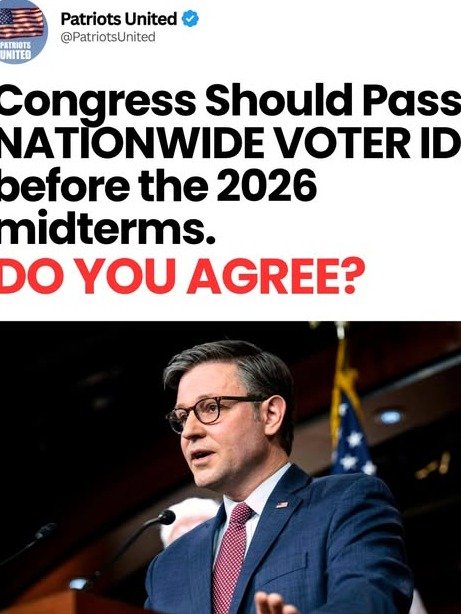
Imagine a battle raging not on a physical battlefield, but within the very fabric of our democracy – a fight over who gets to cast a ballot and how securely that vote is counted. This isn’t a hypothetical scenario; it’s the escalating reality of Voter ID laws, which have dramatically shifted from local skirmishes to a full-blown national flashpoint. The stakes? Nothing less than the integrity and accessibility of every federal election.
For years, Voter ID was largely considered a state-by-state issue, debated in legislative chambers across the country. However, recent election controversies and the pervasive distrust in electoral processes have catapulted this debate onto the national stage, transforming it into a deeply polarizing contest over the fundamental balance between election security and voter access.
From State Statute to National Showdown
The journey of Voter ID from a local ordinance to a federal battleground has been swift and contentious. What began as individual states enacting laws requiring identification at the polls has now become a central tenet of national political platforms, deeply intertwined with broader discussions about election integrity and the future of American democracy.
This elevation isn’t accidental. It reflects a growing divide in public trust and political strategy, where one side champions the necessity of robust identification to prevent fraud, while the other warns of its potential to disenfranchise eligible voters, particularly those from marginalized communities.
The Unyielding Push for Election Security
Proponents of stricter Voter ID laws argue that they are a common-sense measure essential for maintaining the integrity of the electoral process. They often highlight the importance of public confidence in election outcomes, suggesting that visible security measures like photo ID requirements can help restore faith in the system.
The argument is straightforward: just as you need identification to board a plane, cash a check, or even buy certain items, you should need it to exercise your most fundamental civic duty. This perspective emphasizes preventing voter impersonation and ensuring that only eligible citizens cast ballots, thereby safeguarding the sanctity of each vote.
“When people believe their vote doesn’t count or that the system is rigged, it erodes the very foundation of our republic. Voter ID is a basic step to secure that foundation.”
Many believe that requiring a photo ID at the polls is a minimal burden compared to the potential for fraud and the loss of public trust. They see it as a necessary deterrent, providing a clear and verifiable method to confirm a voter’s identity and eligibility.
The Alarming Shadow of Voter Suppression
Conversely, opponents of strict Voter ID laws contend that these measures disproportionately impact certain demographics, effectively suppressing the vote of millions of eligible Americans. These groups often include the elderly, low-income individuals, students, and minority communities, who may face significant hurdles in obtaining the specific forms of identification required.
For many, the practical challenges are immense. Obtaining a government-issued photo ID can require birth certificates, transportation to government offices, and fees – all of which can be significant barriers for those with limited resources or mobility. Critics argue that the purported problem of in-person voter impersonation, which Voter ID laws aim to prevent, is statistically rare to virtually non-existent, making these laws solutions in search of a problem.
- Elderly Voters: May no longer drive, lack necessary documents, or find travel to ID offices difficult.
- Low-Income Individuals: Cost of obtaining underlying documents (e.g., birth certificates) and the ID itself can be prohibitive.
- Students: Often rely on out-of-state IDs or student IDs not accepted by state laws.
- Minority Communities: Historically face systemic barriers to accessing government services and documentation.
The core concern here is not just inconvenience, but the potential for systemic disenfranchisement. If the goal is truly secure elections, opponents ask, why implement measures that create such significant barriers for legitimate voters, especially when evidence of widespread in-person fraud is so scarce?
Federal Intervention vs. State Autonomy: A Constitutional Tug-of-War
At the heart of this national debate lies a fundamental constitutional question: who ultimately governs federal elections? The U.S. Constitution grants states significant power to administer elections, but it also gives Congress the authority to “make or alter” state regulations concerning federal elections. This delicate balance is now under immense scrutiny.
Recent legislative proposals at the federal level, such as the For the People Act (H.R.1) and the John Lewis Voting Rights Advancement Act, have sought to establish national standards for voter access, including provisions that could override state Voter ID requirements or mandate certain types of IDs. This has ignited a fierce debate about federal overreach.
States’ rights advocates argue that election administration is a prerogative best left to individual states, allowing them to tailor laws to their unique populations and circumstances. They view federal mandates as an infringement on state sovereignty and an unnecessary homogenization of diverse electoral practices.
Historical Echoes and Modern Stakes
The current battle over Voter ID is not entirely new; it echoes historical struggles over voting rights in America. From poll taxes and literacy tests designed to suppress minority votes in the Jim Crow era to the ongoing debates about ballot access, the nation has a long and complex history of defining and redefining who gets to participate in democracy.
Today, the stakes feel particularly high. The deeply polarized political landscape, fueled by persistent claims of election fraud on one side and warnings of voter suppression on the other, means that every proposed change to election law is viewed through a highly partisan lens. The outcome of this debate could fundamentally reshape the electorate and the balance of power for generations.
The Political Divide: A Deeply Entrenched Standoff
Voter ID has become a clear demarcation line between the two major political parties. Republicans generally champion stricter ID laws as a cornerstone of election integrity, viewing them as essential to prevent fraud and instill confidence in results. Democrats, conversely, largely oppose such laws, framing them as thinly veiled attempts at voter suppression aimed at reducing turnout among demographics more likely to vote for their party.
This partisan divide makes compromise incredibly difficult. Each side views the other’s position not just as a policy disagreement, but as an existential threat to democratic principles. The rhetoric is often sharp, and the political will to find common ground appears to be at an all-time low, further cementing Voter ID as a national flashpoint.
What Lies Ahead: A Future of Continued Contention?
As the national conversation intensifies, several paths could emerge. Federal legislation might attempt to set national standards, leading to protracted legal battles over constitutionality. Alternatively, states may continue to diverge, creating a patchwork of election laws across the country, each with its own set of challenges and controversies.
The courts will undoubtedly play a significant role, as challenges to both state and federal election laws are likely to continue. Ultimately, the resolution of the Voter ID debate will require a careful balancing act between ensuring the security of the ballot box and guaranteeing equitable access for every eligible citizen. It’s a national conversation that demands attention, understanding, and a willingness to confront the complex realities of our democratic process.
This isn’t just about showing an ID; it’s about the very soul of our electoral system and who gets to participate in shaping the future of the nation. The battle over Voter ID is far from over, and its outcome will define American democracy for years to come.
About the Author




