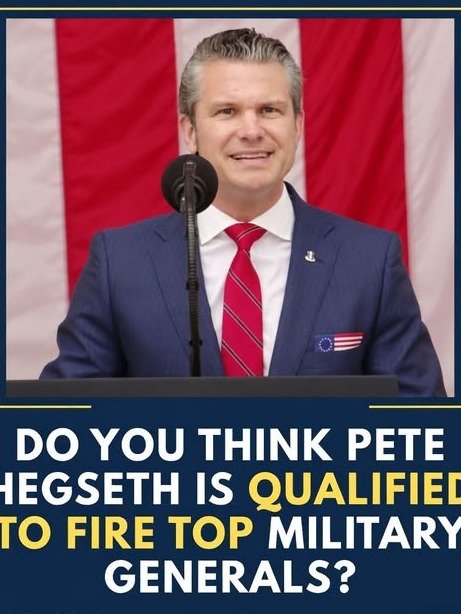
Imagine a complete paradigm shift in the very foundations of America’s defense. What if the leaders at the helm of our military were chosen not just for their rank, but for their unwavering combat experience and unyielding commitment to the front lines? This isn’t a hypothetical scenario; it’s the strategic vision unfolding under Pete Hegseth, the newly appointed Defense Secretary, whose ambitious overhaul of military leadership is poised to reshape the U.S. armed forces as we know them.
Hegseth’s directive is clear and unequivocal: to ensure the military is led by true ‘seasoned warriors.’ This isn’t just about shuffling titles; it’s a profound cultural and operational transformation aimed at re-centering the focus on combat readiness, tactical expertise, and the kind of leadership forged in the crucible of battle. The implications of this sweeping change are monumental, promising to reverberate through every echelon of command and fundamentally alter the trajectory of American military power.
A Mandate for Combat-Proven Leadership
Secretary Hegseth’s initiative stems from a deep-seated belief that the efficacy and morale of the armed forces are inextricably linked to the caliber of its leadership. He argues that modern challenges demand leaders who possess not only strategic acumen but also direct, verifiable experience in high-stakes combat environments. This philosophy marks a distinct departure from recent trends, which some critics contend have overemphasized administrative or political considerations over raw battlefield prowess.
The push for ‘seasoned warriors’ is a call back to what many see as core military virtues. It’s about prioritizing individuals who have led troops under fire, made critical decisions in the heat of battle, and understand the harsh realities of warfare firsthand. This isn’t to diminish other forms of leadership, but rather to elevate a specific type of experience that Hegseth believes is paramount for national security in an increasingly complex global landscape.
The ‘Why’ Behind the Strategic Overhaul
Why is such a dramatic overhaul deemed necessary now? Proponents of Hegseth’s strategy point to a perceived erosion of military readiness and a focus on peripheral issues that, they argue, have distracted from the core mission of defending the nation. There’s a growing sentiment that bureaucracy and political correctness have, in some instances, overshadowed meritocracy and combat effectiveness within the higher ranks.
This strategic shift is also a response to evolving geopolitical threats. From resurgent global adversaries to asymmetric warfare challenges, the demands on the U.S. military are more diverse and intense than ever before. Hegseth’s team believes that only leaders with deep combat experience can truly prepare the forces for these multifaceted challenges, making swift, decisive, and effective judgments when it matters most.
“Our nation faces unprecedented threats, and our military leaders must be prepared not just to strategize, but to fight and win. This means prioritizing those who have proven their mettle in the crucible of combat,” a spokesperson for the Defense Department stated, emphasizing the urgency of the new directive.
Defining ‘Seasoned Warriors’
What exactly does it mean to be a ‘seasoned warrior’ in this context? It’s more than just having deployed to a combat zone. It encompasses a range of critical attributes and experiences:
- Direct Combat Experience: Leadership roles in active combat operations, not just support functions.
- Proven Decision-Making Under Pressure: A track record of making sound, effective choices in high-stress, life-or-death situations.
- Troop Leadership: Demonstrated ability to inspire, train, and lead soldiers, sailors, airmen, and marines effectively in the field.
- Strategic & Tactical Acumen: The capacity to understand both the broader strategic objectives and the granular tactical realities of warfare.
- Unwavering Commitment to Mission: A primary focus on national defense and the well-being of service members above all else.
This stringent criteria aims to identify and promote individuals whose careers reflect a consistent dedication to these principles, ensuring that the top echelons of military command are populated by those who truly embody the fighting spirit of the armed forces.
The Ripple Effect: Ousting and Reshaping
The implementation of this overhaul has already begun to manifest in tangible ways, including the widely reported “ousting of Gen…” and other senior officers who, while perhaps having long and distinguished careers, may not align with Hegseth’s specific vision for ‘warrior leadership.’ This isn’t about arbitrary dismissals but a systemic re-evaluation of leadership profiles against the new, stringent criteria.
This process involves a thorough review of command structures, performance evaluations, and career trajectories. Leaders who are perceived to have drifted too far from a combat-centric focus, or whose leadership style is deemed less effective for modern warfare, are being systematically replaced. The goal is to create a more agile, combat-ready, and decisive military apparatus from the top down.
Such changes are never without controversy. Some argue that a singular focus on combat experience might overlook other crucial aspects of military leadership, such as diplomatic skills, technological expertise, or inter-agency cooperation. However, Hegseth’s proponents contend that these qualities can be cultivated or supported by a strong, combat-proven core leadership.
Impact on Morale and Readiness
The potential impact of this strategic overhaul on military morale and readiness is a topic of intense discussion. On one hand, many within the ranks, especially those with extensive combat experience, may feel validated and empowered by this shift. A clear signal that their battlefield contributions are being prioritized could boost confidence and foster a stronger sense of purpose throughout the force.
Conversely, some may view these changes with apprehension, fearing that it could lead to a less inclusive military or a devaluing of diverse skill sets. The challenge for Hegseth’s team will be to implement these changes in a way that maximizes positive impact on readiness while minimizing any potential negative effects on overall military cohesion and talent retention.
Ultimately, the success of this overhaul will be measured by its ability to enhance the U.S. military’s capacity to deter aggression, respond to crises, and defend national interests effectively. If the new leadership can demonstrate a marked improvement in strategic foresight, tactical execution, and troop welfare, Hegseth’s vision will likely be hailed as a transformative moment in American defense.
Looking Ahead: A New Era for the U.S. Military
Pete Hegseth’s strategic overhaul of military leadership represents a bold, decisive move to recalibrate the U.S. armed forces for the challenges of the 21st century. By prioritizing ‘seasoned warriors’ at every level of command, the Defense Secretary is signaling a renewed commitment to combat excellence, operational readiness, and a leadership ethos forged in the crucible of battle.
This isn’t just a personnel change; it’s a fundamental reassertion of what it means to lead America’s defenders. The coming months and years will reveal the full scope of this transformation, but one thing is clear: the U.S. military is embarking on a new chapter, one where the warrior spirit is once again at the very heart of its command.
The world watches as America’s military leadership undergoes this profound transformation, a shift intended to strengthen its core and sharpen its edge in an unpredictable global arena. This re-focused approach promises to deliver a more formidable, responsive, and ultimately, more effective fighting force for the nation.
About the Author




