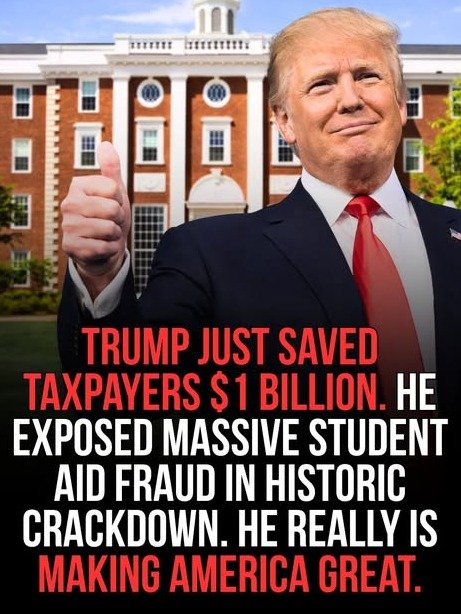
Imagine a staggering sum of money—billions of dollars, to be precise—intended to help students achieve their dreams. Now imagine that same amount being siphoned off by fraudsters, leaving taxpayers footing the bill and genuine students struggling. This isn’t a hypothetical scenario; it’s the harsh reality of widespread student aid fraud, a scandal so profound it’s striking a nerve with every taxpayer across the nation.
The outrage is palpable because this isn’t just about abstract figures or bureaucratic red tape. It’s about a concrete, colossal sum – a billion dollars – that could have funded countless scholarships, supported vital research, or eased the burden of legitimate student debt. Instead, it’s vanishing into the pockets of criminals, turning a familiar frustration into a shocking financial blow we all feel.
The Alarming Scale of Student Aid Fraud
Student aid programs, designed as a lifeline for millions, have unfortunately become a target for sophisticated criminal enterprises. From federal Pell Grants to subsidized student loans, these funds are meant to democratize education, making higher learning accessible to those who need it most. However, a significant portion is being diverted through various fraudulent schemes, creating a massive drain on public resources.
The sheer scale of this fraud is what truly ignites public anger. When reports surface of a ‘billion-dollar’ loss, it’s not just a statistic; it’s a direct assault on the trust taxpayers place in government programs. It represents countless hours of labor, hard-earned income, and collective sacrifice, all squandered by deceit.
What Exactly Is Student Aid Fraud?
Student aid fraud encompasses a wide range of deceptive practices aimed at illicitly obtaining financial assistance meant for education. These schemes often exploit vulnerabilities in the application and disbursement processes, leading to significant financial losses and undermining the integrity of the entire system.
One common form involves identity theft, where fraudsters use stolen personal information to apply for federal student aid. They might enroll in fake courses or non-existent institutions, or simply disappear with the funds once disbursed. Another prevalent method is the creation of ‘ghost students‘ or ‘phantom schools‘ – entirely fabricated entities designed solely to siphon off federal funding.
“Student aid fraud isn’t just a crime against the government; it’s a betrayal of every student who genuinely needs help and every taxpayer who contributes to these vital programs.”
Some schemes are even more elaborate, involving corrupt school officials who falsify enrollment numbers or student attendance records to inflate their federal funding. The goal is always the same: to illicitly acquire funds intended for educational purposes, diverting them for personal gain.
The Staggering Cost: A Billion-Dollar Problem
When we talk about a ‘billion dollars’ in losses, it’s crucial to understand the profound impact this has. This isn’t just a rounding error in a massive budget; it’s a significant sum that directly affects the national treasury and, by extension, every single taxpayer.
This money is drawn from the federal budget, which is funded by taxes on income, sales, and property. Every dollar lost to fraud means less money available for other critical public services, or it contributes to the national debt, which future generations will have to bear. It’s a direct transfer of wealth from honest citizens to criminals.
Who Are the Real Victims?
While the immediate financial loss falls on the government and taxpayers, the ripple effects of student aid fraud extend far beyond that. The integrity of the higher education system itself is compromised, and the most vulnerable often suffer the most.
- Taxpayers: They bear the ultimate financial burden, seeing their hard-earned money misused and wasted.
- Legitimate Students: Fraud can lead to increased scrutiny for genuine applicants, making it harder and slower for them to access the aid they desperately need. It can also deplete funds, potentially reducing the overall amount of aid available.
- Educational Institutions: Reputable schools can suffer reputational damage by association or become victims themselves if their systems are breached or exploited.
- The Public Trust: Widespread fraud erodes public confidence in government programs, making it harder to garner support for essential initiatives.
When the system designed to help people is exploited so brazenly, it fosters cynicism and resentment, making it harder for society to address genuine needs effectively.
Why Is This Happening? Unpacking the Vulnerabilities
The existence of such large-scale fraud points to systemic vulnerabilities that criminals are adept at exploiting. Several factors contribute to this pervasive problem, creating fertile ground for illicit activities.
One major issue is the sheer volume and complexity of the student aid system. Processing millions of applications and billions of dollars annually creates numerous points of entry for fraud. The reliance on self-reported information and the difficulty in verifying every single claim can be exploited.
Furthermore, the rapid expansion of online education and distance learning, while beneficial, has also opened new avenues for fraud. It can be more challenging to verify student identity, attendance, and academic progress in a fully remote setting, making ‘ghost student’ schemes easier to execute.
Real-World Implications and Case Studies
While specific ongoing investigations are often confidential, historical examples and general trends illustrate the scope. For instance, some for-profit colleges have faced accusations of encouraging students to apply for federal aid under false pretenses, knowing they wouldn’t complete their degrees but still collecting the funds.
There have also been cases where individuals set up fake online schools, complete with fabricated websites and nonexistent faculty, purely to enroll ‘students’ (often using stolen identities) and collect federal Pell Grants and loan disbursements. These operations can run for months or even years before being detected, accumulating millions in fraudulent gains.
“Every dollar stolen through student aid fraud is a dollar that cannot be used to educate a deserving student, fund a groundbreaking research project, or alleviate the crushing burden of legitimate student debt.”
These schemes are not victimless crimes. They leave a trail of financial devastation, not only for taxpayers but also for individuals whose identities are stolen, often leaving them with fraudulent debt they never incurred.
Fighting Back: Strengthening Defenses and Accountability
Recognizing the severity of the problem, various government agencies are actively working to combat student aid fraud. This includes enhanced data analytics to detect suspicious patterns, more rigorous auditing of educational institutions, and improved inter-agency cooperation.
Technological advancements are also playing a crucial role. Artificial intelligence and machine learning are being deployed to identify anomalies in application data and flag potential fraud earlier in the process. Increased investment in cybersecurity measures helps protect sensitive student information from identity thieves.
Furthermore, legislative efforts are underway to close loopholes and strengthen oversight mechanisms within federal student aid programs. The goal is to create a more robust and resilient system that is harder for fraudsters to penetrate.
What You Can Do: Vigilance and Reporting
Combating student aid fraud isn’t solely the responsibility of government agencies; it requires collective vigilance. As a taxpayer, a student, or a parent, you have a role to play in protecting these vital resources.
- Be Informed: Understand how student aid programs work and what legitimate applications entail.
- Protect Your Identity: Safeguard your personal information, especially Social Security numbers and financial details. Be wary of unsolicited requests for this information.
- Report Suspicious Activity: If you encounter any suspicious offers for ‘free money’ for college, or if you suspect fraudulent activity related to student aid, report it immediately to the appropriate authorities, such as the Department of Education’s Office of Inspector General.
- Advocate for Oversight: Support policies and initiatives that promote greater transparency and accountability in federal spending and student aid programs.
The Imperative for Change and Trust
The ‘billion-dollar betrayal’ of student aid fraud is a stark reminder that even the most well-intentioned programs can be exploited. The frustration of taxpayers seeing their money wasted is entirely justified, especially when many are grappling with their own financial challenges or the burden of legitimate student loans.
It is imperative that we not only recover these lost funds but also implement robust preventative measures to ensure such a colossal waste never happens again. By working together, we can protect the integrity of student aid, ensure it reaches those who truly need it, and restore public trust in a system designed to build a brighter future for all.
About the Author




