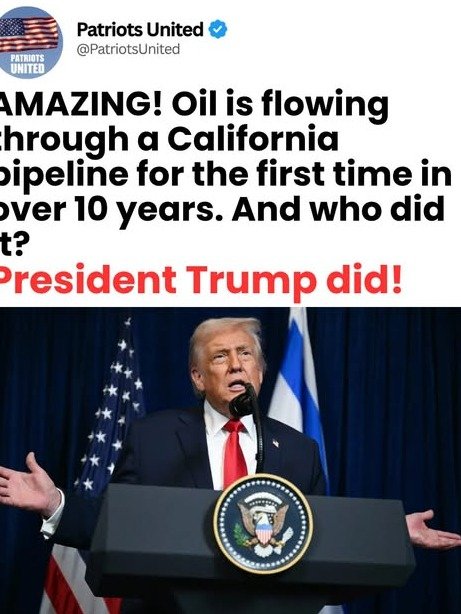
A seismic shift just hit the energy landscape, and it’s sending shockwaves across California and beyond. Former President Donald Trump has made an unprecedented move, invoking the powerful Defense Production Act (DPA) to mandate the immediate reactivation of California’s long-dormant Santa Ynez pipeline. This isn’t just about oil; it’s a high-stakes play in an energy emergency that has been quietly brewing for nearly a decade.
For years, environmental concerns and regulatory hurdles kept this vital artery offline, leaving California vulnerable. Now, with a single executive order, Trump has cut through the red tape, forcing a resolution that promises to reshape the state’s energy future. But what does this mean for consumers, the environment, and the delicate balance of federal and state power? Prepare for a deep dive into an unfolding drama that could define the next chapter of America’s energy independence.
The Sleeping Giant Awakens: Understanding the Santa Ynez Pipeline
The Santa Ynez Unit (SYU) pipeline system, a critical piece of infrastructure, has been a ghost in California’s energy grid for what feels like an eternity. Located in Santa Barbara County, this pipeline is designed to transport crude oil from offshore platforms to onshore processing facilities. Its operational capacity is significant, playing a crucial role in bringing domestically sourced energy to market.
Its shutdown, which has now stretched for roughly a decade, created a massive void in the state’s energy supply chain. This wasn’t merely an inconvenience; it forced California to rely more heavily on imported oil, often from less environmentally regulated sources, and complicated the logistics for local producers. The economic ripple effects have been substantial, impacting everything from refinery operations to local employment.
A Decade of Dormancy: Why the Pipeline Went Offline
The story of the Santa Ynez pipeline’s shutdown is complex, rooted in a tragic environmental incident. In May 2015, a rupture occurred in the Plains All American Pipeline, Line 901, near Refugio State Beach. This spill released thousands of barrels of crude oil into the Pacific Ocean, causing widespread ecological damage and sparking immense public outrage.
While the Santa Ynez pipeline itself wasn’t directly responsible for the spill, it was connected to the broader infrastructure operated by Plains All American. Following the disaster, regulatory bodies tightened oversight, and the companies involved faced immense pressure and legal challenges. The pipeline system, including the Santa Ynez section, was subsequently taken offline for extensive inspections, repairs, and a lengthy re-permitting process that became mired in bureaucratic and environmental opposition.
“The Refugio oil spill was a wake-up call, highlighting the critical need for robust infrastructure and stringent safety protocols. But the prolonged shutdown of vital arteries like Santa Ynez also created an unintended energy crisis, forcing us to weigh environmental protection against energy security,” stated a former energy department official, reflecting on the historical context.
Trump’s Bold Stroke: Invoking the Defense Production Act
The invocation of the Defense Production Act (DPA) is a truly extraordinary measure, typically reserved for times of national crisis or war. Enacted in 1950 during the Korean War, the DPA grants the President sweeping powers to direct private companies to prioritize and accept contracts for materials and services deemed necessary for national defense. In this context, “national defense” can be broadly interpreted to include national security and economic stability, particularly concerning critical infrastructure.
Trump’s order signifies a clear declaration that California’s energy situation, exacerbated by the pipeline’s shutdown, has reached a point of national emergency. By using the DPA, he is essentially overriding state-level regulatory hurdles and local opposition, asserting federal authority to ensure the flow of essential energy resources. This move bypasses the lengthy permitting processes that have kept the pipeline offline, forcing its rapid return to service.
- Emergency Powers: The DPA allows the President to compel businesses to produce materials or services critical for national security.
- Energy Security: The order frames California’s reliance on imported oil and its energy constraints as a threat to national security.
- Federal Override: It provides a mechanism to bypass state and local regulatory roadblocks that have prevented the pipeline’s restart.
The Energy Crisis in California: A Looming Threat
California, often seen as a leader in renewable energy, paradoxically faces significant energy challenges. Its aggressive climate policies have led to the phasing out of traditional power sources, while the transition to renewables struggles to keep pace with demand. This imbalance, combined with the shutdown of key infrastructure like the Santa Ynez pipeline, has created a precarious situation.
The state’s reliance on imported oil, often transported by less efficient and potentially more hazardous methods like rail or truck, carries both economic and environmental costs. Furthermore, the limited domestic supply drives up prices at the pump for consumers and increases operational costs for businesses, impacting the overall economy. The pipeline’s absence has been a silent drain on the state’s financial and energy resources.
Economic Impact and National Security Implications
Reactivating the Santa Ynez pipeline could bring substantial economic benefits. It would reduce transportation costs for crude oil, potentially lowering gas prices for consumers in California. It would also support local jobs in the energy sector, from pipeline maintenance to refinery operations. For domestic oil producers, it offers a more efficient and cost-effective route to market, encouraging local production rather than discouraging it.
From a national security perspective, reducing reliance on foreign oil sources is always a strategic advantage. It lessens vulnerability to geopolitical instability and supply chain disruptions. By bolstering domestic energy infrastructure, the United States strengthens its energy independence, a goal that has been consistently emphasized across different administrations, albeit with varying approaches.
Environmental Concerns vs. Energy Pragmatism
The decision to restart the pipeline will undoubtedly reignite fierce debate between environmental advocates and those prioritizing energy supply. Environmental groups will raise legitimate concerns about the risks of oil spills, the carbon footprint of fossil fuels, and the broader impact on climate change. They argue that reactivating such infrastructure contradicts California’s ambitious clean energy goals.
However, proponents of the restart argue that while the long-term goal is renewable energy, the immediate reality demands a pragmatic approach to meet current energy needs. They contend that transporting oil via pipeline is generally safer and more environmentally sound than alternative methods like rail or truck, which have higher accident rates and greater emissions per barrel. The debate highlights the complex tension between immediate energy demands and long-term environmental aspirations.
The Road Ahead: Challenges and Opportunities
While the DPA order is a powerful directive, the actual restart of the Santa Ynez pipeline won’t be without its challenges. There will likely be legal battles, protests, and significant logistical hurdles. The pipeline has been dormant for a long time, requiring extensive re-certification, safety checks, and potentially upgrades to meet modern standards.
However, the opportunity is significant. A functioning Santa Ynez pipeline could provide a reliable, efficient, and potentially safer means of delivering essential energy resources to California. It could alleviate some of the immediate pressures on the state’s energy grid, offer a buffer during the transition to renewables, and contribute to a more robust national energy infrastructure. The coming months will reveal whether this bold move truly becomes a game-changer for California and the nation’s energy future.
The Future of Federal vs. State Power in Energy
Trump’s DPA order also sets a powerful precedent regarding the extent of federal authority over state-level energy policy. While states traditionally hold significant sway over infrastructure projects within their borders, the DPA allows the federal government to intervene when national security or defense is deemed at risk. This could lead to a broader discussion about the balance of power, especially in areas where state environmental policies clash with federal energy objectives.
This move underscores a recurring theme in American politics: the tension between local control and national interests. As the nation grapples with climate change, energy transitions, and economic stability, the question of who ultimately decides the fate of critical infrastructure will continue to be a central point of contention. The Santa Ynez pipeline saga is far from over; it’s just entered a dramatic new chapter.
About the Author




