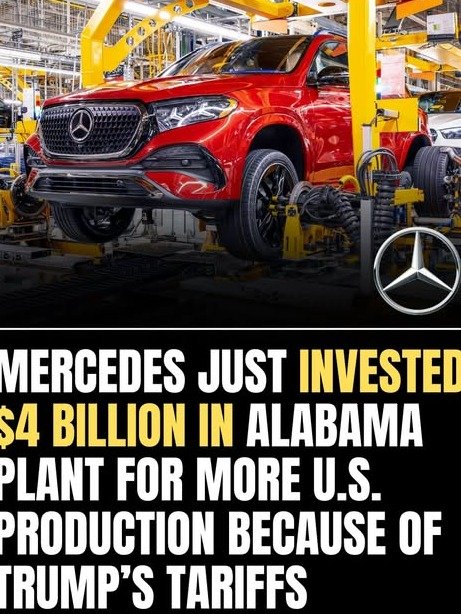
Is the era of cheap imported goods rapidly coming to an end? For decades, global manufacturing prioritized cost-cutting and offshore production, but a seismic shift is now underway, and luxury automotive giant Mercedes-Benz is at the forefront of this monumental change. This isn’t just another corporate investment; it’s a multi-billion dollar declaration that America is back in the manufacturing game, and the implications for our economy, our jobs, and even our wallets are profound.
Mercedes-Benz is channeling an unprecedented sum of capital into its Alabama operations, a strategic move that signals a fundamental adjustment to a new global trade reality. As the cost of importing goods, especially vehicles, continues to climb, major manufacturers are being forced to rethink their entire supply chains and production strategies. This isn’t just about avoiding tariffs; it’s about building resilience, securing future growth, and meeting a growing demand for products stamped with ‘Made in America’.
The Shifting Tides of Global Trade
For decades, the global economy operated on the principle of hyper-globalization, where companies sought the lowest labor costs and most lenient regulations, often leading to complex, far-flung supply chains. This model, while efficient in many ways, proved vulnerable to geopolitical tensions, natural disasters, and global pandemics, which exposed critical weaknesses and led to unprecedented disruptions.
The COVID-19 pandemic, in particular, served as a harsh wake-up call, highlighting how fragile these extended supply lines truly were. Everything from microchips to medical supplies faced severe bottlenecks, prompting a global reassessment of where and how goods are produced. This vulnerability, coupled with evolving trade policies and the rising cost of international shipping, has created an undeniable impetus for companies to bring production closer to their primary markets.
This ‘new trade reality’ isn’t just a fleeting trend; it’s a strategic imperative. Governments worldwide are increasingly emphasizing domestic production, offering incentives, and implementing policies that favor local manufacturing. For consumers, this translates into a renewed focus on product origin, driven by a desire for quality, reliability, and support for local economies. The era of purely price-driven offshore manufacturing is giving way to a more balanced approach that prioritizes security, speed, and sustainability.
Mercedes-Benz’s Bold Move in Alabama
Mercedes-Benz’s substantial investment in its Tuscaloosa, Alabama plant is a textbook example of this strategic pivot. While specific figures can fluctuate with ongoing projects, the commitment amounts to billions of dollars, earmarked for significant expansions and technological upgrades. This isn’t merely about tweaking existing lines; it’s about fundamentally transforming their US production capabilities, particularly in the burgeoning electric vehicle (EV) sector.
The Tuscaloosa plant, already a cornerstone of Mercedes-Benz’s global SUV production, is being retooled and expanded to become a hub for EV manufacturing. This includes not only the assembly of electric vehicles but also the crucial production of battery systems, a vital component of the EV ecosystem. This holistic approach ensures greater control over the supply chain, reduces reliance on overseas imports for critical components, and accelerates the brand’s transition to an all-electric future.
This massive infusion of capital is a clear indicator that Mercedes-Benz views its US operations not just as an assembly point for the American market, but as a crucial strategic asset within its global production network. By localizing more of its production, particularly for high-demand electric models like the EQS SUV and EQE SUV, the company aims to mitigate risks associated with international trade, enhance operational efficiency, and better serve its North American customer base.
Why Alabama? A Strategic Choice
The decision by Mercedes-Benz to deepen its roots in Alabama is no accident; it’s the result of a carefully considered strategic alignment. Alabama has cultivated an incredibly business-friendly environment, offering competitive incentives, a robust infrastructure, and a dedicated, skilled workforce. The state has long been a magnet for automotive manufacturing, earning its moniker as the ‘Detroit of the South,’ and Mercedes-Benz was one of the first luxury automakers to establish a significant presence there, dating back to 1997.
The existing ecosystem of suppliers, logistics networks, and specialized talent in Alabama provides a distinct advantage. Companies looking to reshore or nearshore operations seek locations that can offer more than just cheap land; they need a comprehensive support system. Alabama’s strong vocational training programs and partnerships with local educational institutions ensure a steady pipeline of skilled workers, essential for advanced manufacturing processes, especially in the rapidly evolving EV sector.
Furthermore, the logistical advantages of Alabama are significant. Its central location in the Southeastern US, with access to major interstates, rail lines, and port facilities, facilitates efficient distribution of vehicles and components across North America. This blend of economic incentives, a ready workforce, and strategic geography makes Alabama an irresistible choice for manufacturers looking to establish a resilient and competitive production base.
The ‘Made in America’ Imperative and Its Impact
The push for ‘Made in America’ is more than just a patriotic slogan; it’s a powerful economic and political force. Consumers are increasingly valuing products manufactured domestically, often perceiving them as higher quality and more reliable. This sentiment is amplified by government policies, such as the Inflation Reduction Act, which offers significant tax credits and incentives for electric vehicles assembled in North America and using domestically sourced batteries and components.
For Mercedes-Benz, aligning with the ‘Made in America’ ethos allows them to tap into these incentives, making their EVs more competitive and appealing to US buyers. More importantly, it strengthens their brand image by demonstrating a commitment to the American economy and workforce. This shift helps foster a stronger connection with consumers who appreciate companies that invest in local communities and create domestic jobs.
The economic ripple effect of such an investment is immense. Thousands of direct jobs are created at the Mercedes-Benz plant itself, ranging from production line workers to engineers and management staff. Beyond that, countless indirect jobs are generated across the supply chain, from raw material extraction and component manufacturing to logistics and service industries. Local businesses thrive as the workforce grows, spending more on housing, retail, and services, injecting vitality into the regional economy.
A Broader Trend: Reshoring and Nearshoring
Mercedes-Benz is not alone in this strategic reorientation. The phenomenon of ‘reshoring’ (bringing manufacturing back to the home country) and ‘nearshoring’ (moving production to nearby countries) is gaining significant traction across various industries. Companies like General Motors, Ford, and even foreign manufacturers like Toyota and Hyundai have also made substantial investments in expanding their US manufacturing footprints, particularly in the EV space.
This trend is driven by a confluence of factors: the desire for greater supply chain control, the need to reduce lead times, rising labor costs in traditionally low-cost manufacturing hubs, and geopolitical uncertainties. The strategic importance of having critical production capabilities close to home has never been clearer. It provides greater agility in responding to market changes, reduces transportation costs and carbon footprints, and minimizes exposure to international trade disputes.
While the initial capital investment for reshoring can be substantial, the long-term benefits in terms of supply chain stability, reduced risk, and enhanced brand perception often outweigh the costs. This strategic realignment is fundamentally reshaping the global manufacturing landscape, creating a more distributed and resilient system where key production centers are closer to their end markets.
Challenges and Opportunities Ahead
While the benefits of this ‘Made in America’ push are clear, the transition is not without its challenges. Companies must navigate complex regulatory environments, manage significant upfront capital expenditures, and ensure they have access to a sufficiently skilled workforce. The competition for talent, especially in specialized areas like EV battery production and advanced robotics, is intensifying.
However, the opportunities presented by this shift are even greater. For the United States, it means a revitalization of its manufacturing sector, leading to higher-paying jobs, technological advancements, and increased economic security. For companies like Mercedes-Benz, it means a more robust and responsive supply chain, a stronger connection with their customer base, and a competitive edge in a rapidly evolving global market.
The investment by Mercedes-Benz in Alabama is more than just a business decision; it’s a powerful statement about the future of manufacturing. It underscores a fundamental re-evaluation of global trade, signaling a new era where resilience, domestic production, and strategic localization are paramount. As imported vehicles become more expensive and the demand for American-made goods grows, this multi-billion dollar bet on Alabama could very well be a blueprint for a nationwide manufacturing renaissance that benefits us all.
About the Author




