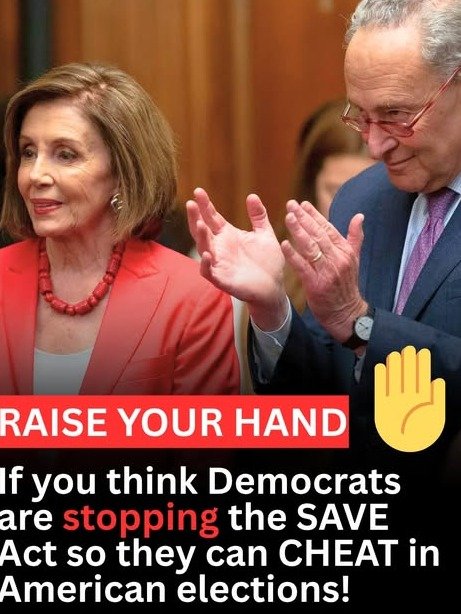
A seismic shift is underway in Washington, D.C., and it could fundamentally alter how every American participates in our democracy. At the heart of this brewing storm is the SAVE America Act, a legislative proposal that has rapidly escalated into one of the most contentious battles on Capitol Hill. Why? Because it demands a dramatic change to the very foundation of voter registration: requiring explicit proof of U.S. citizenship to register for federal elections.
Imagine a world where your right to cast a ballot, a cornerstone of American identity, suddenly comes with an additional hurdle. This isn’t just political theater; it’s a profound debate about election integrity, voter access, and the future of our democratic process. The implications are vast, touching every eligible voter and sparking fierce arguments from both sides of the political spectrum.
The Core of the Controversy: Proof of Citizenship
The SAVE America Act isn’t a minor tweak to election law; it’s a sweeping reform designed to ensure that only U.S. citizens are able to register and vote in federal elections. While the concept might seem straightforward – after all, only citizens are legally permitted to vote – the implementation and necessity of such a measure are anything but.
Currently, under the National Voter Registration Act of 1993, commonly known as the ‘Motor Voter’ law, individuals can register to vote when applying for or renewing a driver’s license. They typically attest to their citizenship under penalty of perjury, but often are not required to provide specific documents proving their citizenship at the time of registration. This proposed act aims to change that.
Understanding the SAVE America Act’s Mandate
The central provision of the SAVE America Act would impose a nationwide requirement for individuals to present documentary evidence of U.S. citizenship when registering to vote in federal elections. This could include documents such as a birth certificate, a U.S. passport, naturalization papers, or a certificate of citizenship.
Proponents argue this is a vital step to safeguard the integrity of the ballot box. They contend that without such a requirement, there’s a risk, however small, of non-citizens unlawfully participating in elections, thereby diluting the votes of legitimate citizens and eroding public trust in election outcomes. For them, the act is a common-sense measure to protect the sanctity of our electoral system.
“The right to vote is sacred, and it belongs exclusively to American citizens. The SAVE America Act simply ensures that our voter rolls reflect that fundamental truth, restoring faith in our elections for every lawful voter.” – A proponent’s view.
Arguments for Election Integrity and Confidence
Those who champion the SAVE America Act often highlight the importance of election integrity as their primary motivation. They believe that even a perception of non-citizen voting can undermine public confidence in election results. By requiring concrete proof, the act aims to eliminate any doubt about who is eligible to cast a ballot.
Preventing Illegal Voting: The core argument is to prevent non-citizens from registering and voting, whether intentionally or unintentionally.
Restoring Public Trust: Supporters believe that stricter verification processes will bolster public confidence in the accuracy and fairness of election results.
Upholding Constitutional Principles: They emphasize that the U.S. Constitution grants voting rights to citizens, and the act merely reinforces this foundational principle.
Securing Voter Rolls: It’s seen as a mechanism to clean up and secure voter registration databases, ensuring that only eligible individuals are listed.
For many, the act is not about making voting harder, but about making it more secure and trustworthy. They argue that if you need to show ID for many everyday activities, proving citizenship for the most important civic duty should be a straightforward expectation.
The Fierce Opposition: Concerns Over Voter Suppression
On the other side of the debate, critics of the SAVE America Act raise serious alarms about voter suppression and the potential to disenfranchise millions of eligible citizens. They argue that while the intention might be to secure elections, the practical effect would be to create significant barriers for lawful voters, particularly those from marginalized communities.
Many Americans, especially older citizens, those in low-income brackets, or individuals who have moved frequently, may not readily possess the required documents like birth certificates or passports. Obtaining these documents can be time-consuming, costly, and difficult, especially for those without easy access to government offices or digital records.
“This act is a solution in search of a problem, designed to create unnecessary hurdles for eligible voters. It’s a thinly veiled attempt at voter suppression that will disproportionately impact minorities, the elderly, and young people trying to exercise their constitutional right.” – A critic’s perspective.
Potential Barriers and Disproportionate Impact
The concerns from opponents are multi-faceted:
Administrative Burden: The process of obtaining birth certificates or other proof can be challenging. Fees, travel to county or state offices, and lengthy waiting periods could deter eligible voters.
Disproportionate Impact: Critics argue that certain demographic groups are less likely to have easy access to these documents. This includes elderly citizens born at home without formal records, Native Americans, low-income individuals who cannot afford document fees, and those who have faced systemic barriers in the past.
Risk of Disenfranchisement: Even if a citizen is eligible, failing to possess or produce the required documents could prevent them from registering, effectively disenfranchising them.
“Solution in Search of a Problem”: Opponents contend that instances of non-citizen voting are exceedingly rare and not widespread enough to warrant such a drastic, nationwide measure. They argue that existing laws already make non-citizen voting illegal, with severe penalties.
Cost and Logistics: Implementing such a system nationwide would entail significant costs for states, requiring new administrative processes, training, and potential legal battles.
The argument here is that the cure is worse than the perceived disease, and that protecting the integrity of the vote should not come at the expense of making it harder for legitimate citizens to participate.
The Political Battleground: A Partisan Divide
Unsurprisingly, the SAVE America Act has become a flashpoint along existing partisan lines. Generally, Republican lawmakers and conservative organizations are strong proponents, viewing it as essential for election security and trust. They often cite concerns about vulnerabilities in current registration systems.
Conversely, Democratic lawmakers and civil rights advocacy groups overwhelmingly oppose the act. They frame it as a dangerous attack on voting rights, a form of voter suppression, and an unnecessary burden on eligible voters. The debate often reflects broader ideological differences on the balance between access and security in elections.
This deep divide means the path for the SAVE America Act through Congress is fraught with challenges. With a closely split Congress, any legislation deemed this controversial faces an uphill battle, often becoming a political football in the broader culture wars.
Historical Context and Legal Precedents
The debate over proof of citizenship for voting is not entirely new. Some states have, in the past, attempted to implement similar requirements, often leading to protracted legal challenges. Courts have sometimes struck down these laws, citing conflicts with federal statutes like the National Voter Registration Act, which aims to simplify voter registration.
The Supreme Court, in cases like Arizona v. Inter Tribal Council of Arizona (2013), has weighed in on the interplay between state and federal election laws regarding proof of citizenship. While the Court affirmed Congress’s power to regulate federal elections, it also highlighted the complexities of state-level implementation and potential conflicts with federal mandates.
Any federal law like the SAVE America Act would undoubtedly face immediate and intense legal scrutiny, potentially leading to years of litigation that could delay or even invalidate its implementation.
What’s Next for the SAVE America Act?
As the SAVE America Act continues its journey through the legislative process, it remains a central topic of discussion and contention. Its future is uncertain, entangled in the intricate web of congressional negotiation, public opinion, and the ever-present threat of legal challenges.
The outcome of this legislative fight will have profound implications for future elections, potentially reshaping voter registration processes across all 50 states. It will test the boundaries of federal and state powers, redefine the balance between election security and voter access, and ultimately impact millions of American citizens.
Your Voice Matters
The debate surrounding the SAVE America Act is more than just a political skirmish; it’s a critical discussion about the fundamental right to vote and the integrity of our democratic institutions. Whether you support its intentions or fear its consequences, understanding the nuances of this legislation is paramount.
As this election flashpoint intensifies, staying informed and engaging in respectful dialogue about these crucial issues is essential. The future of American elections, and who gets to participate in them, hangs in the balance.