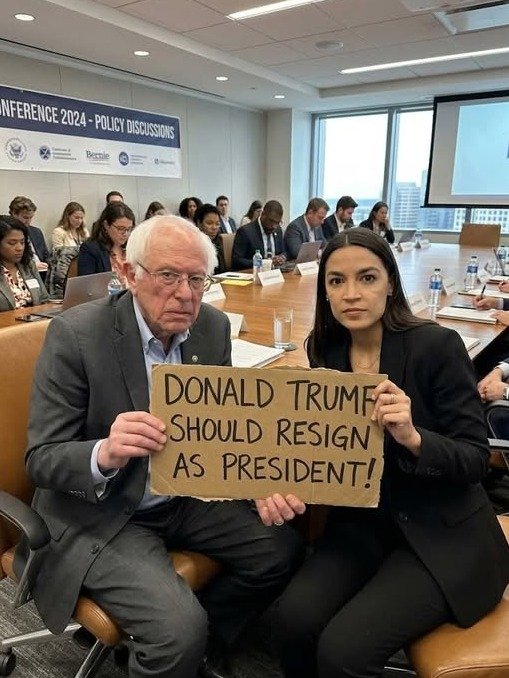
“It Is Morally Outrageous!” That was the thunderous declaration from Washington, D.C., as Senator Bernie Sanders and Representative Alexandria Ocasio-Cortez launched an explosive assault on America’s profit-driven healthcare system. In a fiery joint appearance, these progressive champions laid bare the profound injustices and systemic failures leaving millions vulnerable and without essential care.
Their powerful message was clear: the current system is a moral abomination. They delivered a searing indictment of a healthcare landscape where access to life-saving treatment depends on bank account size, not illness severity. This is about fundamental human rights.
The Unfolding Crisis: A System on the Brink
Americans navigate a labyrinthine healthcare system fraught with exorbitant costs, confusing insurance policies, and the constant fear of medical bankruptcy. Sanders and Ocasio-Cortez presented these as symptoms of a deeply corrupt structure, arguing a wealthy nation like the U.S. has no excuse for failing to guarantee healthcare as a universal right.
Their joint address was a rallying cry for systemic change. The duo detailed how the current model, driven by profit from insurance and pharmaceutical giants, actively harms patients and stifles public health innovation. They painted a vivid picture of a system failing on every metric for a developed nation.
Senator Sanders’ Enduring Crusade for Healthcare Justice
Senator Bernie Sanders, a lifelong advocate for a single-payer healthcare system, brought decades of experience and unwavering conviction. He passionately reiterated his core belief: healthcare is a human right, not a privilege, and the U.S. stands as an outlier among industrialized nations.
“It is morally outrageous that in the richest country in the history of the world, millions of people cannot afford to go to a doctor when they are sick,” Sanders declared. “It is morally outrageous that people are dying because they cannot afford the prescription drugs they need. This is an issue of life and death, and we must stand up to the powerful special interests who profit from human suffering.”
He emphasized medical debt’s devastating impact, driving countless families into bankruptcy annually. Sanders highlighted the absurdity of a system where sudden illness can wipe out savings, leaving families destitute. His message resonated with a public frustrated by healthcare’s financial burden.
Representative Ocasio-Cortez: A New Generation’s Fierce Voice
Representative Alexandria Ocasio-Cortez brought her unique perspective, articulating how the current system exacerbates inequalities. It disproportionately affects communities of color, low-income individuals, and rural areas.
AOC highlighted racial disparities in healthcare access and outcomes, arguing the profit-driven model perpetuates cycles of poverty and illness. She connected systemic injustice to the struggle for basic medical care with compelling expertise.
“When we talk about a morally outrageous system, we’re talking about a system where a child’s zip code often determines their health outcomes,” Ocasio-Cortez stated. “We’re talking about a system where a Black woman is three times more likely to die from pregnancy-related causes than a white woman. This isn’t just an economic crisis; it’s a racial justice crisis, and it demands immediate, radical change.”
Her arguments underscored the intersectional nature of healthcare access, linking it to broader economic fairness. She argued true healthcare reform must address these underlying systemic biases, ensuring everyone has an equal opportunity to live a healthy life.
The Crushing Weight of Medical Debt and Preventable Suffering
The joint appearance detailed the harrowing consequences: medical bills are the leading cause of personal bankruptcy in the U.S., affecting over half a million families annually. Even with insurance, deductibles, co-pays, and out-of-network charges quickly accumulate into insurmountable debt.
Beyond financial ruin, they underscored preventable suffering when people delay or forgo treatment due to cost. Individuals skip vital tests, ration insulin, or avoid emergency room visits—decisions leading to more severe, and expensive, health crises.
- Skyrocketing Premiums: Families struggle to afford monthly payments for high-deductible coverage.
- Surprise Billing: Patients receive unexpected, exorbitant bills.
- Drug Price Gouging: Essential medications are priced out of reach.
- Limited Access: Underserved communities lack sufficient doctors and facilities.
These are not isolated incidents but systemic failures built into a system treating health as a commodity. The personal anecdotes painted a grim reality for millions.
Profit Over Patients: Exposing the Insurance and Pharmaceutical Industries
At the heart of their “morally outrageous” claim was a direct accusation against the powerful lobbies of the insurance and pharmaceutical industries. Both Sanders and Ocasio-Cortez argued these entities prioritize shareholder profits over patient well-being, actively campaigning against reforms.
“When you have an industry making billions in profits while people are dying because they can’t afford insulin, that is not a free market; that is a rigged system,” Sanders asserted. “These companies spend millions lobbying Congress to maintain the status quo, to keep their profits soaring while ordinary Americans suffer.”
AOC added that this profit-driven model creates perverse incentives. Preventing illness might reduce profits, leading to a system that benefits more from sickness than from wellness. This fundamental conflict of interest, they argued, explains why incremental reforms consistently fall short.
The Bold Vision: A Call for Medicare for All
The solution, championed by both, is unequivocal: a comprehensive, single-payer Medicare for All system. This transformative proposal would dismantle the current fragmented, profit-driven model, replacing it with a universal public health insurance program covering all medically necessary services.
Under Medicare for All, private insurance would be largely eliminated, and healthcare decisions made by patients and their doctors. The system would be funded through progressive taxation, ensuring everyone contributes their fair share, and no one is denied care due to inability to pay.
- Universal Coverage: Every American would have comprehensive health insurance.
- No Premiums, Deductibles, or Co-pays: Eliminating financial barriers.
- Patient Choice of Doctors: Patients would retain provider choice.
- Cost Savings: Administrative savings and negotiating power for drug prices.
- Focus on Prevention: Shifting from reactive treatment to proactive wellness.
This vision, they argued, is not radical but essential—a common-sense approach adopted by virtually every other major industrialized nation, proving its feasibility and effectiveness.
Addressing the Skeptics: Feasibility and Funding
Anticipating criticisms, Sanders and Ocasio-Cortez addressed concerns about Medicare for All’s cost and feasibility. They contended that while upfront government spending would increase, overall national healthcare expenditure would actually decrease due to administrative efficiencies, bulk purchasing, and elimination of insurance profits.
“We are already paying for this system, and we’re getting far less for our money,” AOC explained. “When you factor in premiums, deductibles, co-pays, and out-of-pocket costs, Americans are already paying more per capita for worse outcomes. Medicare for All is an investment in our collective health and economic security.”
They framed the debate not as an expense, but as an investment in a healthier, more productive society, freeing individuals and businesses from crushing healthcare burdens.
Real Stories, Real Consequences: The Human Toll
Throughout their impassioned address, the progressive leaders underscored the human toll. They spoke of families forced to choose between groceries and medication, or parents sacrificing their health for their children’s care. The profound emotional and physical stress of medical uncertainty impacts millions.
Imagine a young teacher diagnosed with a chronic illness facing a lifetime of debt, or an elderly couple losing their home for a catastrophic health event. These are not abstract fears; they are the lived realities for countless Americans. Sanders and Ocasio-Cortez argued these are systemic failures, products of a policy choice prioritizing market forces over human dignity.
A Powerful Call to Action: Mobilizing for Justice
Their joint appearance culminated in a powerful call to action, urging Americans to demand the healthcare system they deserve. They emphasized that true change will not come from Washington alone, but from a grassroots movement of ordinary people organizing, advocating, and voting for leaders committed to universal healthcare.
“This is a fight for the soul of our nation,” Sanders proclaimed. “We will not stand idly by while our neighbors go bankrupt or die because they can’t afford healthcare. We will organize, we will mobilize, and we will win the fight for Medicare for All!”
AOC echoed this, stressing sustained engagement and rejecting the notion that fundamental change is impossible. She reminded the audience that every major social advancement in American history was won through persistent public pressure.
The Road Ahead: A Defining Battle for America’s Health
As the echoes of their powerful statements subsided, the message was undeniable: the debate over America’s healthcare system is far from over. Bernie Sanders and Alexandria Ocasio-Cortez have reignited a crucial national conversation, forcing universal healthcare back into the spotlight with renewed urgency and moral clarity.
Their “explosive assault” was not just a critique; it was a blueprint for a future where health is a right, not a privilege. The path forward will be challenging, marked by fierce political battles. However, their joint appearance served as a potent reminder that the fight for a truly equitable healthcare system continues, driven by the conviction that no American should ever face financial ruin or preventable suffering simply because they got sick.
About the Author




