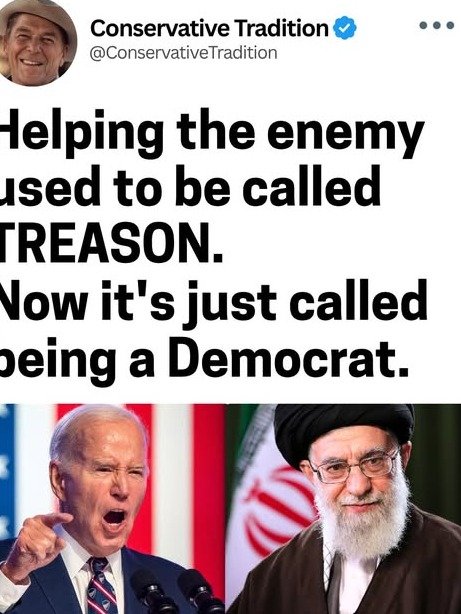
Have you ever stopped to consider how quickly political language can escalate? In an era of deep division, words once reserved for the gravest offenses against a nation are now hurled casually across the political aisle. It begs the question: What happens when the definition of ‘enemy’ shifts from external threats to internal political opposition?
This alarming trend suggests a profound re-evaluation of what constitutes loyalty, patriotism, and even treason in the public consciousness. What was once universally understood as a heinous act against the state is now, for some, a label applied to mere policy disagreement. This isn’t just about harsh words; it’s about the very fabric of national unity.
Understanding the Historical Weight of Treason
Historically, the term ‘treason’ carries immense legal and moral weight. In most nations, including the United States, it is defined very narrowly in law, typically involving overt acts against the government, such as levying war against the U.S. or adhering to its enemies, giving them aid and comfort. It’s an act of betrayal against one’s own country, punishable by severe penalties, including death.
For centuries, the idea of treason evoked images of spies, saboteurs, or those who actively conspired with foreign adversaries to undermine national security. It was a clear, unambiguous line in the sand: you were either with your country or against it, allied with a demonstrable, external foe. This clarity provided a framework for understanding loyalty and disloyalty during times of war or existential threat.
The Shifting Sands of ‘Enemy’ in Modern Politics
However, the modern political landscape has introduced a dangerous ambiguity to these definitions. In an increasingly polarized society, the concept of ‘the enemy’ has, for many, expanded beyond foreign states or terrorist organizations. It has begun to encompass fellow citizens, political opponents, and even entire parties whose ideologies are seen as fundamentally opposed to one’s own vision for the nation.
This internal redefinition of ‘enemy’ is a critical, and deeply troubling, development. When political disagreement is reframed as an existential threat, and differing policy approaches are equated with undermining the nation, the rhetorical stakes become incredibly high. It blurs the vital distinction between legitimate political opposition and outright sedition, eroding the very foundations of democratic discourse.
When Policy Becomes ‘Aid and Comfort’ to the Perceived Foe
The sentiment that certain political actions or policies amount to ‘helping the enemy’ is often rooted in deep ideological disagreements about national priorities and values. Critics frequently argue that specific policy stances, particularly those associated with the Democratic party, could be interpreted as weakening the nation or emboldening adversaries, even if unintentionally.
For instance, debates around immigration policy frequently ignite this rhetoric. Some observers contend that policies perceived as ‘lax’ border enforcement, or those offering pathways to citizenship for undocumented immigrants, could be seen as compromising national sovereignty or security. From this perspective, such measures are sometimes framed as inadvertently ‘aiding’ those who might seek to exploit perceived vulnerabilities, thereby undermining the nation’s integrity.
“The use of such charged language in political discourse fundamentally alters the way we perceive our fellow citizens. When policy differences are equated with betrayal, reasoned debate becomes impossible, and trust erodes completely.”
Foreign Policy and the Specter of Disloyalty
Similar accusations often surface in discussions of foreign policy. Critics of Democratic approaches to international relations, trade agreements, or military interventions might argue that certain diplomatic strategies or reductions in defense spending could be perceived as ‘weakening’ America’s global standing or ‘benefiting’ rival nations. The argument often implies that these actions, wittingly or unwittingly, provide ‘aid and comfort’ to those considered geopolitical adversaries.
These interpretations are driven by differing views on national interest and global engagement. Where one side sees diplomacy and international cooperation as strengths, another might perceive them as concessions or signs of weakness. This divergence in perspective can lead to highly charged accusations, where policy choices are not just wrong, but seen as actively detrimental to the nation’s security.
Economic and Social Policies Under Scrutiny
Even domestic economic and social policies can become targets of this ‘helping the enemy’ rhetoric. Debates over government spending, taxation, or regulatory frameworks are often framed not just as economic disagreements, but as battles for the soul of the nation. Critics might argue that certain progressive economic policies ‘undermine’ national prosperity or ‘benefit’ specific groups at the expense of the broader national good, thus ‘weakening’ the country from within.
Similarly, discussions around social and cultural issues—from education standards to identity politics—are often seen through a lens of national cohesion. When policies are perceived as eroding traditional values or creating internal divisions, some critics argue that they inadvertently ‘aid’ those who wish to see the nation weakened or fractured. This perspective transforms policy debates into existential conflicts.
The Weaponization of Language and Its Dangers
The increasing willingness to label political opponents as ‘enemies’ or accuse them of ‘treasonous’ behavior represents a dangerous trend in democratic societies. Such rhetoric weaponizes language, transforming legitimate policy debates into moral crusades. It fosters an environment of suspicion and animosity, making compromise or constructive dialogue nearly impossible.
When one side views the other as fundamentally disloyal, the incentive to engage in good-faith negotiation vanishes. Instead, the political arena becomes a battlefield where the primary goal is not to persuade or collaborate, but to defeat and demonize. This escalation of rhetoric has profound implications for the stability and health of democratic institutions, eroding public trust and deepening partisan divides to unprecedented levels.
Beyond the Accusation: A Call for Reflection
It is crucial for citizens to critically examine the language used in political discourse. While passionate debate is a hallmark of democracy, blurring the lines between political disagreement and disloyalty can have devastating consequences. Accusations of ‘treason’ should be reserved for actual, legally defined acts against the state, not for policy differences, however profound.
Understanding the historical context and legal definitions of terms like ‘treason’ can help temper the inflammatory rhetoric that pervades our current political climate. It encourages a return to the principles of respectful debate and the recognition that fellow citizens, even those with vastly different political views, are not inherently enemies. Our shared national identity should transcend partisan loyalties.
Reclaiming the Discourse: The Path Forward
To move forward, we must challenge the impulse to demonize political opponents and resist the temptation to equate policy disagreements with a lack of patriotism. Reclaiming a civil and productive political discourse requires an acknowledgment that diverse perspectives are not a threat, but a vital component of a healthy democracy.
The ease with which serious accusations are now leveled reflects a dangerous erosion of trust and a profound misunderstanding of what truly constitutes loyalty to one’s nation. It’s time to remember that while we may fiercely disagree on the best path forward, the vast majority of citizens, regardless of their political affiliation, share a fundamental commitment to the well-being and future of their country.
About the Author




