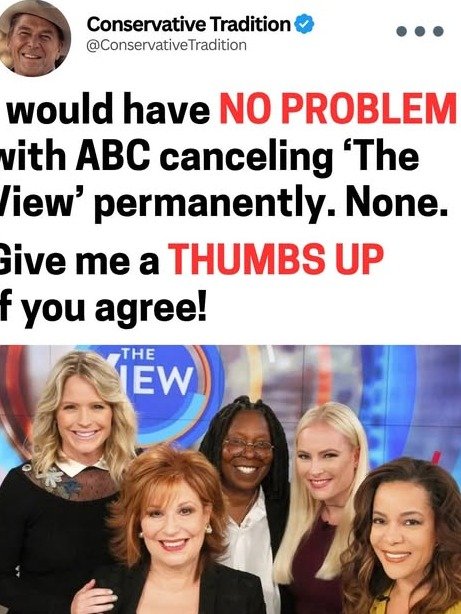
For over two decades, millions of Americans have tuned into ABC’s ‘The View,’ expecting lively debate and diverse perspectives on current events. Yet, for a significant portion of the audience, particularly those on the conservative end of the political spectrum, the daily banter has transformed into something far more troubling: a consistent platform for ideological attacks, selective information, and what many perceive as outright condescension.
Is ‘The View’ truly a forum for balanced discussion, or has it evolved into a powerful, prime-time political weapon disguised as daytime entertainment? The allegations from its critics are stark and consistent, pointing to a pattern of behavior that suggests a deliberate strategy to undermine conservative viewpoints, spread one-sided narratives, and lecture a substantial segment of the American population on values they may not share.
A Legacy of Controversy: More Than Just Morning Talk
Since its inception, ‘The View’ positioned itself as a groundbreaking show, bringing together women of different generations and backgrounds to discuss the day’s hot topics. While this format promised a rich tapestry of opinions, many viewers argue that over the years, the show has increasingly leaned into a singular ideological bent, marginalizing any dissenting voices that dare to challenge the prevailing liberal narrative.
This shift has transformed the show from a casual morning chat into a highly politicized arena. What began as a discussion often devolves into a monologue, with certain hosts consistently dominating the conversation and pushing a specific agenda, leaving little room for genuine, respectful disagreement or the exploration of alternative perspectives. The very essence of debate, which should involve a give-and-take of ideas, seems to be lost in the pursuit of ideological conformity.
The Art of the Smear: How Conservative Voices Are Silenced
One of the most frequent and severe criticisms leveled against ‘The View’ is its alleged tendency to ‘smear’ conservatives. This isn’t just about disagreeing with a policy; it’s about the characterization of conservative individuals, their motivations, and their entire belief system. Critics argue that conservative guests and viewpoints are often met with derision, caricature, or outright hostility, rather than thoughtful engagement.
The show is accused of painting all conservatives with a broad brush, often associating them with extreme or unpopular fringes, regardless of their actual positions. This tactic can effectively demonize an entire political movement, making it difficult for viewers to genuinely consider conservative ideas when they are consistently presented in a negative or dismissive light. It fosters an environment where an entire demographic feels unfairly targeted and misunderstood.
When a conservative voice does appear on the panel, it often feels like an adversarial setup rather than an inclusive discussion. These guests frequently face intense scrutiny, interruptions, and a barrage of questions designed more to corner them than to understand their position. This contrasts sharply with the often more lenient treatment given to guests who align with the show’s perceived liberal leanings, highlighting a clear double standard that frustrates many viewers.
Spreading Narratives, Not Just News: The Misinformation Machine
Beyond character assassination, ‘The View’ has also faced accusations of spreading misinformation or, at the very least, highly selective information that supports a particular narrative. In today’s complex media landscape, where facts can be easily twisted or omitted, the responsibility of major network shows to present accurate and balanced information is paramount. Critics claim ‘The View’ often falls short.
This alleged misinformation isn’t always about outright falsehoods but often involves presenting incomplete pictures, exaggerating certain aspects of a story, or ignoring inconvenient truths that might challenge the hosts’ preferred worldview. By focusing solely on information that reinforces a specific political stance, the show can inadvertently, or perhaps intentionally, mislead its audience about the full scope of an issue.
For instance, complex policy debates might be oversimplified into good-vs-evil narratives, leaving no room for nuance or the legitimate concerns of opposing sides. This approach doesn’t just inform; it persuades, guiding viewers towards a pre-determined conclusion rather than empowering them to form their own opinions based on a comprehensive understanding of the facts. The impact of such selective storytelling on public perception can be profound and long-lasting.
Lecturing the Nation: The Disconnect Between Hosts and Audience
Perhaps one of the most grating aspects for many viewers is the perception that the hosts of ‘The View’ frequently ‘lecture’ millions of Americans on values they themselves may not fully embody or understand. This criticism often stems from a feeling of disconnect between the show’s affluent, celebrity hosts and the everyday struggles and beliefs of a large segment of their audience.
There’s a palpable sense, for many, that the hosts, from their privileged positions, are dictating what is morally acceptable or politically correct, without genuinely appreciating the diverse experiences and deeply held convictions of people across the country. This can come across as elitist and out-of-touch, further alienating viewers who feel their values are being dismissed or even ridiculed.
About the Author




