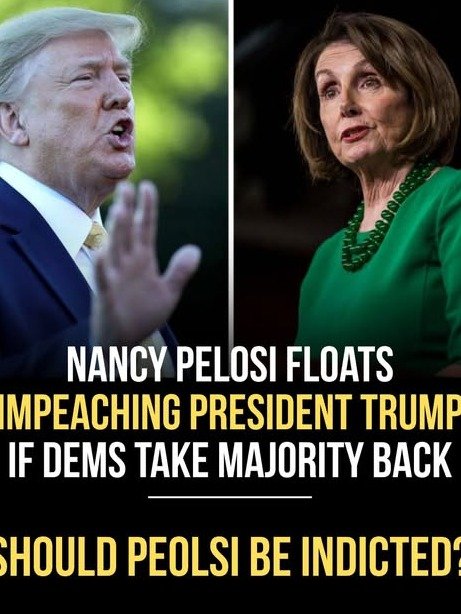
Imagine a political landscape where the echoes of past battles refuse to fade, constantly threatening to reignite. That’s precisely the unsettling reality former House Speaker Nancy Pelosi has hinted at, sending shockwaves through Washington and across the nation. Her recent remarks suggest that if Democrats regain control of the political levers, a return to impeachment proceedings against former President Donald Trump isn’t just a possibility – it’s a distinct consideration.
For many Americans, this prospect immediately conjures feelings of exhaustion and frustration. The nation has already navigated two tumultuous impeachment sagas involving Trump, each deeply divisive and consuming vast amounts of political energy. The idea of revisiting such a contentious path raises critical questions about the future of governance, national unity, and what truly constitutes a priority for the American people.
The Haunting Specter of Impeachment Past
The United States has witnessed the impeachment of Donald Trump twice. The first instance, in late 2019, centered on allegations of abuse of power and obstruction of Congress related to his dealings with Ukraine. House Democrats accused him of pressuring the Ukrainian government to investigate political rival Joe Biden, withholding military aid as leverage. The Senate, however, acquitted him on both articles.
The second impeachment, in January 2021, came in the immediate aftermath of the January 6th Capitol riot. Trump was charged with incitement of insurrection, accused of encouraging his supporters to march on the Capitol. While the House swiftly impeached him, the Senate once again voted to acquit, falling short of the two-thirds majority required for conviction. These events left deep scars on the political fabric of the country, intensifying partisan divides.
A Clear Signal: Pelosi’s Intentions Revealed
Former Speaker Pelosi’s recent comments were not merely speculative; they were a clear signal, interpreted by many as a warning shot across the bow. While she didn’t explicitly lay out a detailed plan, her statements strongly implied that the Democrats’ pursuit of accountability for Trump’s actions remains an open-ended objective, particularly if they secure a more commanding position in future elections.
Her rhetoric often frames such actions not as political retribution, but as a defense of democracy and the rule of law. This perspective suggests that certain alleged offenses, particularly those related to the January 6th events or perceived threats to democratic institutions, are considered so grave that they warrant continued investigation and potential action, regardless of past outcomes or public fatigue.
“We have to hold people accountable. Nobody is above the law. And if that means pursuing actions that some may find politically inconvenient, then so be it. Our democracy depends on it.” – A sentiment often echoed by proponents of further action.
The Democratic Rationale: Accountability or Strategy?
From the Democratic viewpoint, the potential for renewed impeachment discussions stems from a deep-seated belief that former President Trump’s actions, particularly those surrounding the 2020 election and the Capitol riot, represent a fundamental challenge to American democratic norms and institutions. They argue that failing to hold a president accountable for such conduct sets a dangerous precedent, potentially eroding the rule of law.
This perspective often emphasizes the constitutional duty of Congress to act as a check on executive power. Proponents might cite new evidence, ongoing investigations, or the cumulative effect of various alleged wrongdoings as justification for further proceedings. Furthermore, some strategists might see renewed impeachment efforts as a way to energize their base and draw a stark contrast with their political opponents, reinforcing their commitment to democratic principles.
- Upholding the Constitution: A belief that egregious actions must be addressed to protect the framework of government.
- Setting Precedent: Ensuring future leaders understand the severe consequences of overstepping their authority.
- Base Mobilization: Galvanizing voters who feel strongly about accountability.
The Republican Counter-Narrative: Political Weaponization
Unsurprisingly, the prospect of a third impeachment attempt is met with fierce opposition from Republicans. They view such discussions as a blatant example of political weaponization, a partisan vendetta designed to undermine a political opponent rather than a genuine pursuit of justice. Republicans frequently argue that these efforts distract from the real issues facing Americans and deepen political divisions.
Many in the GOP would contend that the previous impeachments were politically motivated and lacked sufficient grounds for conviction, characterizing them as an attempt to overturn election results or prevent a future presidency. They would likely frame any new impeachment talks as an obsession, a desperate attempt by Democrats to keep Trump out of power by any means necessary, rather than focusing on pressing national concerns like the economy, border security, or international relations.
America’s Impeachment Fatigue: A Nation Divided and Exhausted
Beyond the partisan bickering, there’s a palpable sense of exhaustion among a significant portion of the American public. The constant cycle of political warfare, particularly the high-stakes drama of impeachment, can leave citizens feeling disillusioned and cynical about the political process. Many yearn for a focus on tangible solutions to everyday problems rather than seemingly endless political battles.
This ‘impeachment fatigue’ is a critical factor. Voters are often more concerned with the cost of living, healthcare access, job security, and educational opportunities for their children. When political leaders appear consumed by past grievances and partisan feuds, it can lead to a perception that they are out of touch with the needs and priorities of ordinary Americans. This sentiment could have significant implications for voter turnout and political alignment in future elections.
Constitutional Precedent and the High Bar
It’s important to remember that impeachment is an extraordinary constitutional remedy, intended for “high Crimes and Misdemeanors.” It’s not a tool for policy disagreements or political unpopularity. Historically, it has been used sparingly, with only a handful of presidents ever facing the process.
The constitutional framework requires a majority vote in the House of Representatives to impeach, followed by a trial in the Senate where a two-thirds majority is needed for conviction and removal from office. This high bar is deliberately set to prevent impeachment from becoming a routine political weapon, ensuring it remains a measure reserved for truly egregious offenses against the state. The fact that no president has ever been removed from office via impeachment underscores its difficulty and gravity.
What’s at Stake: The Future of American Governance
The implications of another impeachment attempt extend far beyond the fate of a single individual. Such a move could further destabilize American governance, creating an environment where political power is constantly used to target opponents rather than to build consensus and address national challenges. It risks normalizing impeachment as a regular feature of political discourse, rather than a rare and solemn constitutional process.
Moreover, it could deepen the already gaping chasm of polarization in the country. Trust in institutions, including Congress and the presidency, could erode further if the public perceives political actions as driven purely by partisan animosity. The focus would inevitably shift from policy debates to personal attacks, making it even harder for the nation to unite on critical issues.
Looking Ahead: The 2024 Election and Beyond
Pelosi’s statements, whether intentional or not, will undoubtedly cast a long shadow over the upcoming 2024 election cycle. For Democrats, it could serve as a rallying cry, emphasizing the need to elect leaders committed to accountability. For Republicans, it will likely be framed as proof of Democratic extremism and a reason to vote against them to prevent further political turmoil.
The rhetoric surrounding potential impeachment could become a significant wedge issue, influencing voter behavior in key swing states and congressional races. It forces voters to consider not just policy positions, but also the fundamental nature of political warfare they are willing to endure. The election results themselves could then be interpreted as a mandate on whether the public supports further investigations or prefers to move on.
Beyond Impeachment: Seeking Common Ground?
In a nation grappling with complex challenges – from economic uncertainties and healthcare costs to social divisions and international conflicts – the question arises: are there more constructive avenues for political leaders to pursue? While accountability is crucial, many Americans might prefer to see their elected officials dedicating their energy and resources to finding common ground and delivering tangible improvements to their lives.
The constant threat of impeachment, regardless of its constitutional merits, can overshadow efforts to build bridges and foster cooperation. Perhaps the greater challenge for American democracy is not just ensuring accountability, but also demonstrating that political leaders can rise above partisan animosity to serve the collective good, focusing on solutions that truly benefit all citizens.
The possibility of a third impeachment saga is a stark reminder of the deep divisions that persist in American politics. Whether it materializes or not, the mere discussion of it underscores the ongoing struggle between partisan objectives and the broader aspiration for a functioning, unified nation. The choice of direction will ultimately rest with the American people and the leaders they choose to represent them.
The nation stands at a crossroads, where the path forward could either lead to renewed political warfare or a concerted effort to heal divisions and address the pressing issues that truly impact the lives of millions. What will our leaders prioritize? And what will the American public tolerate?
About the Author




