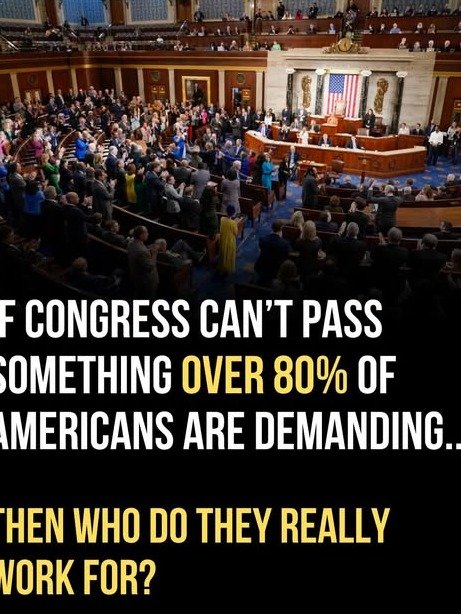
Imagine a future where the rules governing every election you participate in are fundamentally different, where casting your ballot requires new steps, and the very definition of a qualified voter is redefined at the federal level. This isn’t a distant hypothetical; it’s the immediate reality facing Congress with the introduction of the SAVE Act. This proposed legislation is poised to become a defining battleground, drawing a stark line in the sand regarding the future of federal voting rules in America.
For decades, election administration has largely remained the purview of individual states, leading to a patchwork of regulations across the nation. However, the SAVE Act seeks to establish a more uniform, federally mandated framework, igniting a fierce debate over voter access, election integrity, and the balance of power between state and federal governments. The stakes couldn’t be higher, and understanding this critical bill is paramount for every American.
The Battle Lines Are Drawn: What Exactly is the SAVE Act?
The Safeguard American Voter Eligibility (SAVE) Act, formally introduced by Republican lawmakers, aims to significantly tighten federal voting requirements. Its primary stated objective is to enhance election integrity and restore public confidence in the electoral process, which proponents argue has been eroded by perceived vulnerabilities in the current system. This isn’t just about minor tweaks; it represents a comprehensive overhaul of how federal elections are conducted.
At its core, the SAVE Act seeks to address what its proponents identify as critical loopholes that could potentially allow ineligible individuals to vote. These concerns often stem from issues surrounding voter registration accuracy, the verification of voter identity, and the security of absentee ballot processes. The bill’s supporters argue that without these changes, the integrity of American elections remains compromised.
Unpacking the Core Provisions: What Would Change?
The SAVE Act proposes several significant changes that would impact millions of voters across the country. These provisions are designed to create a more standardized and rigorous process for voter registration and ballot casting, moving away from the varied state-by-state approaches that currently exist. Understanding these specific proposals is key to grasping the potential impact of the legislation.
One of the most impactful provisions is the establishment of a nationwide photo identification requirement for federal elections. This would mean that every voter would need to present a government-issued photo ID at the polls, a measure currently implemented in varying degrees by many states but not universally mandated for federal contests. For those who lack such identification, this could pose a significant hurdle.
Furthermore, the bill mandates proof of citizenship as a prerequisite for voter registration. While it is already illegal for non-citizens to vote in federal elections, the SAVE Act would require specific documentation, such as a birth certificate, passport, or naturalization papers, to be presented during the registration process. This is a substantial departure from current practices in many states, where voters often attest to their citizenship under penalty of perjury without providing immediate documentary evidence.
Other key provisions of the SAVE Act include:
- Federal photo ID requirement: Standardizing the need for government-issued photo identification at polling places for all federal elections.
- Proof of citizenship for registration: Requiring documentary evidence of U.S. citizenship to register to vote.
- Restrictions on absentee voting: Limiting the availability of no-excuse absentee voting and implementing stricter verification processes for absentee ballots.
- Prohibition of ballot harvesting: Banning the collection and submission of ballots by third parties, a practice legal in some states.
- Enhanced voter roll maintenance: Mandating more frequent and robust efforts to remove ineligible voters (e.g., deceased individuals, those who have moved) from registration lists.
- Increased penalties for voter fraud: Strengthening the legal repercussions for individuals found guilty of committing election-related offenses.
The Proponents’ Stance: Securing the Ballot Box for All
Republicans and other proponents of the SAVE Act argue passionately that these measures are essential to safeguard the sanctity of the American vote. Their core argument revolves around the concept of election integrity, asserting that transparent, secure, and verifiable elections are fundamental to a functioning democracy. They believe that without these reforms, public trust in election outcomes will continue to erode, regardless of actual fraud levels.
Many supporters point to polling data suggesting that a significant portion of the electorate has concerns about election security. They contend that requiring photo ID and proof of citizenship are common-sense measures, akin to what is needed for other essential activities like boarding an airplane or opening a bank account. The argument is that if these hurdles are acceptable for everyday life, they should certainly be acceptable for the fundamental act of voting.
“Our democracy depends on the trust of its citizens,” stated one proponent during a recent debate. “The SAVE Act isn’t about making it harder to vote; it’s about making it harder to cheat. It’s about ensuring every legal vote cast counts, and every illegal vote is prevented. This is a foundational principle for free and fair elections.”
They also emphasize that robust voter roll maintenance is not about disenfranchisement but about accuracy. Removing deceased individuals or those who have moved ensures that election systems are clean and less susceptible to fraud, thereby making the entire process more efficient and trustworthy.
The Opposition’s Concerns: Access vs. Security – A Dangerous Trade-Off?
On the other side of this critical debate are Democrats, civil rights organizations, and voting rights advocates who vehemently oppose the SAVE Act. Their primary concern is that while the stated goal is election integrity, the practical effect of these provisions would be widespread voter suppression, particularly among vulnerable populations.
Opponents argue that requiring photo ID disproportionately affects elderly voters, students, low-income individuals, and minority groups who may not have easy access to the necessary identification, or who face significant logistical and financial barriers to obtaining it. They highlight that many eligible citizens, particularly in rural areas or those with limited mobility, may struggle to acquire specific forms of ID, turning a fundamental right into a bureaucratic obstacle.
The mandate for proof of citizenship is another major flashpoint. Critics assert that this requirement could lead to the disenfranchisement of naturalized citizens or those born in the U.S. who may not readily possess birth certificates or passports, or whose documentation may be lost or difficult to retrieve. They fear that such a requirement could burden legitimate voters and lead to discriminatory practices at the polls.
A Deep Dive into the “Line in the Sand”
The SAVE Act truly represents a “line in the sand” because it encapsulates a fundamental ideological divide over the priorities of election administration. Is the paramount goal to maximize voter access, even if it means potentially accepting a higher risk of fraud? Or is it to maximize election security, even if it means potentially creating new barriers for eligible voters?
This legislative battle also highlights the ongoing tension between federal and state control over elections. For centuries, states have held primary authority in setting their own voting rules, leading to a diverse electoral landscape. The SAVE Act represents a significant federal encroachment into this traditional state domain, which raises questions about federalism and the appropriate balance of power.
The political stakes are enormous. For Republicans, passing the SAVE Act would be a victory in their long-standing quest to tighten election rules and address voter fraud concerns. For Democrats, blocking it is seen as essential to protect voting rights and ensure broad access to the ballot box, which they argue is the bedrock of democratic participation. The outcome will undoubtedly shape future elections and the very nature of American democracy.
Potential Ramifications: A Fork in the Road for American Democracy
If the SAVE Act were to pass, the landscape of American elections would undergo a dramatic transformation. We could see a significant shift in voter demographics, with potential decreases in turnout among certain groups. Election administration across states would become more standardized, but also potentially more resource-intensive as states adapt to new federal mandates.
Proponents would hope for increased public confidence in election results, believing that stricter rules would legitimize outcomes. However, opponents fear that it would lead to widespread litigation, further partisan division, and a perception among many that the system has become less inclusive and fair. The immediate impact on voter registration and turnout would be closely watched and hotly debated.
Conversely, if the SAVE Act fails to pass, the current system of diverse state-level election laws would largely remain intact. This would mean the continuation of varying requirements for voter ID, absentee voting, and voter roll maintenance across the country. While it would avert the concerns of voter suppression raised by opponents, it would also mean that the concerns about election integrity raised by proponents would persist, fueling ongoing calls for reform at both federal and state levels.
Looking Ahead: The Future of Federal Election Oversight
The debate surrounding the SAVE Act is more than just about a single piece of legislation; it’s a microcosm of the larger struggle over the future of American democracy. It forces a national conversation about who gets to vote, how they get to vote, and what measures are deemed necessary to ensure the integrity and accessibility of our elections.
As this critical bill makes its way through Congress, the discussions will undoubtedly be intense and deeply partisan. Regardless of its ultimate fate, the SAVE Act has already succeeded in drawing a clear “line in the sand,” forcing lawmakers and citizens alike to confront fundamental questions about the balance between election security and voter access. The outcome will not only define the immediate future of voting rules but also set a precedent for federal involvement in state elections for years to come. It’s a moment that demands every citizen’s attention and informed participation.
About the Author




