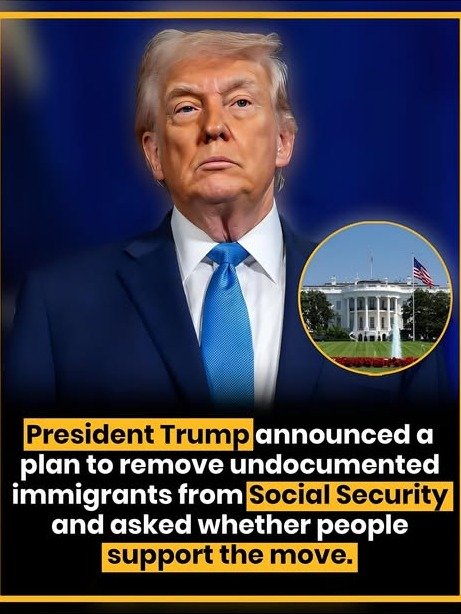
Imagine a future where your hard-earned Social Security benefits are secure, untouched by political maneuvering or budget cuts. For millions of Americans, this isn’t just a dream – it’s a central promise from Donald Trump, a cornerstone of his ‘America First’ agenda. But what exactly does this powerful promise entail, and can it truly safeguard the bedrock of American retirement?
In an era where the financial stability of Social Security is a constant topic of debate, Trump’s consistent stance offers a stark contrast to many traditional political approaches. He has made it unequivocally clear that protecting these vital benefits is not just a policy position, but a fundamental commitment to the American people.
The Core of “America First” and Social Security
The “America First” philosophy, at its heart, prioritizes the interests of the United States above all else. This includes a strong focus on economic nationalism, ensuring domestic industries thrive, and creating jobs within the country. When applied to social programs like Social Security, this translates into a commitment to protect what has been earned and promised to American citizens.
For Trump, Social Security isn’t merely an entitlement; it’s a sacred trust. He views it as a contract between generations, a system that hardworking Americans have paid into throughout their careers. Therefore, any discussion of cuts or reductions is seen as a betrayal of that trust, directly conflicting with the “America First” principle of putting American citizens first.
This perspective sets a distinct tone for his approach to fiscal policy. Rather than considering benefit reductions as a solution to financial challenges, his agenda seeks to bolster the system through alternative means, primarily economic growth and efficiency.
Trump’s Unwavering Pledge: A Departure from Traditional GOP?
Throughout his political career, Donald Trump has maintained a remarkably consistent message regarding Social Security, Medicare, and Medicaid. His pledge has been simple and direct: “We’re not going to cut Social Security, we’re not going to cut Medicare, we’re not going to cut Medicaid.” This promise has been a recurring theme in his rallies and policy discussions.
This position often places him at odds with more fiscally conservative factions within the Republican Party, who have historically advocated for reforms such as raising the retirement age, means-testing benefits, or even partial privatization to ensure the long-term solvency of these programs. Trump’s refusal to entertain such proposals marks a significant departure.
“I will protect Social Security, I will protect Medicare, and I will protect Medicaid. I will do it without cuts. We will make our country rich enough to do it.” – Donald Trump
His strategy appears to be rooted in a deep understanding of the political potency of these programs. For millions of seniors and those nearing retirement, the security of their benefits is paramount. By taking a firm stance against cuts, Trump effectively appeals to a broad demographic that often feels vulnerable to changes in social safety nets.
The Looming Crisis: Why Social Security Needs Attention
Despite strong political pledges, the financial health of Social Security remains a pressing national concern. The program faces significant long-term challenges, primarily due to shifting demographics. Americans are living longer, and birth rates have declined, leading to fewer workers contributing per retiree.
According to the latest reports from the Social Security Administration, the Old-Age and Survivors Insurance (OASI) Trust Fund is projected to be able to pay 100 percent of scheduled benefits until the mid-2030s. After that, it will be able to pay only a portion of scheduled benefits if no legislative action is taken. This isn’t a prediction of collapse, but a clear signal that adjustments are necessary.
The Congressional Budget Office (CBO) also routinely highlights the long-term fiscal imbalances. While the system is not in immediate danger of running out of money, the projected shortfall means that future generations could face reduced benefits unless Congress intervenes. This reality underscores the urgency of finding sustainable solutions.
How Does Trump Plan to Protect Benefits Without Cuts?
This is the critical question that often arises when Trump reiterates his no-cut pledge. If benefits cannot be reduced, and taxes on current workers or retirees are not to be raised, where will the necessary funds come from? Trump’s proposed solution primarily hinges on a robust and booming national economy.
The theory is straightforward: a stronger economy leads to more jobs, higher wages, and ultimately, increased payroll tax revenue flowing into the Social Security trust funds. His administration’s focus on deregulation, tax cuts, and trade policies designed to bring manufacturing back to the U.S. were all aimed at stimulating this kind of economic growth.
- Economic Expansion: Generating more jobs and higher incomes directly translates to a larger tax base contributing to Social Security.
- Reducing Waste and Fraud: A common theme in his rhetoric, suggesting that eliminating inefficiencies and corruption within government agencies could free up funds.
- Trade Policy: Reforming trade agreements to favor American businesses and workers, thereby boosting domestic prosperity and tax contributions.
These strategies aim to create a virtuous cycle where a flourishing economy naturally solves the funding gap without requiring direct modifications to benefit structures or tax rates on individuals.
Economic Nationalism as a Solution?
Diving deeper into the “America First” economic model reveals how it is theoretically designed to support Social Security without direct cuts. Trump’s emphasis on tariffs, for instance, was intended to protect domestic industries from foreign competition, encouraging U.S. production and job creation.
By fostering a competitive domestic landscape, the administration aimed to keep businesses and capital within the United States. This, in turn, would lead to more American workers earning taxable wages, thus increasing the contributions to Social Security and Medicare.
Deregulation was another key component, posited as a way to reduce burdens on businesses, allowing them to expand, hire more employees, and innovate faster. The argument is that a less encumbered private sector is a more dynamic one, capable of generating the wealth needed to sustain social programs.
While these policies are primarily economic tools, their intended effect on the national tax base is seen as the indirect mechanism for shoring up Social Security. The challenge, of course, lies in the unpredictable nature of economic cycles and the global factors that influence national prosperity.
The Political Landscape and Public Perception
Donald Trump’s steadfast position on Social Security has undeniable political advantages. For many voters, particularly seniors, the fear of benefit cuts is a powerful motivator. By explicitly ruling out such measures, he taps into a deep-seated desire for stability and security in retirement.
This stance often puts other political candidates, who might propose more traditional fiscal reforms, on the defensive. They are then forced to explain their positions, which can be interpreted as a willingness to reduce benefits, making them less appealing to a significant portion of the electorate.
Public opinion polls consistently show strong support for maintaining Social Security benefits as they are. This widespread sentiment validates Trump’s political strategy, demonstrating that his “no cuts” promise resonates deeply with the concerns of everyday Americans who depend on these programs for their financial well-being.
What’s Next for Social Security Under an “America First” Presidency?
Should Donald Trump return to the presidency, his commitment to protecting Social Security benefits without cuts would undoubtedly remain a central tenet of his domestic policy. The specifics of how this would be achieved, beyond general economic growth, would likely become a focal point of his administration.
We might anticipate renewed efforts to stimulate the economy through familiar “America First” policies: further tax cuts, continued deregulation, and potentially aggressive trade negotiations aimed at bolstering domestic industries. The success of these measures would be crucial to fulfilling his Social Security pledge.
While a comprehensive legislative plan detailing *how* the Social Security shortfall would be addressed without cuts has not been fully articulated, the consistent message suggests that any solutions would prioritize revenue generation through economic expansion over direct program alterations. The ongoing national dialogue about securing Social Security for future generations would continue, with Trump’s unique approach at its forefront.
The Stakes Are High: Understanding Trump’s Unique Vision
Donald Trump’s “America First” agenda, with its strong emphasis on protecting Social Security benefits, presents a distinctive vision for the future of American retirement. His unwavering commitment to avoiding cuts challenges conventional political wisdom and offers a clear alternative to proposals that involve adjusting benefits or raising the retirement age.
For millions of Americans, the security of their Social Security checks is not just a policy detail—it’s the foundation of their financial future. Understanding Trump’s approach, rooted in the belief that a booming economy can solve the system’s challenges without touching benefits, is crucial for anyone invested in the future of this vital program. The debate over Social Security’s solvency is far from over, and Trump’s unique stance ensures it will remain a central, high-stakes issue.
About the Author




