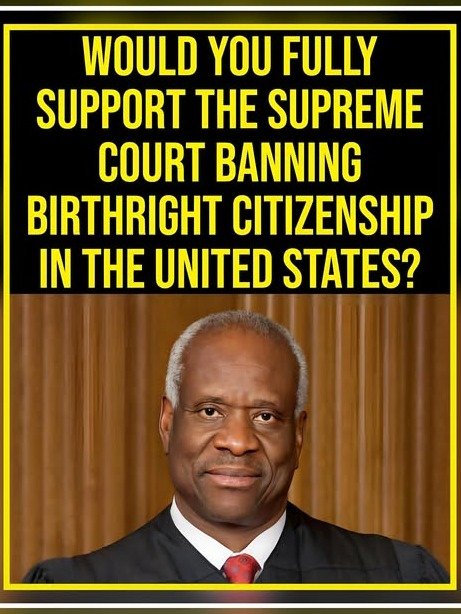
Imagine a nation where the very definition of who belongs is under constant, furious debate. This isn’t a hypothetical scenario; it’s the intense reality shaping America’s future right now. At the heart of this storm is one of the most contentious issues of our time: birthright citizenship.
Should children born within U.S. borders to parents who are not legal residents automatically be granted citizenship? This question isn’t just a legal technicality; it strikes at the core of national identity, sovereignty, and the very fabric of American society. The outcome could redefine citizenship for generations.
The Bedrock of American Citizenship: The 14th Amendment
For over a century and a half, the principle of birthright citizenship in the United States has been largely understood through the lens of the 14th Amendment. Ratified in 1868, in the wake of the Civil War, its Citizenship Clause states:
“All persons born or naturalized in the United States, and subject to the jurisdiction thereof, are citizens of the United States and of the State wherein they reside.”
This foundational text was primarily intended to grant citizenship to formerly enslaved people, overturning the Dred Scott decision. However, its broad language has since been interpreted by many legal scholars and courts, most notably in the 1898 Supreme Court case *United States v. Wong Kim Ark*, to mean that nearly everyone born on U.S. soil is a citizen, regardless of their parents’ immigration status.
Why Birthright Citizenship Matters: The Case For
Proponents argue that the current interpretation of the 14th Amendment is not only legally sound but also crucial for societal stability and human dignity. Automatically granting citizenship to those born here prevents the creation of a stateless underclass, ensuring that millions of individuals are not left without a legal identity or basic rights.
This approach also offers significant administrative simplicity. Imagine the complex, costly, and potentially discriminatory processes that would be needed to determine the citizenship status of every newborn based on their parents’ shifting legal situations. The current system, while debated, avoids this bureaucratic nightmare.
- Preventing a Stateless Underclass: Without birthright citizenship, children born here could be left without any national affiliation, creating immense humanitarian and social problems.
- Administrative Efficiency: The current system is straightforward, avoiding complex investigations into parental status for every birth.
- Social Integration: Children growing up as citizens are more likely to be integrated into society, contributing economically and socially.
- Family Unity: It helps keep families together, as children are not separated from their parents by citizenship status.
Furthermore, many believe that these citizen children contribute significantly to the U.S. economy and social fabric. They grow up educated in American schools, speak English, and often become productive members of the workforce, paying taxes and contributing to their communities, regardless of their parents’ origins.
The Fierce Opposition: Why Some Say NO to Automatic Citizenship
On the other side of this heated debate are those who vehemently argue against the automatic granting of citizenship to children of undocumented immigrants. They contend that the framers of the 14th Amendment never intended for it to apply to individuals whose parents were not legally present in the country.
A core part of this argument revolves around the phrase “subject to the jurisdiction thereof.” Opponents suggest that undocumented immigrants, by virtue of their unlawful presence, are not fully subject to U.S. jurisdiction in the same way legal residents or citizens are. They believe this phrase was meant to exclude, for example, children of diplomats or invading armies, and should also exclude children of those who have broken immigration laws.
The “Anchor Baby” Controversy and National Sovereignty
Critics often use the term “anchor baby” to describe children born in the U.S. to undocumented parents, asserting that these children serve as a magnet for illegal immigration. The idea is that parents are incentivized to enter the U.S. unlawfully, knowing their children will gain citizenship and potentially provide a pathway to legal status for the family in the future.
This perspective also ties into concerns about national sovereignty. Many feel that a nation should have the ultimate say in who its citizens are, and that the current system undermines border control and incentivizes unlawful entry. They point to the fact that many other developed nations, including most of Europe, do not have unconditional birthright citizenship.
- Original Intent: Argue the 14th Amendment was for former slaves, not modern immigration scenarios.
- “Anchor Baby” Effect: Believe it incentivizes illegal immigration by offering a path to citizenship.
- National Sovereignty: Contend that countries should control who becomes a citizen, not have it automatically conferred.
- “Subject to the Jurisdiction” Debate: Interpret this phrase to exclude children of undocumented immigrants.
Legal Challenges and Proposed Reforms
Changing the current interpretation of birthright citizenship is fraught with legal and political complexities. Some suggest that a simple act of Congress could redefine “subject to the jurisdiction thereof” to exclude children of undocumented immigrants. However, many legal scholars believe that such an act would immediately face constitutional challenges and likely be struck down by the Supreme Court, given the precedent set by *Wong Kim Ark*.
The most direct, albeit incredibly difficult, route to change would be a constitutional amendment. This would require a two-thirds vote in both the House and Senate, followed by ratification by three-fourths of the states – a monumental task in today’s deeply divided political landscape. Short of an amendment, executive orders have also been discussed, but their legal standing on such a fundamental constitutional issue would be highly questionable.
“The debate over birthright citizenship isn’t just about legal interpretations; it’s a profound moral and ethical challenge to the very soul of America.” – Unnamed Legal Scholar (for illustrative purposes)
The implications of any change would be massive. Millions of individuals currently considered citizens would face an uncertain future, potentially becoming non-citizens in the only country they’ve ever known. The administrative burden of reclassifying these individuals and establishing a new system would be immense, leading to potential social upheaval and legal chaos.
The Human and Economic Stakes
Beyond the legal arguments, the debate over birthright citizenship has profound human and economic stakes. For families, a change could mean deeper divisions, with parents and children having vastly different legal statuses, impacting everything from travel to healthcare to educational opportunities.
Economically, proponents of the current system argue that these citizen children are a vital part of the future workforce, paying taxes and contributing to the social safety net. Removing their automatic citizenship could lead to a large population of marginalized individuals who are less able to contribute fully to society, potentially increasing social costs in the long run.
Conversely, opponents highlight the perceived costs associated with providing social services, education, and healthcare to undocumented families, arguing that birthright citizenship exacerbates these burdens. They believe that by removing the “magnet” of citizenship, resources could be better managed and allocated.
What Does the Future Hold?
The debate over birthright citizenship is far from over. It is a deeply polarizing issue that touches on fundamental questions of law, morality, and national identity. As immigration remains a front-page issue, the pressure to revisit and potentially reform this long-standing tenet of American law will only intensify.
Whether through a dramatic constitutional challenge, a legislative push, or continued public discourse, the future of birthright citizenship will undoubtedly shape the demographic, social, and political landscape of the United States for generations to come. The stakes couldn’t be higher, prompting every American to consider: what truly defines who belongs?
About the Author




