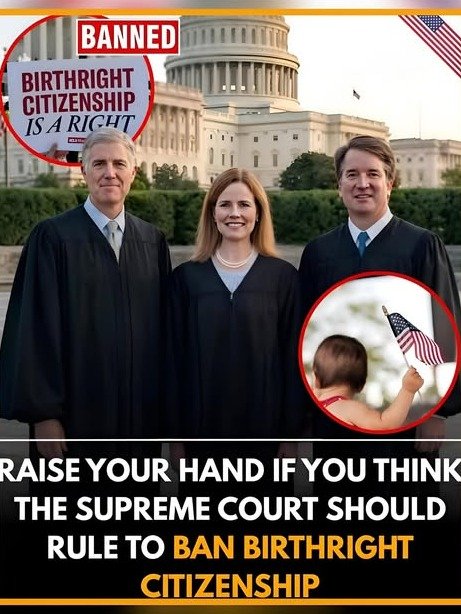
Imagine waking up one day to a nation fundamentally altered, where a foundational principle you thought was immutable suddenly hangs in the balance. That very scenario is playing out right now, behind the hallowed doors of the Supreme Court, as a monumental debate over birthright citizenship gains unprecedented momentum. This isn’t just a legal squabble; it’s a profound constitutional clash with the power to redefine who is, and who can become, an American citizen.
For generations, the concept has seemed straightforward: if you are born on U.S. soil, you are a U.S. citizen. This bedrock principle, enshrined in the 14th Amendment, has shaped countless lives and formed a cornerstone of American identity. Yet, its interpretation is now under intense scrutiny, sparking a contentious debate that could have far-reaching social, economic, and political consequences for every person living within our borders.
The 14th Amendment: A Century-Old Foundation Under Review
At the heart of this controversy lies a single, pivotal sentence from the 14th Amendment to the United States Constitution, ratified in 1868:
“All persons born or naturalized in the United States, and subject to the jurisdiction thereof, are citizens of the United States and of the State wherein they reside.”
This clause, known as the Citizenship Clause, was originally designed to grant citizenship to formerly enslaved people after the Civil War.
For over a century, this language has been widely understood to confer citizenship on nearly everyone born within U.S. territory, regardless of their parents’ immigration status. This interpretation was solidified by the Supreme Court’s 1898 ruling in United States v. Wong Kim Ark, which affirmed birthright citizenship for the U.S.-born child of Chinese immigrants who were not citizens themselves.
The Debate Ignites: Arguments Against Birthright Citizenship
Despite its long-standing acceptance, the concept of birthright citizenship has faced increasing challenges in recent years. Critics argue that the traditional interpretation of the 14th Amendment is flawed and outdated, leading to what they term
About the Author




