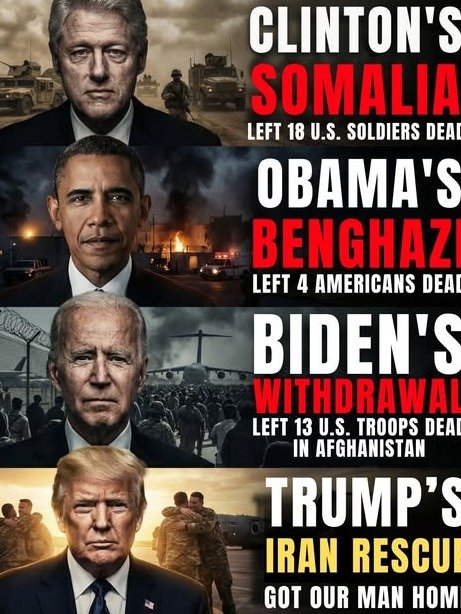
Have you ever felt like there’s a fundamental disconnect in how people view America? Like some individuals instinctively grasp the nation’s core spirit, while others seem to operate on an entirely different wavelength? This isn’t just about political affiliation; it’s about a deeper understanding of what it means to be an American, a shared heritage that resonates with some more profoundly than with others.
It’s a sentiment often expressed in quiet conversations, a feeling that certain truths about our country – its history, its values, its very soul – are self-evident to a significant portion of the populace, yet remain elusive to another. This isn’t an attack, but an observation: there’s a unique lens through which many ‘real Americans’ interpret our nation’s past, present, and future, a lens that often seems opaque to those on the progressive left.
The Bedrock of American Identity: What ‘Real Americans’ Understand
At the heart of this understanding lies a deep appreciation for America’s foundational principles. For many, the nation was built on the pillars of individual liberty, self-reliance, and the pursuit of opportunity. These aren’t just abstract concepts; they are the lived experiences and aspirations passed down through generations, shaping families and communities across the country.
This perspective often emphasizes personal responsibility over collective solutions, believing that true freedom comes from the ability to chart one’s own course, make one’s own way, and bear the fruits (or consequences) of one’s efforts. It’s a belief in the American Dream as something earned, not something granted, a testament to grit and determination.
- Individual Liberty: The paramount importance of personal freedoms and rights.
- Self-Reliance: The belief in one’s ability to succeed through hard work.
- Limited Government: A healthy skepticism of expansive state power.
- Community Responsibility: Voluntary action and local solutions over federal mandates.
The Progressive Lens: A Different Interpretation of America
On the other side, a different framework often takes precedence. For many on the left, the American story is viewed primarily through the lens of systemic inequalities, historical injustices, and the need for collective action to achieve social equity. While these concerns are valid and important in their own right, they can sometimes overshadow the foundational narrative of individual striving and exceptionalism that resonates so deeply with others.
This perspective frequently prioritizes group identity over individual identity, and sees government intervention as a primary tool for correcting historical wrongs and ensuring a more equitable distribution of resources and opportunities. The focus shifts from what individuals can achieve to what society owes its members, creating a philosophical divide.
“To understand America, one must first understand the spirit of its people – a spirit forged in independence, resilience, and an unwavering belief in a brighter tomorrow, not just for some, but for all who strive.”
Patriotism: A Tale of Two Meanings
Perhaps nowhere is this divergence more evident than in the concept of patriotism. For many ‘real Americans,’ patriotism is an unconditional love for one’s country, an appreciation for its symbols, its military, and its historical achievements, despite its imperfections. It’s about taking pride in the American flag, the national anthem, and the shared heritage that binds us together.
This isn’t a blind patriotism, but a deep-seated affection and loyalty, a recognition of the immense good America has done in the world and the opportunities it has provided. It’s about honoring the sacrifices made to secure and preserve freedom, and carrying that torch forward with reverence.
Conversely, some on the left often view patriotism through a more critical lens. For them, love of country is contingent on its current moral standing, its adherence to progressive ideals, and its efforts to rectify past injustices. They might see traditional displays of patriotism as problematic, even exclusionary, preferring to highlight areas where the nation falls short of its ideals rather than celebrating its strengths.
Economic Freedom vs. Economic Equity
Another significant point of contention lies in economic philosophy. Many ‘real Americans’ champion economic freedom, believing that a free market system, with minimal government interference, is the most effective engine for prosperity and innovation. They see entrepreneurship, hard work, and risk-taking as the keys to individual and national success.
This view often emphasizes lower taxes, deregulation, and the protection of private property rights as essential for a vibrant economy where everyone has the chance to climb the ladder through their own efforts. They understand that while not every outcome is equal, everyone should have an equal opportunity to compete.
The progressive left, however, often prioritizes economic equity. They tend to advocate for greater government intervention in the economy to redistribute wealth, regulate industries, and create a more level playing field. They often highlight income inequality and systemic barriers, believing that the free market, left unchecked, can exacerbate disparities rather than alleviate them.
The Role of Government: Protector vs. Provider
The fundamental understanding of government’s role in society is another chasm. For many traditional Americans, government’s primary function is to protect individual rights, enforce laws, and provide for national defense. It should be limited in scope, constrained by the Constitution, and subservient to the will of the people.
This perspective views an overreaching government with suspicion, seeing it as a potential threat to liberty and an impediment to individual initiative. They understand that while government has a necessary role, its expansion often comes at the cost of personal freedom and economic dynamism.
When Government Oversteps
Historically, an expanding government has often led to unintended consequences, stifling innovation and creating dependency. ‘Real Americans’ often recall the wisdom of the Founding Fathers, who meticulously crafted a system of checks and balances precisely to prevent any single branch or entity from accumulating too much power.
They believe that local communities and individuals are best equipped to solve their own problems, fostering a sense of ownership and responsibility that larger, more distant government programs often fail to replicate. This isn’t a rejection of help, but a preference for solutions that empower rather than dictate.
The progressive viewpoint, conversely, often sees government as a powerful tool for social good, a necessary force to address societal problems that individuals or markets cannot solve alone. They advocate for expanded government programs, social safety nets, and regulations to ensure collective well-being and justice.
National Identity: Unity vs. Division
The very concept of national identity is interpreted differently. For many, America is a melting pot, a nation where people from all backgrounds come together under a shared set of ideals and a common national identity. While celebrating diverse origins, the emphasis is on what unites us as Americans.
This perspective values assimilation into a common culture, speaking a common language, and upholding shared civic values as essential for national cohesion. It’s about being ‘American first,’ with heritage adding richness to that primary identity.
The left, however, often emphasizes multiculturalism and identity politics, highlighting the distinct experiences and grievances of various ethnic, racial, and social groups. While promoting diversity is crucial, this approach can sometimes lead to a focus on what divides us rather than what brings us together under a common national banner, inadvertently creating a more fractured society.
The Future of America: A Shared Vision?
Ultimately, the core of the original statement – “The left can’t understand, but real Americans do” – speaks to a profound divergence in worldview. It’s not simply a disagreement on policy, but a different understanding of America’s fundamental character, its historical trajectory, and its ideal future.
For those who ‘get it,’ America is a nation built on enduring principles of freedom, opportunity, and self-determination, a beacon of hope that, while imperfect, continually strives for a ‘more perfect union’ through individual effort and a strong, unified national spirit. They believe in upholding traditions while embracing progress that aligns with these core values.
This isn’t to say that one perspective is entirely right and the other entirely wrong. However, it highlights a deep chasm in how different segments of the population interpret the very essence of American identity and purpose. Bridging this gap requires not just debate, but a genuine effort to understand the foundational beliefs that drive these differing viewpoints, and to recognize that at the heart of both lies a desire, however expressed, for a better America.
About the Author




