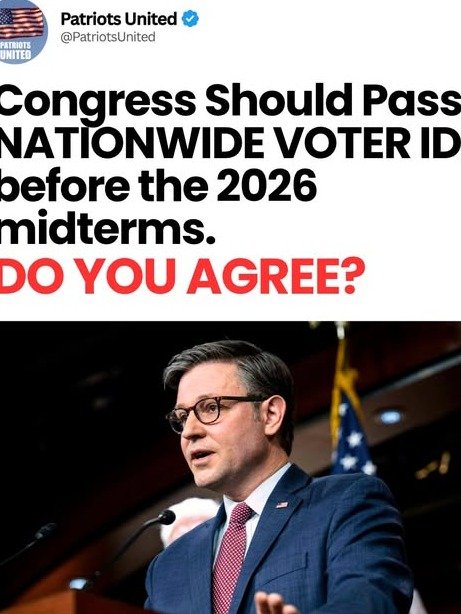
For decades, the debate over voter identification laws simmered quietly in state legislatures. But suddenly, this once-regional issue has exploded onto the national stage, transforming into a high-stakes battle that could fundamentally alter the landscape of American democracy.
What was once a localized discussion about election administration in individual states has now become a central flashpoint in the national conversation about election integrity and access. The stakes couldn’t be higher, with implications for every single ballot cast in federal elections across the country.
The Quiet Origins: Voter ID at the State Level
Voter ID laws are not a new phenomenon. They first began appearing in various states in the 1950s, primarily as a measure to prevent voter impersonation at the polls. For many years, these laws varied widely from state to state, reflecting local political climates and concerns.
Some states adopted strict photo ID requirements, demanding a government-issued photo identification like a driver’s license or passport. Others were less stringent, allowing non-photo IDs or providing alternative methods for voters without the required documentation to cast their ballots.
The debate remained largely confined to state capitals, with arguments centering on the balance between securing elections and ensuring universal access to the ballot box. However, the political landscape shifted dramatically, pushing this issue into the national spotlight.
The Shifting Battleground: From State Houses to Capitol Hill
The 2020 presidential election, followed by unprecedented challenges to its results, acted as a catalyst, propelling voter ID from a state concern to a national obsession. Concerns about election integrity, whether perceived or actual, became amplified, leading to a renewed push for stricter voting rules across the nation.
Suddenly, the question of whether a voter should present identification at the polls wasn’t just about local elections; it became intertwined with the legitimacy of federal races. This nationalization of the debate has fueled a fierce partisan divide, with both sides viewing the issue through the lens of protecting democracy.
Federal legislative efforts, such as the ‘For the People Act’ and the ‘John Lewis Voting Rights Advancement Act,’ sought to establish national standards for voting access, often clashing directly with existing or proposed state-level voter ID requirements. This created a direct confrontation between federal oversight and state autonomy over election administration.
The Case for Stronger Election Security: Why Proponents Advocate for Voter ID
Advocates for stricter voter ID laws often emphasize the paramount importance of election integrity. They argue that requiring voters to show identification is a common-sense measure, akin to presenting an ID for boarding an airplane, cashing a check, or purchasing alcohol.
The core argument is that voter ID helps prevent various forms of election fraud, particularly in-person voter impersonation, and boosts public confidence in election outcomes. When people believe elections are secure, they are more likely to trust the results and participate in the democratic process.
“Requiring identification at the polls is a fundamental step to ensure that only eligible voters cast ballots and that every legal vote counts,” states one prominent election security advocate. “It’s about safeguarding the integrity of our democratic system.”
Proponents also point to the fact that many other developed democracies around the world have some form of voter identification requirement. They contend that if obtaining an ID is necessary for so many daily activities, it should certainly be a prerequisite for exercising the most fundamental right of citizenship.
The Other Side of the Coin: Concerns Over Voter Suppression and Access
On the other side of the debate, opponents of strict voter ID laws argue that these measures are, in practice, a form of voter suppression. They contend that while the stated goal may be election security, the actual effect is to disenfranchise eligible voters, particularly those from marginalized communities.
Groups disproportionately affected often include elderly citizens who may no longer drive and lack current photo ID, low-income individuals who may struggle to afford the fees or transportation required to obtain an ID, students living away from home, and people with disabilities who face mobility challenges.
Critics also highlight that the specific type of fraud that voter ID laws are designed to combat—in-person voter impersonation—is exceedingly rare. Numerous studies and analyses have shown that instances of such fraud are statistically insignificant, suggesting that strict ID laws solve a problem that barely exists.
Instead, opponents argue, these laws create an unnecessary and unfair barrier to the ballot box, making it harder for certain demographics to exercise their constitutional right to vote. They see it as a political tool designed to depress turnout among specific voter groups.
Understanding “Election Security” Beyond Just ID Cards
The term “election security” itself has become a loaded phrase in this debate. For many, it encompasses a wide range of issues far beyond just voter identification. True election security involves robust voter registration databases, secure voting machines, protection against cyberattacks, accurate ballot counting, and transparent auditing processes.
While voter ID plays a role in the broader discussion, it is just one component. Focusing solely on ID requirements, critics argue, can distract from other critical vulnerabilities in the election system, such as foreign interference, disinformation campaigns, or issues with ballot chain of custody.
The national conversation needs to address the full spectrum of security measures. Is a strict photo ID the most effective way to secure an election, or are resources better spent on other areas like cybersecurity and protecting voter registration rolls from manipulation?
A Constitutional Tug-of-War: Federal Power vs. State Autonomy
At the heart of this national battle lies a fundamental constitutional tension: the balance between states’ rights to administer elections and the federal government’s role in protecting voting rights. The U.S. Constitution grants states significant power over elections, but also empowers Congress to regulate federal elections and protect citizens’ right to vote.
This creates a complex legal and political landscape. When the federal government attempts to set national standards for voter ID or voting access, it often faces strong resistance from states that view such actions as an overreach into their sovereign authority.
Conversely, when states enact what some perceive as restrictive voting laws, civil rights groups and federal lawmakers often argue that these laws violate federal protections and disproportionately harm certain populations, necessitating federal intervention.
The Path Forward: Navigating a Divided Landscape
The national battle over voter ID and election security shows no signs of abating. It will continue to be a central theme in legislative sessions, courtrooms, and public discourse for the foreseeable future. Each election cycle brings renewed scrutiny and fresh legislative proposals.
The challenge lies in finding common ground that both protects the integrity of the vote and ensures universal access to the ballot. Can a balance be struck that satisfies both proponents of strict security and advocates for broad access? Or will this remain a deeply polarized issue, contributing to ongoing political division?
Understanding the nuances of this debate – the historical context, the arguments for and against, and the broader implications for federal elections – is crucial for every citizen. Your right to vote, and the integrity of every election, hangs in the balance as this national flashpoint continues to unfold.
About the Author




