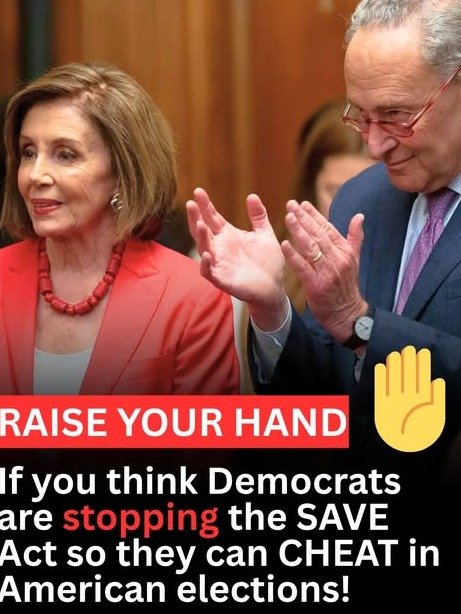
A silent battle is raging in Washington, D.e. The outcome could fundamentally reshape the landscape of American elections, impacting every citizen’s right to cast a ballot. At the heart of this storm is a piece of legislation known as the SAVE America Act, and it’s quickly becoming one of the most contentious political flashpoints of our time.
Why is this act sparking such fierce debate, and why should you pay close attention? Because if passed, it would introduce a sweeping new requirement: mandatory proof of U.S. citizenship to register for federal elections. This seemingly straightforward proposal has ignited a firestorm, pitting advocates of election integrity against defenders of voting access, and the stakes couldn’t be higher.
What Exactly Is the SAVE America Act?
The SAVE America Act, or ‘Safeguarding American Votes for Everyone’ Act, is a proposed federal law designed to bolster election security measures. Its primary and most controversial provision mandates that individuals provide documentary proof of U.S. citizenship when registering to vote in federal elections. This goes beyond current practices in many states, which often rely on sworn attestations of citizenship under penalty of perjury, rather than requiring physical documentation.
Proponents argue that this act is a critical step towards ensuring that only eligible citizens participate in federal elections. They contend that the current system, in their view, is vulnerable to exploitation, potentially allowing non-citizens to register and vote illegally. The act aims to close these perceived loopholes and restore public confidence in the integrity of the electoral process.
The Call for Citizenship Proof: A Deep Dive
Currently, the National Voter Registration Act of 1993 (NVRA), also known as the ‘Motor Voter’ Act, allows individuals to register to vote when applying for a driver’s license or at various state agencies. While the NVRA requires registrants to attest under oath that they are U.S. citizens, it does not universally mandate the presentation of physical proof of citizenship at the time of registration across all states.
The SAVE America Act seeks to change this by requiring specific forms of documentation. This could include a U.S. passport, a birth certificate, naturalization papers, or other federally approved documents. The goal, from its supporters’ perspective, is to create an undeniable paper trail that verifies every voter’s eligibility, thereby preventing any possibility of non-citizen participation in federal contests.
The Argument for Election Integrity
Supporters of the SAVE America Act often frame their arguments around the principle of election integrity. They believe that ensuring only citizens vote is a fundamental cornerstone of a democratic republic. Without this safeguard, they argue, the legitimacy of election outcomes could be undermined, eroding public trust in the system.
“Our elections must be for citizens, by citizens, and of citizens. Anything less compromises the very foundation of our democracy. The SAVE America Act is about protecting that sacred principle,” stated a prominent advocate during a recent congressional hearing.
They point to anecdotal evidence or specific cases where non-citizens have allegedly voted, though the prevalence of such occurrences is hotly debated. For proponents, even a small number of illegal votes is unacceptable and necessitates robust preventative measures like the SAVE America Act.
Concerns Over Voter Suppression and Access
On the other side of the aisle, opponents of the SAVE America Act raise serious alarms about potential voter suppression and the disproportionate impact it could have on eligible citizens. They argue that requiring specific documents for voter registration would create significant barriers for millions of Americans, particularly those from marginalized communities.
Many eligible voters, especially seniors, low-income individuals, students, and those in rural areas, may not readily possess or have easy access to the required documentation. Obtaining birth certificates or other proofs can be costly, time-consuming, and logistically challenging, potentially disenfranchising a substantial portion of the electorate who are, in fact, U.S. citizens.
- Elderly Voters: Many older Americans may not have easy access to their birth certificates or passports, which might be stored away or lost over time.
- Low-Income Individuals: The cost and time associated with obtaining new documents can be prohibitive for those living paycheck to paycheck.
- Minority Groups: Historically, such requirements have disproportionately affected minority communities and new citizens, who may face additional hurdles in navigating bureaucratic processes.
- Rural Residents: Access to government offices for obtaining documents can be limited in remote areas.
The Practical Challenges and Existing Safeguards
Opponents also highlight the practical difficulties of implementing such a sweeping federal mandate. State election offices, already stretched thin, would face immense logistical and financial burdens in verifying citizenship for millions of registrants. This could lead to long delays, errors, and increased administrative costs, potentially disrupting the efficiency of the voter registration process.
Furthermore, critics contend that existing laws already provide sufficient safeguards. Federal law makes it a crime for non-citizens to vote in federal elections, punishable by fines and imprisonment. Many states also have their own robust systems for verifying voter eligibility, including cross-referencing voter rolls with other government databases. They argue that the focus should be on enforcing existing laws rather than creating new, potentially restrictive ones.
A Constitutional Conundrum?
Beyond the practical and political debates, the SAVE America Act also raises significant constitutional questions. Critics argue that placing additional burdens on voter registration could violate the 14th Amendment’s Equal Protection Clause and the 15th Amendment’s prohibition against denying the right to vote based on race. They also cite Supreme Court precedents that have generally disfavored laws that create undue burdens on the right to vote.
Legal scholars on both sides are preparing for potential court battles should the act pass. The question of whether the federal government has the authority to impose such a universal requirement on state-run election systems, particularly when it could be seen as infringing on the fundamental right to vote, is a complex one that would likely end up before the Supreme Court.
The Political Battleground: What’s Next?
The SAVE America Act has indeed become a major political flashpoint, drawing clear lines between political parties and ideologies. It is seen by many as a litmus test for a party’s stance on election security versus voter access. Debates in Congress have been heated, reflecting the deep divisions within the country on how best to balance these competing priorities.
As the next election cycle approaches, the pressure to address perceived vulnerabilities in the electoral system will only intensify. Whether the SAVE America Act gains enough traction to pass both chambers of Congress and survive potential legal challenges remains to be seen. Its fate will depend on a delicate balance of political will, public opinion, and judicial interpretation.
Why This Matters to YOU
Regardless of where you stand on the issue, the SAVE America Act represents a pivotal moment in the ongoing national conversation about voting rights and election integrity. Its potential passage could mean significant changes to how you, or someone you know, registers to vote. It underscores the critical importance of understanding proposed legislation and engaging in the democratic process.
Stay informed, understand the arguments from all perspectives, and be prepared for potential shifts in election laws. Your voice and your vote are the cornerstones of our democracy, and ensuring their protection and accessibility is a responsibility we all share. The battle for the future of American elections is far from over, and the SAVE America Act is just one front in this crucial fight.
About the Author




