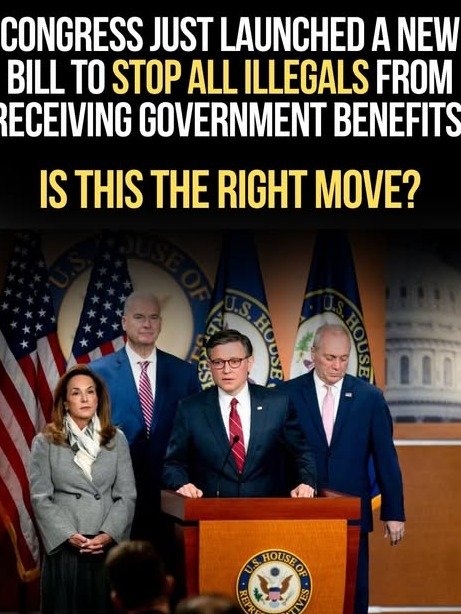
Imagine your hard-earned tax dollars, intended to support the most vulnerable citizens, being siphoned off by individuals who are not legally entitled to them. This isn’t just a hypothetical scenario; it’s a stark reality that Congress is now directly confronting with a new, aggressive legislative push.
A significant movement is gaining momentum in Washington, D.C., aiming to tackle the controversial issue of taxpayer-funded benefits being unlawfully collected by illegal immigrants. This isn’t merely about financial oversight; it’s about a fundamental question of fairness, national sovereignty, and the integrity of public assistance programs.
The Alarming Scope of Benefit Fraud
For years, debates have raged over the extent to which non-citizens, particularly those residing in the U.S. without legal authorization, access and sometimes exploit public benefits. While emergency services and some specific programs are available regardless of immigration status, a range of other benefits are strictly reserved for citizens and legal residents.
The issue becomes particularly contentious when individuals allegedly misrepresent their eligibility or use fraudulent means to access programs like housing assistance, food stamps, unemployment benefits, or even certain healthcare subsidies. Such actions not only strain public resources but also erode public trust in the system designed to help legitimate recipients.
Congress Takes a Stand: A New Legislative Push
In a bold move signaling a significant shift in policy, Congress is actively advancing legislation designed to transform the unlawful collection of taxpayer-funded benefits by illegal immigrants into a deportable offense. This proposed crackdown is not just about recovering misused funds; it’s about establishing a powerful deterrent and reinforcing the rule of law.
Lawmakers are pushing for measures that would explicitly define such fraud as a serious immigration violation, potentially leading to immediate deportation proceedings for those found guilty. This represents a substantial escalation from current enforcement mechanisms, promising a more direct and severe consequence for offenders.
What Constitutes ‘Unlawful Collection’?
It’s crucial to understand what exactly this proposed legislation targets. ‘Unlawful collection’ refers to instances where individuals who are not legally eligible for specific benefits — due to their immigration status — intentionally misrepresent information or use deceptive practices to receive them. This is distinct from emergency aid or services that are universally available.
For example, if an illegal immigrant knowingly applies for and receives federal housing assistance designated solely for legal residents, that act could fall under the purview of this new crackdown. The intent to deceive and the receipt of benefits for which one is ineligible are key components of the offense.
Why Now? The Driving Forces Behind the Crackdown
Several factors are converging to fuel this legislative effort. Firstly, there’s a growing public sentiment that taxpayer money must be protected and allocated responsibly, especially during times of economic uncertainty. Many citizens feel that their hard-earned contributions should primarily support those who are legally entitled to them.
Secondly, the ongoing debate around border security and immigration enforcement has brought the issue of illegal immigration to the forefront. Proponents of the bill argue that stronger enforcement against benefit fraud is a necessary component of a comprehensive strategy to manage immigration and uphold the integrity of the nation’s legal framework.
“This isn’t about denying aid to those in true need,” stated a congressional aide familiar with the proposed bill. “It’s about ensuring that our social safety nets are not exploited and that the rule of law is respected. Taxpayers deserve to know their money is being spent responsibly and legally.”
The Deportable Offense: A Game Changer
The most significant aspect of this new legislative push is the classification of benefit fraud as a deportable offense. Currently, while benefit fraud can lead to criminal charges or civil penalties, it doesn’t automatically trigger deportation proceedings in all cases for non-citizens.
Under the proposed changes, an illegal immigrant found to have unlawfully collected taxpayer-funded benefits could face immediate removal from the United States. This direct link between fraud and deportation is intended to act as a powerful deterrent, discouraging individuals from attempting to exploit public assistance programs.
Understanding the Impact on Immigration Policy
This crackdown, if enacted, would have far-reaching implications for U.S. immigration policy. It would add another layer of enforcement and provide immigration authorities with a clear legal basis to initiate deportation proceedings against individuals involved in benefit fraud.
The measure aims to send a clear message: engaging in fraudulent activities to access public funds will have severe and immediate consequences, impacting an individual’s ability to remain in the country. This could potentially reduce the appeal of entering or remaining in the U.S. unlawfully for those seeking to exploit the welfare system.
Key Benefits Targeted by the Legislation
While the specifics of the bill are still being refined, the crackdown is expected to target a broad range of federal, state, and local benefits that are typically restricted based on immigration status. These commonly include:
- Supplemental Nutrition Assistance Program (SNAP): Often known as food stamps.
- Medicaid: Non-emergency healthcare services.
- Housing Assistance: Including Section 8 vouchers and public housing.
- Temporary Assistance for Needy Families (TANF): Cash assistance for low-income families.
- Unemployment Benefits: Payments to those who have lost their jobs.
The legislation would focus on instances where an individual knowingly and intentionally applies for and receives these benefits despite not meeting the legal residency requirements.
Protecting Taxpayer Interests and National Security
Beyond the financial implications, proponents argue that this crackdown is also a matter of national security and maintaining the integrity of the immigration system. By deterring fraud, the government can better allocate resources to legitimate recipients and reduce vulnerabilities within public assistance programs.
Ensuring that only eligible individuals receive benefits reinforces the principle that citizenship and legal residency come with both rights and responsibilities. It also aims to prevent the misuse of public funds that could otherwise be directed towards critical infrastructure, education, or other essential services.
The Road Ahead: Legislative Hurdles and Public Debate
While the push for this new legislation is strong, it is likely to face significant debate and potential hurdles in Congress. Advocates for immigrant rights may raise concerns about due process, potential for false accusations, or the impact on vulnerable populations.
However, the bipartisan concern over fiscal responsibility and the integrity of public services suggests that this proposal has a real chance of becoming law. The public will undoubtedly be watching closely as lawmakers deliberate on a measure that directly impacts taxpayer dollars and the future of immigration enforcement.
What Does This Mean for You?
For U.S. citizens and legal residents, this legislative effort is positioned as a safeguard for their tax contributions. It aims to ensure that the systems designed to support those in need are not undermined by fraudulent claims, thereby preserving the resources for their intended beneficiaries.
Staying informed about these developments is crucial, as the outcome will shape not only immigration policy but also the broader landscape of public benefits and fiscal accountability. This congressional push represents a pivotal moment in the ongoing national conversation about immigration and economic justice.
About the Author




