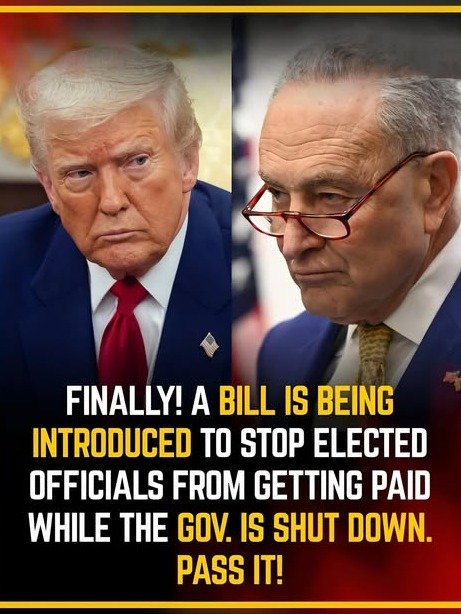
Imagine a government shutdown: federal workers furloughed, vital services halted, and countless families struggling to make ends meet. Now, imagine the very lawmakers responsible for the gridlock still collecting their full paychecks, untouched by the chaos they created. For years, this has been the frustrating reality – but a new, groundbreaking bill is threatening to change everything, potentially forcing Congress to finally feel the same pinch as the American people.
This isn’t just another piece of legislation; it’s a direct challenge to a long-standing double standard. A proposal currently gaining traction in Congress aims to pause the salaries of elected officials during any government shutdown. This isn’t merely about saving money; it’s about accountability, empathy, and restoring a semblance of fairness in Washington. The question isn’t just *if* it will pass, but *what* it means for the future of governance and public trust.
The “No Budget, No Pay” Mandate
At the heart of this pivotal discussion is a bill introduced by Senator John Kennedy, a move that has resonated deeply with a public weary of political stalemates. This isn’t the first time such an idea has been floated, but the current climate, marked by increasing partisan divides and the looming threat of future shutdowns, gives this proposal unprecedented urgency.
The essence of Kennedy’s bill is simple yet profound: if the government shuts down due to a failure to pass appropriations bills, members of Congress would see their paychecks withheld. This isn’t a permanent forfeiture, but a pause, with salaries restored only once the government is fully operational again. The underlying principle is clear: if the government isn’t working for the people, its leaders shouldn’t be paid as if it is.
A History of Congressional Pay During Shutdowns
For decades, a stark contrast has existed during government shutdowns. While hundreds of thousands of federal employees face furloughs, delayed paychecks, or are forced to work without immediate compensation, members of the House and Senate have continued to receive their salaries without interruption. This practice is rooted in the 27th Amendment, which states that “No law, varying the compensation for the services of the Senators and Representatives, shall take effect, until an election of Representatives shall have intervened.”
This constitutional protection has historically been interpreted to mean that Congress cannot vote to cut its own pay *during* its current term. While the intent was to prevent lawmakers from arbitrarily raising or lowering their pay for political gain, it has inadvertently created a loophole that allows them to remain financially insulated from the consequences of their legislative inaction. This legal nuance has been a major point of contention and a source of public frustration for years, making the current bill a significant legislative hurdle.
Why Now? The Growing Demand for Accountability
The timing of this proposal is no accident. Recent government shutdowns have become increasingly frequent and disruptive, highlighting the deep-seated dysfunction within the legislative branch. Each shutdown leaves a trail of economic instability, public inconvenience, and a significant blow to the morale of federal workers who are often caught in the crossfire.
Public sentiment has reached a boiling point. Americans, across the political spectrum, are tired of seeing their elected representatives seemingly immune to the very crises they create. The call for greater accountability has grown louder, with many arguing that if lawmakers are truly committed to serving the public, they should share in the burdens caused by their inability to govern effectively.
“It’s time for Congress to put their money where their mouth is. If federal workers are going without pay, so should the people who caused the problem in the first place,” remarked one frustrated constituent, reflecting a widespread sentiment.
Arguments For: Incentivizing Resolution and Restoring Trust
Proponents of the “No Budget, No Pay” bill argue that its passage would bring about several crucial benefits, fundamentally altering the dynamics of congressional negotiations during budget impasses. The most obvious benefit is the creation of a powerful incentive for lawmakers to reach a consensus promptly.
If their own financial well-being is directly tied to keeping the government open, the motivation to avoid a shutdown would become far more personal and immediate. This could lead to more earnest negotiations, less political posturing, and a greater willingness to compromise, ultimately benefiting the American public who rely on stable government services.
Furthermore, passing this bill could significantly help in restoring public trust in Congress. For too long, the perception has been that politicians are out of touch with the struggles of everyday Americans. By demonstrating a willingness to share in the financial discomfort caused by a shutdown, lawmakers could send a powerful message that they are indeed accountable to the people they serve.
- Increased Urgency: Lawmakers would face direct financial consequences, potentially accelerating budget negotiations.
- Fairness and Equity: Aligns congressional pay with the experiences of furloughed federal workers.
- Improved Public Perception: Demonstrates accountability and empathy, potentially rebuilding trust.
- Reduced Political Posturing: May discourage using shutdowns as a political tool if the cost is personal.
Potential Roadblocks and Criticisms
Despite its popular appeal, the “No Budget, No Pay” proposal faces significant hurdles and has drawn criticism from various corners. The primary challenge, as mentioned, lies in navigating the constitutional implications of the 27th Amendment. Lawmakers would need to craft the bill carefully to ensure it passes legal muster, perhaps by structuring it as a deferral rather than a direct pay cut, or by making it apply to future terms.
Another common argument against such measures is that they amount to political grandstanding rather than genuine solutions. Critics suggest that withholding pay might not actually compel resolution but could instead lead to more entrenched positions as lawmakers seek to avoid the appearance of capitulation under financial duress. Some also argue that it could disproportionately affect members of Congress who are not independently wealthy, potentially limiting who can afford to serve.
There’s also the argument that the financial impact on individual members, while symbolically significant, might not be enough to sway hardened political positions. The salaries of members of Congress, while substantial to the average American, might be seen as a minor inconvenience by some, especially those with significant personal assets, thus failing to achieve its intended incentive.
The Economic and Political Ripple Effect
If enacted, this bill could have far-reaching implications beyond just congressional paychecks. On an economic level, it could reduce the frequency and duration of government shutdowns, thereby mitigating the significant financial damage they inflict on the national economy, small businesses, and individual livelihoods. Predictability and stability are vital for economic growth, and this measure could contribute to both.
Politically, it could fundamentally alter the power dynamics during budget negotiations. The threat of personal financial impact could shift the balance, making compromise a more attractive option than brinkmanship. This could lead to a more functional legislative process, where the focus is less on political victories and more on effective governance.
Moreover, it could set a precedent for greater accountability across all branches of government, inspiring similar measures to ensure that public servants are always aligned with the welfare of the public they serve, even during times of crisis. The ripple effect could extend to state and local governments, encouraging similar accountability measures.
Public Opinion and the Power of the People
The overwhelming majority of Americans consistently express frustration with government shutdowns and the perceived lack of accountability among elected officials. Polls frequently show strong support for measures that would tie congressional pay to legislative performance, particularly during budget impasses. This widespread public sentiment is a powerful force that lawmakers cannot easily ignore.
The pressure from constituents, amplified by social media and traditional news outlets, plays a crucial role in pushing such legislation forward. When the public demands fairness and accountability, it creates an environment where lawmakers find it increasingly difficult to defend the status quo. This bill, therefore, is not just a legislative proposal; it’s a reflection of the public’s enduring desire for a government that truly works for them.
Looking Ahead: Will It Pass?
The path for Senator Kennedy’s bill is undoubtedly challenging, fraught with constitutional questions and political maneuvering. However, the current political climate, coupled with intense public pressure, suggests that this proposal has a stronger chance of success than similar efforts in the past. It will require bipartisan support and a willingness among lawmakers to put the interests of the nation above individual financial comfort.
The debate surrounding this bill will be a telling indicator of Congress’s commitment to accountability and its responsiveness to the frustrations of the American people. Its passage would mark a significant shift, signaling a new era where those who govern are truly held responsible for their actions, or inactions, when the government grinds to a halt.
Ultimately, this isn’t just about a paycheck; it’s about the fundamental principles of public service and the integrity of democratic governance. The “No Budget, No Pay” bill is a powerful statement, and its journey through Congress will be watched closely by millions who are eager to see if their elected officials are finally ready to lead by example.
About the Author




