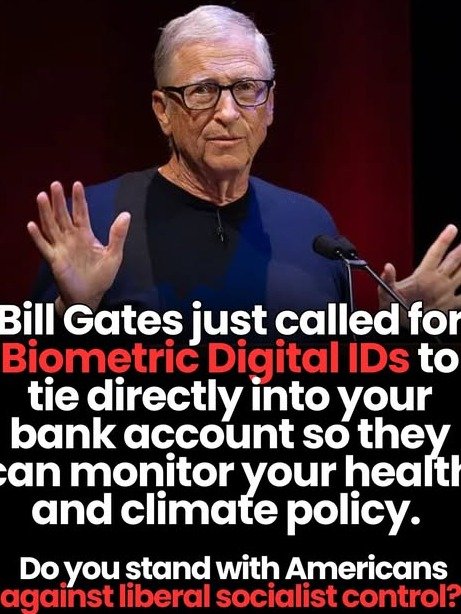
Imagine a world where every aspect of your life – from buying groceries to accessing healthcare – is tied to a single, unchangeable digital identity. This isn’t science fiction; it’s the looming reality of biometric digital IDs, and for millions, it raises a deeper, more chilling fear than mere technological advancement. This isn’t just about convenience; it’s about control.
For many Americans, the push for biometric digital identification systems isn’t just an upgrade; it’s a profound threat to personal liberty and autonomy. The battle over these digital fingerprints, facial scans, and iris patterns goes far beyond the realm of tech and delves deep into the very foundations of individual freedom and societal governance.
The Illusion of Effortless Convenience
At first glance, biometric digital IDs seem like a logical step forward. Proponents highlight their potential to streamline everything from international travel and banking transactions to accessing government services. Picture a world where your fingerprint grants you seamless entry to your flight, or a facial scan verifies your identity for a medical appointment, eliminating the need for countless physical documents.
These systems promise enhanced security, reducing fraud and identity theft by linking individuals to unique biological markers. They paint a picture of efficiency, a frictionless society where every interaction is swift, secure, and effortlessly verified. But beneath this enticing veneer of convenience lies a complex web of implications that demands our immediate and critical attention.
What Exactly Are Biometric Digital IDs?
Before diving deeper, it’s crucial to understand what we’re discussing. Biometric digital IDs leverage unique biological or behavioral characteristics to verify identity. This includes physiological biometrics like fingerprints, facial recognition, iris scans, and DNA, as well as behavioral biometrics such as voice recognition, gait, and even keystroke dynamics.
When these biological markers are digitized and linked to a centralized or distributed digital profile, they form a biometric digital ID. This ID then becomes the key to unlocking various services, authenticating transactions, and proving who you are in an increasingly digital world.
The Unseen Threat: Beyond Biometrics
The true concern isn’t just the technology itself, but what it enables. Biometric digital IDs are not isolated data points; they are designed to be integrated. They serve as the foundational layer for a vast network of interconnected systems, capable of aggregating an unprecedented amount of personal data about every individual.
This means your financial history, medical records, travel patterns, social interactions, and even your political affiliations could potentially be linked to this single, immutable digital identity. The result is a comprehensive digital profile that could define your access to society, making it far more than just a convenient way to prove who you are.
“When your identity becomes a digital gateway to all essential services, the power dynamic shifts dramatically from the individual to the gatekeeper.”
The Specter of the “Control Grid”
The term “control grid” may sound dystopian, but for many, it encapsulates a very real and growing fear. It refers to a theoretical, interconnected system where access to essential services – banking, travel, employment, healthcare, and even basic commerce – becomes contingent on your digital ID. Imagine being unable to open a bank account, purchase certain goods, or even travel if your digital ID is flagged or suspended.
Such a system opens the door to unprecedented levels of surveillance and potential social engineering. It raises legitimate questions about how dissenting voices or individuals who don’t conform to certain societal norms might be excluded or penalized. The fear isn’t just about what the technology can do, but what it could be used for in the wrong hands.
Privacy Under Siege: A Fundamental Right at Risk
The erosion of personal privacy is perhaps the most immediate and tangible threat posed by widespread biometric digital ID adoption. Every time a biometric scan is performed, data is collected. Who controls this data? How is it stored? Who has access to it?
The potential for data breaches, misuse by governments or corporations, and the creation of comprehensive surveillance states becomes a chilling reality. Our fundamental right to privacy, to exist without constant monitoring and data collection, stands on the precipice.
The Global Agenda: A Coordinated Push?
It’s not just individual nations pushing for these systems. Various international organizations, often in collaboration with powerful corporations, are actively advocating for global digital identity standards. The World Economic Forum, for example, has published extensively on the topic of digital identity, framing it as crucial for a “post-pandemic” world and for achieving Sustainable Development Goals.
While presented as a path to greater global efficiency and inclusivity, this coordinated push raises significant concerns about national sovereignty and the imposition of top-down systems that may not align with the values and freedoms cherished by many nations, particularly those with strong traditions of individual liberty.
A Deeper Fear: Loss of Autonomy and Freedom
At the heart of the resistance to biometric digital IDs lies a profound concern for individual autonomy. Freedom isn’t just about physical movement; it’s about the ability to control one’s own life, make choices, and participate in society without being constantly monitored, assessed, or potentially restricted by an overarching digital system.
If a single digital ID becomes the gatekeeper to all essential services, the power dynamics shift dramatically. Governments and corporations would wield immense power over individuals, capable of granting or denying access based on criteria that could evolve over time. This is the ultimate “deeper fear” – the potential for a system that can effectively control every aspect of one’s existence.
Resisting the Digital Chains: What Can We Do?
The fight against an all-encompassing biometric digital ID system is far from over, but it requires vigilance and concerted action. Here’s how individuals and communities can push back and protect their freedoms:
- Education and Awareness: Understanding the true implications of these systems is the first step. Share information, discuss concerns, and raise awareness within your networks.
- Advocacy for Privacy-Preserving Alternatives: Demand and support the development of decentralized, privacy-first identity solutions that put individuals in control of their own data, rather than central authorities.
- Demanding Transparency and Accountability: Hold governments and corporations accountable for their plans regarding digital IDs. Insist on clear regulations, robust data protection laws, and mechanisms for redress.
- Supporting Decentralized Technologies: Explore and advocate for blockchain-based or other decentralized identity systems that distribute control and minimize the risk of a single point of failure or control.
- Resisting Mandates: Where possible, resist the mandatory adoption of biometric digital IDs, especially when voluntary alternatives are not provided or are made deliberately inconvenient.
The choice before us is stark: embrace a future of unprecedented convenience at the potential cost of fundamental freedoms, or stand firm in defense of individual liberty and privacy in the digital age. The debate over biometric digital IDs is not merely a technological discussion; it is a battle for the very soul of our society.
The Stakes Have Never Been Higher
The push for biometric digital IDs is accelerating globally, often presented as an inevitable march towards progress. But true progress must prioritize human dignity, privacy, and freedom above all else. The “control grid” warning isn’t a distant fantasy; it’s a potential future we are building today, brick by digital brick.
It’s time to ask ourselves: are we willing to trade our autonomy for perceived convenience? Are we prepared to live in a world where our very existence is authenticated and controlled by a system we don’t fully understand or oversee? The fight over biometric digital IDs is indeed about more than technology – it’s about defining the future of human freedom.
About the Author




