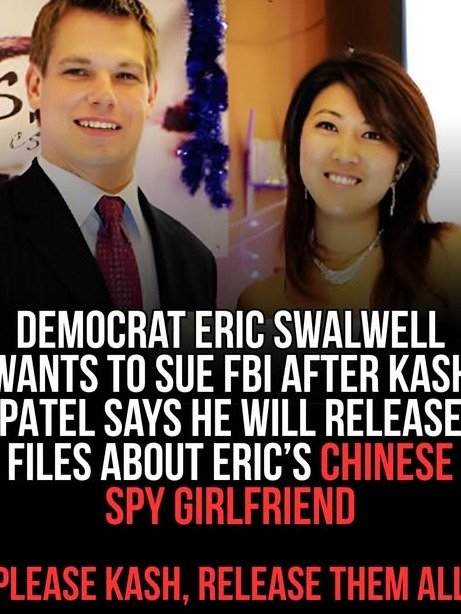
What if critical information regarding a high-profile U.S. Congressman’s past ties to a suspected Chinese intelligence operative was about to be made public, despite frantic efforts to keep it hidden? That’s precisely the high-stakes drama unfolding right now around Representative Eric Swalwell, as his legal team battles fiercely to block any release of details connected to the infamous ‘Fang Fang’ investigation.
Just when many believed the explosive story of Swalwell’s alleged entanglement with a suspected Chinese spy had faded, a new legal push has brought it roaring back into the national conversation. This isn’t merely a political skirmish; it’s a profound debate about transparency, national security, and the lengths to which powerful figures will go to control their narratives.
The Ghost of ‘Fang Fang’: A Quick Recap
For those who may have forgotten, the name ‘Fang Fang’ – or Christine Fang – sent shockwaves through Washington D.C. in late 2020. She was identified as a suspected Chinese intelligence operative who cultivated relationships with a number of rising American politicians, particularly in the Bay Area, between 2011 and 2015.
Her modus operandi reportedly involved political fundraising, extensive networking, and even engaging in romantic or sexual relationships with at least two Midwestern mayors. The goal, according to intelligence officials, was to gain access and influence over emerging political figures who could one day hold significant power.
Among those Fang reportedly targeted was then-Councilmember Eric Swalwell, who was just beginning his political ascent. Reports indicated that Fang volunteered for Swalwell’s 2012 congressional campaign, engaging in fundraising activities and establishing a close working relationship with him.
The FBI eventually became aware of Fang’s activities and initiated an investigation. In 2015, they reportedly briefed Swalwell on their concerns about Fang, leading to her abrupt departure from the U.S. and effectively ending her association with him. Swalwell’s office has consistently maintained that he fully cooperated with the FBI and was not accused of any wrongdoing.
The Unfolding Legal Battle: What Are They Hiding?
Fast forward to today, and the ‘Fang Fang’ controversy is back in the headlines. Recent reports indicate that Congressman Swalwell’s legal representatives are now actively working to prevent the release of any information related to the original investigation. This aggressive legal stance has ignited fresh speculation and concern.
Exactly what information Swalwell’s lawyers are attempting to suppress remains unclear, but the implications are significant. It could involve FBI records, internal communications, or other documents that shed further light on the nature and extent of his interactions with Fang Fang, or even the FBI’s assessment of those interactions.
Critics argue that such efforts to block transparency raise serious questions. If there’s nothing to hide, why the fervent legal battle to keep information under wraps? The public’s right to know about potential national security risks involving elected officials is paramount, especially when those officials serve on sensitive committees.
“The American people deserve full transparency when it comes to potential foreign influence on their elected representatives. Any attempt to conceal information only fuels suspicion and erodes public trust,” stated one political analyst.
National Security Implications: A Broader Threat
Beyond Congressman Swalwell himself, this ongoing saga underscores the pervasive and sophisticated nature of foreign espionage, particularly from nations like China. Influence operations are not always about stealing classified documents; often, they are about building long-term relationships to gain leverage and subtly shape policy.
The targeting of local and state politicians, often seen as less scrutinized than federal officials, is a common tactic. These individuals can eventually rise to positions where they have access to sensitive information, influence legislative decisions, or even shape national policy. The ‘Fang Fang’ case serves as a stark reminder of this insidious threat.
When a suspected foreign agent successfully infiltrates political circles, even if no classified information is directly compromised, the potential for manipulation and the erosion of trust in democratic institutions is immense. This is why the FBI takes such operations incredibly seriously.
Transparency vs. Privacy: A Delicate Balance
The legal fight also reignites the complex debate between government transparency and individual privacy, especially for public figures. While Swalwell’s legal team might argue for the protection of personal information or the sanctity of an FBI investigation, the public interest in matters of national security is equally compelling.
There’s a legitimate concern that releasing certain details could compromise intelligence gathering methods or reveal sources. However, the counter-argument is that the public needs to be fully informed about the potential vulnerabilities of their representatives, particularly those who hold security clearances and serve on critical committees like the House Intelligence Committee.
The very act of seeking to block information, regardless of the legal justification, can be perceived by the public as an admission of something damaging. In the court of public opinion, a fight for secrecy often translates into an assumption of guilt or, at the very least, an attempt to avoid uncomfortable truths.
The Political Fallout and What Comes Next
This resurfacing controversy is undoubtedly a significant headache for Congressman Swalwell, who has previously sought to dismiss the Fang Fang affair as a politically motivated attack. It could impact his standing within his party, his ability to fundraise, and his overall public image.
For the Republican party, this renewed focus on Swalwell’s past is an opportunity to question his judgment and fitness for office, especially given his prominent role as a vocal critic of the previous administration and a member of key congressional committees. Expect this issue to be weaponized in ongoing political debates.
- Increased Scrutiny: Swalwell will face renewed media and public scrutiny over his past associations.
- Legal Precedent: The outcome of this legal battle could set a precedent for how information related to intelligence investigations involving public officials is handled.
- Erosion of Trust: Regardless of the outcome, the ongoing secrecy battle risks further eroding public trust in government and elected officials.
As the legal proceedings unfold, the nation will be watching closely. Will Swalwell’s lawyers succeed in keeping the ‘Fang Fang’ files under wraps, or will the push for transparency ultimately prevail? The answer could have far-reaching implications, not just for one Congressman, but for the delicate balance between national security, public accountability, and the integrity of American democracy.
The shadow of China’s influence operations continues to loom large, and the efforts to expose them – or conceal information about them – are far from over. This is a story that demands our attention, as it speaks to the very heart of who we elect to represent us and what we expect from them in safeguarding our nation.
Why This Matters to YOU
You might wonder why a years-old controversy is suddenly so important. The answer lies in the ongoing battle against foreign interference in our political system. If a suspected foreign operative can get close to a rising political star, it highlights a vulnerability that every citizen should be aware of. Our national security depends on the integrity of our leaders.
Furthermore, the fight for transparency isn’t just about Swalwell. It’s about setting a standard for all elected officials. Do they have a right to privacy when their past connections potentially involve national security threats, or does the public’s right to know supersede that? This legal challenge will help define those boundaries.
Stay tuned as this complex and critical story develops. The truth, whatever it may be, has a way of eventually finding its light, no matter how hard some try to keep it buried in the shadows.
About the Author




