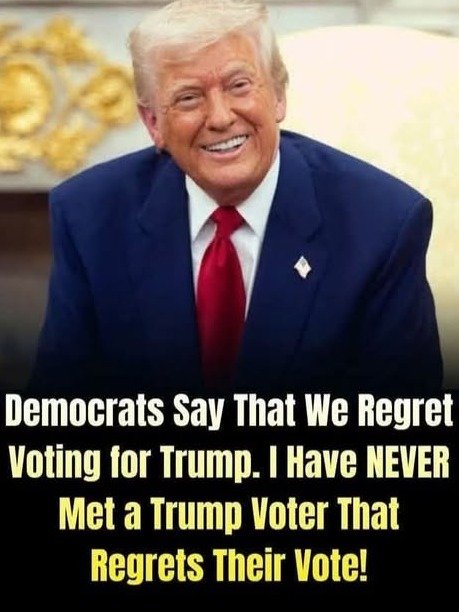
For years, a consistent drumbeat has echoed across mainstream news channels and punditry desks: “Trump voters are riddled with regret.” This narrative, often presented as an undeniable truth, suggests a widespread buyer’s remorse among those who cast their ballots for the 45th President. But what if that narrative is not just flawed, but entirely fabricated?
Step outside the cable news studios and away from the echo chambers of social media, and you’ll find a dramatically different reality. In communities across the nation, among friends, family, and neighbors, the sentiment isn’t one of regret or wavering support. Instead, there’s a palpable sense of conviction, a steadfast loyalty that mainstream analyses consistently fail to capture.
The Punditry Echo Chamber: A Narrative of Regret
It’s a familiar cycle: a political figure emerges who challenges the established order, and a segment of the media immediately begins to predict their downfall, often through the lens of voter disillusionment. For former President Trump, this has been a particularly persistent theme. Pundits frequently speculate about the “silent majority” of his voters secretly wishing they could take back their vote, or feeling embarrassment for their choice.
This narrative serves a clear purpose for some: to delegitimize the support base and to project an image of a movement on the decline. It’s a convenient way to dismiss the concerns and motivations of millions of Americans, framing their political choices as impulsive or ill-informed, rather than deeply considered.
Yet, this constant refrain often feels disconnected from the lived experiences of actual voters. The idea that a significant portion of the electorate would suddenly reverse course on deeply held beliefs or policy preferences, simply because the media says so, seems to underestimate the intelligence and resolve of the American public.
On the Ground: A Different Story Unfolds
My own observations, gathered from countless conversations in my community, at local events, and among my diverse circle of acquaintances, paint a starkly contrasting picture. Far from expressing regret, many Trump supporters articulate their continued support with clarity and conviction, often citing specific reasons for their unwavering stance.
There’s a quiet strength in their resolve, a sense that their voices are often unheard or misrepresented by dominant media outlets. They don’t shy away from their past choices; instead, they often double down, feeling vindicated by certain events or developments since the last election cycle.
This isn’t to say every single voter agrees on every single policy, but the core belief in the direction and principles espoused by the former President remains remarkably intact. The narrative of widespread regret simply doesn’t align with the reality I witness daily.
Why the Loyalty Endures: Policy and Performance
So, if regret isn’t the driving force, what is? For many, their support for Donald Trump was, and remains, rooted in specific policy outcomes and a belief in his approach to governance. They point to tangible achievements and ideological alignments that resonate deeply with their values.
- Economic Prosperity (Pre-Pandemic): Many recall a period of robust economic growth, low unemployment rates, and rising wages prior to the global health crisis. The promise of “America First” economics, they argue, delivered tangible benefits to working families and businesses.
- Border Security: The commitment to strengthening border security and enforcing immigration laws is a major touchstone for many supporters. They view a secure border as fundamental to national sovereignty and safety, and they appreciate the efforts made in this area.
- Judicial Appointments: The appointment of conservative judges to federal courts, including the Supreme Court, is often cited as a monumental achievement. For those concerned about constitutional principles and traditional values, these appointments represent a lasting legacy.
- Deregulation: Supporters often praise the administration’s efforts to roll back what they viewed as burdensome regulations, believing it fostered innovation and reduced the cost of doing business, benefiting the economy as a whole.
- Foreign Policy: While controversial to some, many supporters lauded Trump’s “America First” foreign policy, which prioritized national interests, challenged established international norms, and sought to reduce foreign entanglements.
These are not abstract concepts; they are concrete reasons that continue to fuel a strong sense of approval and a belief that their vote was well-placed. The perceived benefits of these policies often outweigh any criticisms or controversies in the eyes of his base.
The ‘Forgotten Man’ Mentality and Distrust in Media
Another powerful factor solidifying support is the deep-seated feeling among many voters that they are the “forgotten men and women” of America. They feel overlooked by the political establishment and dismissed by cultural elites. Trump’s rhetoric, which often positioned him as an outsider fighting for the common person, resonated profoundly with this sentiment.
This feeling of being unheard is often exacerbated by what they perceive as a biased media landscape. When mainstream outlets consistently portray them in a negative light, or misrepresent their motivations, it doesn’t lead to regret; it leads to a deeper distrust of those outlets and a stronger bond with the figure they believe truly represents them.
“When you’re constantly told you’re wrong, ignorant, or even deplorable for your political choices, it doesn’t make you change your mind. It makes you dig in deeper and question the motives of those doing the telling,” remarked a small business owner in Ohio, reflecting a sentiment heard repeatedly.
This dynamic creates a feedback loop: the more the media pushes a narrative of regret or condemnation, the more defiant and resolute the supporters become, viewing it as further proof of an establishment out of touch with their reality.
Cultural Identity and Values: More Than Just Politics
For many Trump voters, their support transcends mere policy preferences; it’s deeply intertwined with their cultural identity and core values. Issues such as religious freedom, traditional family structures, and a sense of national pride play a significant role in their political alignment.
They see the former President as a defender of these values against what they perceive as an increasingly progressive and secular cultural tide. This isn’t just about economic policy; it’s about a broader cultural struggle where they feel their way of life is under attack, and Trump is seen as their champion.
This cultural dimension makes their support particularly resilient. It’s harder to feel “regret” for a choice that you believe defends your fundamental identity and the future of your community and nation. This emotional and cultural connection adds another layer of unwavering loyalty.
Looking Ahead: The Unwavering Base and Future Elections
The implications of this enduring loyalty are significant for the political landscape. If the narrative of widespread regret is indeed a myth, then traditional political forecasting models that rely on such assumptions may be fundamentally flawed. The base of support for former President Trump appears to be robust and largely impervious to external criticism or media pressure.
This means that future elections will likely see a highly motivated and committed segment of the electorate, unwilling to be swayed by narratives that they perceive as biased or inaccurate. Campaigns that fail to understand or acknowledge this steadfast loyalty do so at their own peril.
Ignoring or dismissing this voter segment as “regretful” or “misguided” is not only inaccurate but also a strategic mistake. It prevents a genuine understanding of their concerns and motivations, making effective political engagement virtually impossible.
Beyond the Headlines: Understanding Real American Voices
It’s crucial for anyone seeking to understand the current political climate to look beyond the sensational headlines and the often-biased punditry. The reality on the ground, in communities far removed from the media centers, tells a story of unwavering conviction, not regret.
The reasons for this loyalty are complex and multifaceted, encompassing policy achievements, a sense of cultural identity, and a deep distrust of establishment narratives. To truly grasp the political pulse of the nation, we must listen to these voices, understand their perspectives, and acknowledge the genuine reasons behind their continued support.
The idea that millions of Americans are silently regretting their vote is a convenient, yet ultimately false, narrative. The truth is far more nuanced, revealing a dedicated base that stands firmly by its choices, ready to make their voices heard again.
About the Author




