Imagine a world where the very people responsible for government shutdowns felt the immediate, tangible pinch of their inaction, just like millions of ordinary Americans. What if the solution to Washington’s chronic gridlock and the painful fallout of a lapsed budget wasn’t more debate, but a simple, direct cut to the purse strings of power? A seismic shift is brewing in the halls of Congress, and it involves something most politicians hold incredibly dear: their paychecks.
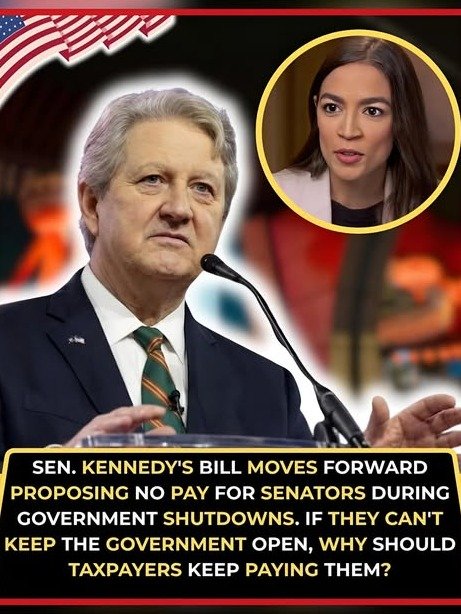
Senator John Kennedy (R-LA) has once again thrust a provocative proposal into the national spotlight, introducing legislation designed to halt the salaries of U.S. senators during government shutdowns. This isn’t just a symbolic gesture; it’s a bold challenge to the status quo, aiming to inject a dose of shared sacrifice and urgency into a system often perceived as insulated from its own failures. Kennedy’s initiative seeks to directly link legislative performance with personal financial consequence, raising critical questions about accountability, political will, and the future of congressional operations.
The Recurring Nightmare of Government Shutdowns
Before diving into the specifics of Senator Kennedy’s proposal, it’s crucial to understand the backdrop against which it emerges: the persistent, disruptive specter of government shutdowns. These events occur when Congress fails to pass appropriations bills, or other legislation to fund government operations, before existing funding expires. The consequences are far-reaching and often devastating, impacting federal employees, essential services, and the nation’s economy.
During a shutdown, hundreds of thousands of federal workers may be furloughed without pay, while others deemed ‘essential’ are forced to work without immediate compensation. National parks close, critical research stalls, and vital public services face disruption. Businesses reliant on government contracts or services suffer, and the overall economic uncertainty can ripple through markets, eroding public confidence and costing taxpayers billions in lost productivity and recovery efforts.
These shutdowns have become an unfortunate hallmark of modern American politics, often stemming from partisan disagreements over budget priorities, policy riders, or broader political leverage. Each shutdown highlights a fundamental breakdown in the legislative process, leaving citizens and federal workers to bear the brunt of congressional inaction.
Senator Kennedy’s Bold ‘No Pay’ Legislation
At the heart of Senator Kennedy’s initiative is a straightforward premise: if the government isn’t fully operational due to a failure in congressional duty, then those responsible for that failure – the senators themselves – should not continue to receive their taxpayer-funded salaries. His proposed legislation, often referred to as a variation of the ‘No Budget, No Pay’ act, aims to put this principle into practice.
Specifically, the bill dictates that if Congress fails to pass all appropriations bills or a continuing resolution by the start of a new fiscal year, or if funding lapses at any point, the salaries of U.S. senators would be withheld. This pause in pay would continue for the duration of the government shutdown, with salaries resuming only once the government is fully funded again. It’s a direct financial consequence designed to create a powerful incentive for lawmakers to reach an agreement.
The intent is clear: to ensure that senators feel the direct economic impact of a shutdown, mirroring the hardship faced by federal employees and the public. Kennedy argues that this shared sacrifice would motivate quicker, more responsible action, fostering a legislative environment where avoiding shutdowns becomes a paramount concern, rather than a recurring political tactic.
Arguments For Shared Sacrifice and Accountability
Proponents of Senator Kennedy’s bill champion it as a vital step towards greater accountability and a more responsive government. The core argument rests on the idea of shared sacrifice. Why should federal workers and the public suffer financially while the lawmakers responsible for the impasse continue to draw their full salaries?
“It’s time for Washington to feel the same pain it inflicts on the American people during a government shutdown,” Senator Kennedy has stated, encapsulating the sentiment behind his proposal. “If Congress can’t do its most basic job – funding the government – then senators shouldn’t get paid.”
This legislation could serve as a powerful incentive to avoid shutdowns. The financial pressure on individual senators might compel them to negotiate in good faith and compromise more readily, rather than digging in their heels for partisan gain. It shifts the personal cost of gridlock from the public to the politicians themselves, potentially streamlining the budget process.
Furthermore, such a measure could significantly improve public perception and trust in government. Many Americans view politicians as out of touch and insulated from the consequences of their actions. A ‘no pay’ policy could demonstrate that lawmakers are willing to put their money where their mouth is, fostering a sense of fairness and showing that they are indeed accountable to the people they serve.
- Increased Urgency: Financial pressure could expedite budget negotiations.
- Fairness: Aligns senators’ experiences with those of furloughed federal workers.
- Accountability: Directly links legislative failure to personal consequences.
- Public Trust: Demonstrates politicians are not above the consequences of their actions.
Navigating Constitutional Hurdles and Potential Challenges
While the proposal garners significant public support, it faces substantial legal and practical challenges, most notably concerning the 27th Amendment to the U.S. Constitution. This amendment states: “No law, varying the compensation for the services of the Senators and Representatives, shall take effect, until an election of Representatives shall have intervened.”
The debate often centers on whether withholding pay during a shutdown constitutes ‘varying’ compensation. Proponents argue that it’s a temporary suspension of payment, not a change to the overall salary, and that the pay is eventually restored once the government reopens. Opponents, however, contend that any temporary alteration to the timing or receipt of pay could be interpreted as ‘varying’ compensation, thus running afoul of the amendment if it takes effect within the same congressional term.
Another challenge is the practical impact. Would withholding pay truly be enough to force a resolution among senators, many of whom are independently wealthy? Critics argue that for some, the financial impact might be negligible, rendering the bill more symbolic than truly effective in ending shutdowns. There’s also the concern that it could create unintended consequences, potentially leading to more rushed, poorly thought-out budgets just to avoid a pay cut, or even more entrenched partisan battles if senators refuse to budge on principle.
There’s also the question of fairness to less affluent senators. While many members of Congress have significant personal wealth, some rely primarily on their congressional salary. A prolonged pay suspension could create genuine financial hardship for them, potentially skewing who can realistically serve in Congress.
A History of Similar Proposals
Senator Kennedy’s bill is not an entirely novel concept. Variations of ‘No Budget, No Pay’ legislation have been introduced by members of both parties over the years, particularly in the wake of significant government shutdowns. These proposals often reflect widespread public frustration with congressional dysfunction and a desire to see lawmakers held more directly responsible.
For instance, during the 2013 government shutdown, similar bills gained traction, though none ultimately passed both chambers and became law. The consistent reintroduction of these measures underscores the enduring public demand for accountability and the ongoing debate within Congress about how best to incentivize responsible governance.
These past attempts highlight the political hurdles such legislation faces. While popular with the public, they often struggle to gain sufficient bipartisan support within Congress itself, where members may be wary of setting a precedent that could directly impact their own financial security or be used as a political weapon by the opposing party.
The Road Ahead for Kennedy’s Bill
The fate of Senator Kennedy’s current proposal remains uncertain. While it taps into a deep well of public frustration and a desire for greater accountability, its journey through the legislative process will be fraught with challenges. It will require significant bipartisan backing to overcome potential opposition, particularly from those who view it as either unconstitutional or ineffective.
The bill’s success will depend on its ability to navigate the complex legal arguments surrounding the 27th Amendment, as well as its capacity to sway enough members of Congress to prioritize shared sacrifice over political expediency. Its introduction, however, serves a crucial purpose: it keeps the conversation about congressional accountability and the costs of government shutdowns front and center.
As the nation continues to grapple with the possibility of future budget impasses, Senator Kennedy’s ‘no pay’ legislation stands as a powerful symbol of the public’s demand for a more responsible, responsive, and accountable government. It forces a critical examination of whether those who lead should also share the burdens they create, potentially paving the way for a new era of congressional conduct.
About the Author




