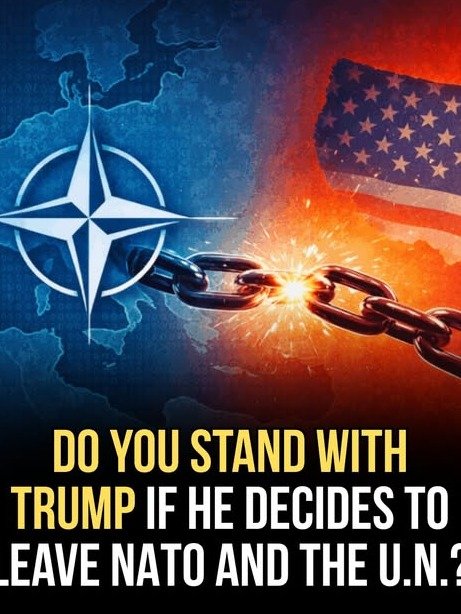
Imagine a world where the United States stands alone, no longer bound by the alliances that have defined its global leadership for over seven decades. It sounds like a doomsday scenario from a political thriller, but the prospect of America withdrawing from cornerstone international bodies like NATO and the United Nations is no longer confined to the fringes of political discourse.
This isn’t just another policy debate; it’s a potential earthquake that could redefine America’s role on the world stage and trigger one of the most profound breaks from the postwar order in modern history. The implications are staggering, promising to reshape everything from global security to humanitarian aid and international diplomacy.
The Pillars of Postwar Stability: NATO and the UN
To truly grasp the magnitude of such a move, we must first understand the foundational role NATO and the UN have played since World War II. Born from the ashes of global conflict, these organizations were meticulously crafted to prevent future catastrophes and foster an era of unprecedented international cooperation.
NATO, the North Atlantic Treaty Organization, was established in 1949 as a collective defense alliance, primarily to counter the Soviet Union’s expansionist ambitions. Its core principle, Article 5, states that an attack on one member is an attack on all, forging an ironclad commitment to mutual defense that has deterred aggression for over 70 years.
The United Nations, founded in 1945, emerged as a universal platform for diplomacy, human rights, and humanitarian efforts. Beyond its peacekeeping missions, the UN facilitates crucial international agreements on climate change, global health, and economic development, acting as a vital forum for nearly every nation on Earth to address shared challenges.
The Call for ‘America First’: Why Some Advocate Withdrawal
Despite their historical significance, both organizations have faced increasing scrutiny, particularly from proponents of an ‘America First’ ideology. Backers of withdrawal often frame it as a necessary step to reclaim national sovereignty and shed perceived burdens.
Arguments frequently center on the financial contributions the U.S. makes, suggesting that other nations are not pulling their weight. Critics argue that America shoulders too much of the defense spending within NATO and contributes disproportionately to UN budgets, while allies benefit from U.S. protection without adequate reciprocal investment.
Furthermore, some believe that these alliances restrict America’s freedom of action, tying its hands in foreign policy decisions. They contend that the U.S. should prioritize its own interests above multilateral commitments, viewing international agreements as potential impediments to national autonomy.
Unraveling NATO: A Gamble with Global Security
A U.S. withdrawal from NATO would send shockwaves across the globe, fundamentally altering the security landscape. For European allies, it would represent an immediate and profound sense of abandonment, forcing them to re-evaluate their defense strategies in a far more dangerous world.
The collective security guarantee, the bedrock of NATO, would instantly crumble. This could embolden revisionist powers like Russia, potentially leading to increased aggression against NATO’s eastern members and destabilizing regions across Europe. The carefully constructed deterrent against large-scale conflict would evaporate.
Moreover, America’s withdrawal would significantly diminish its global influence. NATO has been a powerful tool for projecting U.S. values and leadership, coordinating responses to global threats, and fostering military interoperability with key partners. Losing this platform would leave a gaping void in international security architecture.
“To abandon NATO would not only undermine our security but also cede the playing field to our adversaries, creating a vacuum that others would eagerly fill.” – A former U.S. Secretary of State
The UN’s Role: Beyond Peacemaking
Leaving the United Nations would be equally disruptive, though perhaps in different ways. While NATO primarily focuses on military security, the UN’s mandate is far broader, touching nearly every aspect of global well-being. A U.S. exit would cripple vital international initiatives.
Consider the immense humanitarian efforts coordinated through the UN: disaster relief, refugee support, food aid, and global health campaigns. The U.S. has been a leading contributor and advocate for these programs. Its absence would create a massive funding gap and a leadership vacuum, leaving millions vulnerable.
Furthermore, the UN serves as the primary forum for addressing global challenges that transcend national borders, such as climate change, pandemics, and nuclear proliferation. Without the U.S. at the table, discussions on these critical issues would lose significant weight and effectiveness, making consensus harder to achieve and solutions more elusive.
Economic and Diplomatic Fallout: A World Without US Leadership?
The economic ramifications of such a drastic shift would be severe. Global trade relies on a relatively stable and predictable international order, often underpinned by U.S. security guarantees and diplomatic engagement. A retreat into isolationism could lead to increased protectionism, trade wars, and economic instability.
U.S. businesses and investors could face greater uncertainty in markets where alliances once provided a degree of stability. The dollar’s status as the world’s reserve currency, while complex, is also tied to America’s perceived reliability and global influence – factors that would be severely tested by such withdrawals.
Diplomatically, the U.S. would find itself increasingly isolated. Its ability to forge coalitions, pressure adversaries, and resolve international disputes would be dramatically curtailed. Nations that once looked to Washington for leadership might turn elsewhere, potentially empowering rival powers like China and Russia to fill the void and reshape global norms to their advantage.
The Domestic Divide: A Nation at a Crossroads
The debate over leaving NATO and the UN is not merely a foreign policy discussion; it’s a deep ideological battle within the United States itself. Such a move would unleash unprecedented domestic political turmoil, dividing the nation along fundamental lines regarding its identity and purpose in the world.
The traditional bipartisan consensus on international engagement, which largely held for decades, would be shattered. This would spark intense debates in Congress, among the public, and within the military and intelligence communities, creating profound uncertainty about the nation’s future direction.
For some, it represents a bold assertion of national sovereignty and a rejection of what they see as outdated commitments. For others, it is a dangerous abandonment of responsibility, a betrayal of allies, and a short-sighted gamble with America’s long-term security and prosperity.
What’s at Stake: Redefining American Identity on the World Stage
Ultimately, a decision to withdraw from NATO and the UN would force America to confront its very identity. Would it choose to retreat from the world, prioritizing perceived self-interest above collective security and global cooperation? Or would it reaffirm its commitment to the liberal international order it helped create?
The stakes couldn’t be higher. This is not just about treaties and organizations; it’s about the kind of world we want to live in. It’s about whether the principles of democracy, human rights, and peaceful resolution of disputes will continue to guide international relations, or if we will descend into an era of unchecked nationalistic ambition and increased global instability.
The potential ripple effects are almost impossible to fully predict, but one thing is certain: such a move would be an irreversible step, marking a monumental shift away from the framework that has largely maintained peace and prosperity for over seven decades. The world would undoubtedly change, and America’s place within it would be irrevocably transformed.
The Weight of a World-Altering Decision
The prospect of the United States abandoning NATO and the United Nations is a decision of truly historic proportions, one that would reverberate through generations. It challenges the very foundations of the international system built after World War II and invites a profound re-evaluation of global power dynamics.
This isn’t just about cutting ties; it’s about severing the intricate web of security, economic, and diplomatic relationships that have defined the modern era. The choice to leave would not merely be a policy change; it would be a declaration to the world that America is charting an entirely new, and potentially perilous, course.
As the debate continues, the world watches, holding its breath to see if the nation that built the postwar order will be the one to dismantle it, and what new, uncertain reality would emerge in its wake.
About the Author




