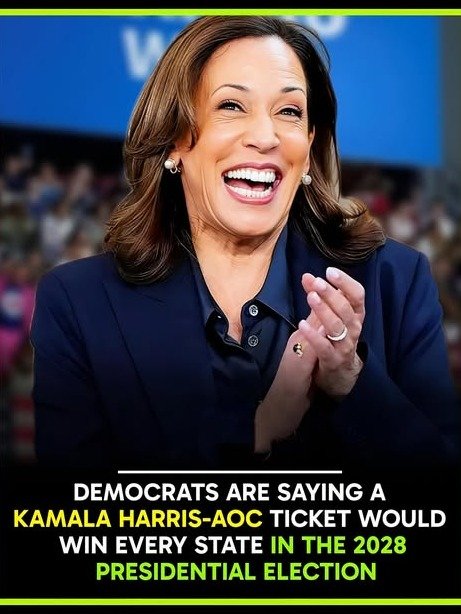
Imagine a political pairing so audacious, so potentially transformative, it sends ripples through every corner of the American political landscape. Whispers have begun to swell into a chorus, discussing a hypothetical 2028 presidential ticket featuring Vice President Kamala Harris and Congresswoman Alexandria Ocasio-Cortez. This isn’t just political speculation; it’s a conversation that has captivated strategists, pundits, and everyday voters alike, sparking intense debate about the future direction of the Democratic Party and the nation itself.
The mere mention of such a ticket immediately conjures images of a powerful, progressive, and undeniably historic duo. It represents a bold vision for America, one that some see as a thrilling path forward, while others view it with caution, or even alarm. But what exactly makes this potential pairing so compelling, and what are the profound implications it could carry for the 2028 election cycle and beyond?
The Power Duo: Unpacking Harris and AOC’s Individual Strengths
Both Kamala Harris and Alexandria Ocasio-Cortez bring formidable, albeit distinct, political strengths to the table. Vice President Harris, with her extensive experience in the executive branch, as a U.S. Senator, and as California’s Attorney General, offers a seasoned, establishment presence. She embodies a steady hand, a deep understanding of governance, and a track record of navigating complex political waters.
Her appeal often resonates with more moderate Democrats, suburban voters, and those who value experience and a pragmatic approach to policy. Harris’s background as a prosecutor and her journey to becoming the first female Vice President of the United States speak volumes about her resilience and barrier-breaking capabilities. She represents a continuation of the Democratic Party’s mainstream, yet with a distinct voice that has evolved over her career.
On the other side, Alexandria Ocasio-Cortez is a political phenomenon, a dynamic and charismatic voice for the progressive movement. As one of the youngest women ever elected to Congress, she has become a national figure almost overnight, known for her passionate advocacy, sharp communication skills, and fearless embrace of bold policy proposals like the Green New Deal and Medicare for All. Her appeal is particularly strong among young voters, urban progressives, and those yearning for systemic change.
AOC has masterfully utilized social media to connect directly with millions, bypassing traditional media gatekeepers and building a powerful grassroots following. Her ability to articulate complex progressive ideas in an accessible way has made her a potent force, capable of mobilizing significant segments of the Democratic base and inspiring a new generation of activists.
A Synergistic Vision: How They Could Complement Each Other
The allure of a Harris-Ocasio-Cortez ticket lies in the potential for powerful synergy. On paper, they represent a compelling blend of experience and fresh vision, mainstream appeal and progressive energy. Harris could provide the gravitas and a bridge to the party’s establishment, reassuring voters concerned about radical shifts. Ocasio-Cortez, meanwhile, could ignite the progressive base, bringing unparalleled enthusiasm, and drawing in younger, more diverse electorates who might otherwise feel disengaged.
“This ticket would be a masterclass in political balancing,” one hypothetical strategist might observe. “Harris brings the executive experience and a track record of navigating the D.C. machine, while AOC electrifies the base and sets the agenda for the next generation. It’s a combination that could truly define the Democratic Party’s future.”
Such a pairing could aim to unify the Democratic Party’s sometimes fractious wings, presenting a united front that signals both continuity and a commitment to bold, forward-thinking policies. It could be seen as an attempt to capture the best of both worlds: the electoral reliability of a seasoned politician and the electrifying momentum of a movement leader.
Policy Alignment and Potential Friction Points
While both Harris and Ocasio-Cortez are firmly within the Democratic Party, their policy approaches and ideological emphasis do have nuances. Harris, while progressive, has often adopted more pragmatic positions, reflecting her experience in traditional governance and her need to appeal to a broader electorate. Her policy stances typically align with mainstream Democratic priorities, focusing on expanding access to healthcare, addressing climate change, and promoting economic equity through established governmental frameworks.
Ocasio-Cortez, on the other hand, is a vocal champion of more transformative, structural changes. Her platform often includes proposals that push the boundaries of current Democratic thought, such as significant government intervention in the economy, universal social programs, and a rapid transition away from fossil fuels. These bold ideas, while inspiring to many, can also be polarizing.
A potential ticket would need to carefully craft a unified platform that bridges these differences. Key areas of focus would likely include:
- Climate Change: Harris’s pragmatic approach versus AOC’s Green New Deal.
- Healthcare: Expanding the ACA vs. a full Medicare for All system.
- Economic Policy: Targeted relief and investment vs. more systemic wealth redistribution.
- Social Justice: Both are strong advocates, but their preferred legislative paths might differ.
The challenge would be to present a cohesive vision that doesn’t alienate either the moderate base or the progressive core, but rather shows how their combined approach leads to a stronger, more inclusive America.
Voter Appeal: Energizing the Democratic Coalition
One of the most compelling arguments for a Harris-Ocasio-Cortez ticket is its potential to energize and expand the Democratic voter coalition. This pairing could be particularly effective in mobilizing:
- Young Voters: Ocasio-Cortez’s powerful voice and social media presence could drive unprecedented youth turnout.
- Women Voters: A historic all-female ticket would undoubtedly inspire and motivate women across all demographics.
- Progressives: AOC’s inclusion would signal a strong commitment to progressive values, bringing highly motivated activists to the polls.
- Minority Voters: Harris, as a woman of color, combined with AOC’s diverse appeal, could strengthen ties with crucial minority voting blocs.
The ticket could project an image of a party ready to tackle the nation’s biggest challenges with fresh energy and diverse perspectives. It would present a stark contrast to potential Republican opponents, framing the election as a choice between a future-oriented, inclusive vision and a more traditional, perhaps less dynamic, alternative.
Navigating the Political Minefield: Challenges and Criticisms
Despite the potential upsides, a Harris-Ocasio-Cortez ticket would face significant hurdles. The most immediate challenge would be from conservative media and Republican opponents, who would undoubtedly paint the ticket as excessively left-wing or even “socialist.” The term “socialism” has been a potent political weapon, and Ocasio-Cortez’s association with it would be heavily scrutinized and weaponized.
Furthermore, concerns about the ticket’s electability among swing voters and in battleground states would be paramount. While energizing the base is crucial, winning a national election requires broad appeal. Some moderate Democrats might fear that such a progressive ticket could alienate centrist voters, particularly those in rural or traditionally conservative areas who might be swayed by narratives of extremism.
Another potential point of contention could be the perception of an ideological imbalance. While Harris has moved left throughout her career, she is generally seen as more centrist than Ocasio-Cortez. The question would be whether Harris could effectively lead a ticket that features such a prominent progressive voice without being overshadowed or forced to adopt positions that might be seen as too far left for the general electorate.
Historical Context and the Road to 2028
Historically, presidential tickets often strive for a balance of geography, experience, and ideology. A Harris-Ocasio-Cortez ticket would certainly break new ground in terms of gender and potentially ideological alignment. While there’s no direct precedent for an all-female ticket at this level, the very discussion signals a shift in what is considered possible and viable in American politics.
The political landscape of 2028 will also play a crucial role. Factors such as the state of the economy, international relations, and ongoing social issues will all shape voter sentiment. The Democratic Party will need to consider whether a bold, progressive ticket is the best strategy to address those prevailing concerns and defeat potential Republican challengers, who may themselves be presenting a dramatically different vision for the country.
The path to 2028 is long and unpredictable. Primary challenges, fundraising capabilities, and the ever-shifting tides of public opinion will all influence the viability of any potential ticket. However, the mere fact that a Harris-Ocasio-Cortez pairing is being seriously discussed underscores a significant moment in American political discourse.
The Democratic Party’s Future: Unity or Fracture?
Ultimately, a Harris-Ocasio-Cortez ticket would force the Democratic Party to confront its own identity and future direction. Could it unite the party’s diverse factions under a common banner, demonstrating a powerful blend of experience and progressive zeal? Or could it exacerbate internal tensions between the moderate and progressive wings, leading to a potentially fractured base?
The answer would likely depend on the narrative they craft and their ability to articulate a vision that feels both ambitious and achievable. If they can successfully merge their individual strengths into a coherent, compelling message, this ticket could indeed become a formidable force. If not, the ideological differences could become a liability.
The conversation surrounding a Harris-AOC ticket is more than just idle speculation; it’s a window into the evolving aspirations and anxieties within the Democratic Party. It highlights the desire for both stability and transformative change, for experienced leadership and a fresh, passionate voice. As 2028 draws closer, whether this hypothetical pairing materializes or not, the very discussion will continue to shape the contours of the upcoming presidential race, forcing everyone to consider what kind of leadership America truly needs.
Conclusion: A Glimpse into Tomorrow’s Politics
The prospect of a Kamala Harris and Alexandria Ocasio-Cortez presidential ticket in 2028 is a tantalizing thought experiment that offers a glimpse into the potential future of American politics. It represents a daring proposition, one that could either unify and electrify the Democratic Party to unprecedented heights or face an uphill battle against deeply entrenched political divisions. Regardless of its ultimate feasibility, the ongoing discussion about this powerful, all-female duo signals a profound shift in what voters and political strategists are willing to imagine for the nation’s highest offices. The future, it seems, is ready for bold new combinations, and this one has certainly captured the imagination.
About the Author




