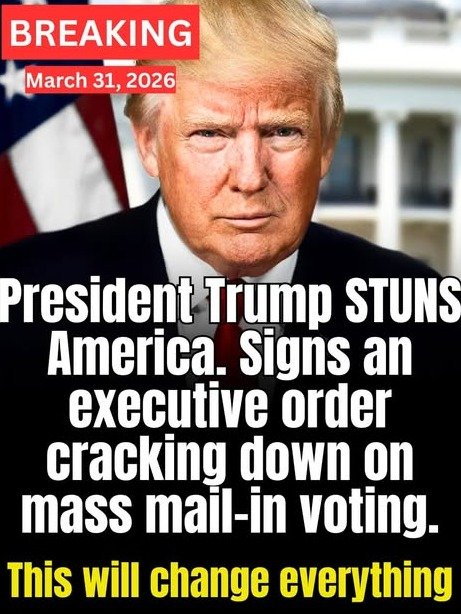
What if the very foundation of our democracy—free and fair elections—was under a silent, creeping threat? That was the urgent question President Trump sought to address when he signed a pivotal Executive Order, targeting what he described as critical weaknesses in our electoral system: mail-in ballot security and the accuracy of voter registration. This wasn’t just another policy tweak; it was a direct challenge to the status quo, igniting a national debate on the future of how Americans cast their ballots.
This groundbreaking Executive Order came at a crucial time, with the nation grappling with unprecedented challenges and an impending election. With Congress seemingly at a standstill, unable to reach a consensus on comprehensive election reform, the White House took unilateral action, asserting the need for federal intervention to safeguard the electoral process.
The Urgent Call for Election Integrity
The core of President Trump’s Executive Order revolved around a dual mandate: to significantly crack down on potential mail-in ballot fraud and to meticulously clean up inaccurate voter rolls. These two areas have long been flashpoints in the broader discussion about election integrity, often sparking intense partisan debate and concern among voters.
For many, the integrity of the voting process is paramount. It underpins public trust in democratic outcomes. Concerns about anomalies, whether real or perceived, can erode this trust, making any effort to bolster election security a significant and often contentious undertaking.
Unpacking the Mail-In Ballot Controversy
Mail-in ballots, while offering convenience, have also become a lightning rod for controversy. Proponents highlight their accessibility, allowing more citizens to participate, especially those with disabilities, military personnel abroad, or individuals facing health concerns. However, critics raise alarms about the potential for fraud, coercion, and logistical nightmares.
One of the primary concerns articulated by those advocating for stricter controls is the risk associated with ballot harvesting, where third parties collect and submit ballots. While illegal in many states, the practice raises questions about undue influence and potential tampering. There are also worries about ballots being lost in transit, intercepted, or completed under duress.
“Ensuring the integrity of our elections is not a partisan issue; it is a bedrock principle of our republic. This Executive Order aims to address vulnerabilities that, if left unchecked, could undermine the very faith Americans place in their vote.” – A White House official at the time.
Furthermore, the verification process for mail-in ballots often relies heavily on signature matching. While effective to a degree, this method is not foolproof and can lead to legitimate ballots being rejected due to minor discrepancies, or fraudulent ballots being accepted if signatures are skillfully forged. The sheer volume of mail-in ballots, particularly in a widespread all-mail election scenario, can also overwhelm local election officials, making thorough verification a monumental task.
The Silent Threat of Inaccurate Voter Rolls
Beyond mail-in ballots, the Executive Order also targeted the often-overlooked but equally critical issue of inaccurate voter rolls. Imagine millions of names on voter lists that belong to people who have moved, are deceased, or are registered multiple times. This isn’t just an administrative oversight; it creates significant vulnerabilities for potential fraud.
States are legally obligated to maintain accurate voter rolls under the National Voter Registration Act (NVRA), often referred to as the ‘Motor Voter’ law. However, the process of removing ineligible voters, known as ‘list maintenance,’ is complex, resource-intensive, and often lags behind population changes. This can result in:
- Deceased Voters: Names remaining on rolls long after individuals have passed away, creating opportunities for fraudulent votes.
- Duplicate Registrations: Individuals registered in multiple states or even multiple times within the same state, potentially allowing them to cast more than one ballot.
- Movers: Voters who have relocated but whose old registrations haven’t been purged, leading to outdated lists.
- Non-Citizens: Instances where non-citizens might be registered to vote inadvertently or intentionally.
These inaccuracies, regardless of intent, can sow distrust and provide avenues for bad actors to exploit the system. Cleaning these rolls is seen by proponents as a vital step in preventing fraudulent votes and ensuring that only eligible citizens cast ballots.
What Did the Executive Order Actually Mandate?
Signed in August 2020, Executive Order 13945, titled “Ensuring Safe and Lawful Mail-In Voting for the 2020 Federal Elections,” laid out several key directives designed to enhance election security. It wasn’t about federalizing elections, but rather about leveraging federal resources and oversight to assist states and identify potential issues.
The order specifically directed the Attorney General and the Secretary of Homeland Security to review and report on any instances of voter fraud, attempted fraud, or election irregularities related to mail-in ballots. This was intended to provide a comprehensive assessment of the landscape of potential vulnerabilities.
The Role of Federal Agencies and Data Sharing
A crucial aspect of the EO was its emphasis on inter-agency cooperation. It called upon federal agencies to provide states with relevant data to help them identify and remove ineligible voters from their rolls. This could include information from the Social Security Administration regarding deceased individuals, or data from the Department of Homeland Security regarding non-citizens.
Additionally, the Executive Order directed the Postmaster General to take steps to ensure the timely and secure delivery of mail-in ballots. This included providing guidance to voters on how to properly complete and return their ballots, as well as working with state and local election officials to address any logistical challenges related to increased mail-in voting.
The Political Firestorm and Divided Opinions
Unsurprisingly, the Executive Order was met with a divided response, reflecting the deep partisan chasm over election integrity issues. Supporters lauded it as a necessary and proactive measure to protect the sanctity of the vote, especially in a year where mail-in voting was expected to surge due to the COVID-19 pandemic.
Many viewed it as a decisive action to address long-standing concerns that Congress had failed to tackle. They argued that a robust federal effort was essential to restore faith in the electoral process and prevent any potential manipulation, particularly given the unprecedented scale of anticipated mail-in voting.
Concerns Over Voter Suppression and Federal Overreach
However, critics quickly condemned the Executive Order, viewing it as an attempt to suppress votes and undermine access to the ballot box. Opponents argued that the claims of widespread mail-in ballot fraud were exaggerated or unsubstantiated, and that the order was a thinly veiled effort to make voting more difficult, particularly for certain demographics.
There were also significant concerns about federal overreach into state-controlled elections. The U.S. Constitution grants states primary authority over how elections are administered, and many saw the Executive Order as an inappropriate federal intrusion into state sovereignty. They worried it could lead to unnecessary hurdles for eligible voters and create confusion.
The Enduring Debate: Convenience vs. Security
The Executive Order, in essence, highlighted the perpetual tension between maximizing voter access and ensuring election security. While some prioritize making it as easy as possible for every eligible citizen to vote, others emphasize the need for stringent safeguards to prevent fraud and maintain public confidence in the results.
This debate is not new, but the context of the 2020 election, with its unique challenges and heightened political polarization, brought these issues to the forefront with unprecedented intensity. The order forced a national conversation about the balance between these two critical pillars of democratic elections.
Looking Ahead: The Ongoing Quest for Secure Elections
While the immediate impact of the Executive Order was felt in the lead-up to the 2020 election, its signing underscored a persistent and vital issue: the continuous need to fortify our electoral systems. Regardless of political affiliation, the goal of fair, transparent, and secure elections is a shared aspiration for all citizens.
The discussions sparked by President Trump’s action continue to shape policy debates and legislative efforts at both federal and state levels. From improving data sharing between states to enhancing signature verification technologies and streamlining voter roll maintenance, the quest for a more resilient and trustworthy election process remains an ongoing endeavor. The Executive Order served as a powerful reminder that the vigilance required to protect the ballot box is a perpetual duty, ensuring that every legitimate vote counts and that the integrity of our democracy remains unassailable.
About the Author




