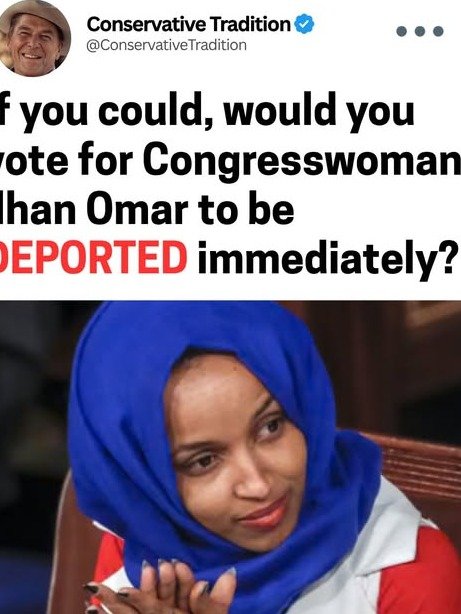
Imagine fleeing war, seeking refuge, and then rising to the highest echelons of power in your new home. This is the extraordinary, yet deeply controversial, journey of Ilhan Omar, a path that has not only redefined what’s possible but also ignited a firestorm of national debate. Her story, from a Somali refugee camp to the halls of the U.S. Congress, is often held up as a testament to the American Dream, yet her tenure has been met with both fervent support and sharp criticism, prompting a closer look at what it truly means to represent a nation.
For many, Omar embodies the very best of American opportunity – a testament to a nation that opens its arms to those in need, offering a pathway to success regardless of origin. She arrived in the United States as a child, escaping civil war, and through hard work and determination, navigated the complexities of a new culture and language to eventually become a prominent voice in American politics. This narrative of resilience and achievement is undeniably powerful and inspiring.
From Refugee to Representative: A Remarkable Ascent
Ilhan Omar’s journey began in Mogadishu, Somalia, where she spent her early years before her family was forced to flee the escalating conflict. After several years in a refugee camp in Kenya, she arrived in the United States in 1995, settling in Arlington, Virginia, before eventually moving to Minneapolis, Minnesota. Her experience as an immigrant shaped her perspective profoundly, instilling a deep understanding of the challenges faced by marginalized communities.
Her political career blossomed from community activism. She served as a policy aide, engaged in local politics, and eventually ran for and won a seat in the Minnesota House of Representatives in 2016. This victory marked a significant milestone, making her the first Somali-American to be elected to a state legislature in the United States. Her rapid ascent continued, culminating in her election to the U.S. House of Representatives in 2018, representing Minnesota’s 5th congressional district.
The Weight of Expectation and the Reality of Dissent
Upon her arrival in Congress, Omar quickly became a high-profile figure, joining a new generation of progressive lawmakers. Her unique background and outspoken nature positioned her as a vocal advocate for issues ranging from immigration reform and universal healthcare to climate action and a re-evaluation of U.S. foreign policy. However, it was often her critical stance on certain American policies and her comments on international relations that drew the most intense scrutiny.
The sentiment expressed by some, that she ‘repaid’ the opportunities afforded to her by criticizing the country, highlights a fundamental tension in public discourse. Is a representative’s role to offer unwavering praise, or to hold power accountable, even if that means critiquing the nation’s actions? Many argue that true patriotism involves striving for a more perfect union, which often necessitates identifying and addressing perceived shortcomings.
Navigating the American Identity and Foreign Policy Debates
Omar’s statements, particularly those concerning U.S. foreign policy and the Israeli-Palestinian conflict, have frequently sparked controversy. Critics have accused her of anti-Semitism and of being ungrateful for the sanctuary America provided. These accusations have fueled intense debates about freedom of speech, the line between legitimate criticism and harmful rhetoric, and what constitutes loyalty to one’s adopted country.
“To be a refugee, to be an immigrant, to be a Muslim, and to be a Black woman in America — it means that you often carry the weight of expectations and the burden of representation.” – A sentiment often echoed by those familiar with her unique position.
Supporters, conversely, emphasize that Omar is simply exercising her right to free speech and representing the diverse views of her constituents, many of whom share similar concerns about global justice and human rights. They argue that her perspective, shaped by her lived experience, offers a crucial counter-narrative to traditional foreign policy stances and enriches the national conversation.
The True Meaning of Opportunity and Allegiance
The idea that receiving opportunities obligates one to unquestioning allegiance is a complex one. While gratitude is a natural human emotion, many would contend that the highest form of ‘repayment’ to a democratic nation is active participation in its improvement. This includes:
Holding leaders accountable: Ensuring transparency and ethical governance.
Advocating for justice: Working towards equality and fairness for all citizens.
Challenging the status quo: Pushing for policies that better serve the evolving needs of the country.
Promoting democratic ideals: Upholding freedom of speech and the right to dissent.
From this perspective, Omar’s vocal criticisms, while often divisive, could be seen not as an act of ingratitude, but as a commitment to the very principles of democracy that allowed her to rise. Her journey exemplifies the unique challenges faced by public figures who embody multiple identities and are expected to navigate complex cultural and political landscapes.
The Broader Impact: Reshaping Political Discourse
Regardless of one’s political leanings, Ilhan Omar’s presence in Congress has undeniably reshaped American political discourse. She has brought conversations about refugee experiences, Islamophobia, and the complexities of global politics to the forefront. Her story forces a nation to confront its ideals, its challenges, and the evolving definition of what it means to be an American.
Her critics often point to specific statements as evidence of her perceived anti-American sentiment, while her defenders highlight her unwavering commitment to social justice and her dedication to her constituents. This ongoing tension underscores a deeper national reckoning about identity, belonging, and the future direction of the country.
A Legacy of Debate and Representation
Ilhan Omar’s career continues to be a lightning rod for debate, reflecting the deep ideological divides within the United States. Her journey from a refugee camp to the U.S. Capitol is a powerful narrative of triumph and opportunity, but her outspoken political career has also challenged conventional notions of patriotism and dissent. She has undeniably carved out a significant, if often controversial, space in American politics.
Ultimately, her story serves as a potent reminder that the American Dream is not a monolithic concept, and the path to public service, especially for those with unique backgrounds, is often paved with both profound opportunity and intense scrutiny. Her legacy will likely be defined not just by her legislative achievements, but by the fierce debates she ignited and the enduring questions she posed about America’s past, present, and future.