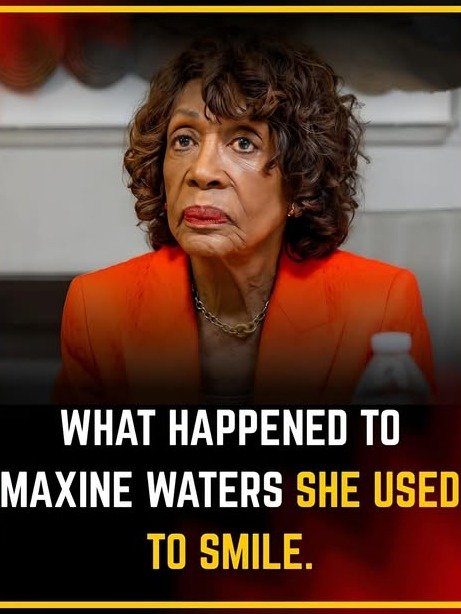
For decades, Representative Maxine Waters has been a formidable voice in American politics, a steadfast progressive whose career spans generations. Yet, something profoundly changed in the public’s perception of her, particularly as Donald Trump ascended to the presidency and beyond. This isn’t just about political affiliation; it’s about a seismic shift in how one of America’s most enduring figures is viewed, loved, and loathed.
Before the Trump era, Maxine Waters was already a well-known figure, celebrated by her constituents and progressive allies, and often criticized by conservatives for her outspoken nature. However, the intensity and breadth of public reaction to her reached unprecedented levels, transforming her into a symbol deeply embedded in the nation’s hyper-polarized political landscape.
A Legacy Before the Storm: “Auntie Maxine” Emerges
Maxine Waters’ political career began long before the 21st century, establishing her as a champion for civil rights, economic justice, and women’s rights. Serving in the U.S. House of Representatives since 1991, she built a reputation as an unyielding advocate for her California district and a vocal critic of corporate power and conservative policies. Her tenure saw her rise to influential positions, including chairing the House Financial Services Committee.
During the Obama years, and even before, Waters cultivated a specific public persona. For many, she was “Auntie Maxine” – a fierce, no-nonsense elder stateswoman whose directness was both endearing and empowering. She became an icon for many progressives and African Americans, embodying resilience and unapologetic conviction in the face of political opposition.
However, even then, she was not without her detractors. Conservative media often portrayed her as overly partisan or out of touch. Yet, these criticisms, while present, rarely reached the fever pitch that would define her public image in the years to come. The political environment, though often contentious, operated within different parameters.
The Trump Catalyst: From Critic to Nemesis
The election of Donald Trump in 2016 served as a profound catalyst, radically altering the national political discourse and, consequently, public reactions to figures like Maxine Waters. As a senior Democrat and a prominent African American woman, Waters became one of Trump’s most vocal and consistent critics from the very beginning of his presidency. Her calls for his impeachment, often expressed with fiery rhetoric, set her apart.
Her now-famous declaration, “Impeach 45,” became a rallying cry for anti-Trump activists and a lightning rod for his supporters. This phrase, repeated across cable news and social media, cemented her role as a leading figure in the “Resistance.” She was no longer just a progressive voice; she was positioned as a direct antagonist to the sitting president, a role she embraced with unwavering resolve.
“I don’t think we should be organizing to impeach the president. I think we should be organizing to make sure he does not take over our country and destroy it.” — Maxine Waters, expressing her early opposition to Trump’s policies, setting the stage for later calls for impeachment.
The intensity of her opposition to Trump led to an unprecedented level of media scrutiny and public attention. Her soundbites went viral, her speeches were dissected, and her every move was amplified across traditional and social media platforms. This amplification, however, was a double-edged sword.
The Polarization Effect: Hero vs. Villain
During the Trump presidency, Maxine Waters became one one of the most polarizing figures in American politics. For her supporters, she was a brave and necessary voice, unafraid to speak truth to power and stand up against what they perceived as an assault on democratic norms. They saw her as a beacon of integrity and a symbol of resistance, her courage inspiring millions.
- For Supporters: Waters embodied unwavering principles, a fearless advocate for justice, and a vital check on presidential power.
- For Detractors: She was seen as an extreme partisan, an obstructionist, and someone whose rhetoric fueled division and hatred.
On the other side, Trump and his allies frequently targeted Waters, labeling her as “low IQ” or “crazy Maxine.” These attacks, often delivered via presidential tweets, further solidified her image among conservatives as a radical and an enemy. Her calls for public confrontations with Trump administration officials – famously stating, “If you see anybody from that Cabinet in a restaurant, in a department store, at a gas station, you get out and you create a crowd. And you push back on them. And you tell them they’re not welcome anymore, anywhere” – ignited a firestorm of controversy.
These comments were widely condemned by Republicans and even some Democrats, who argued they incited harassment and undermined civil discourse. However, her supporters viewed them as a legitimate call to action, a necessary response to an administration they believed was acting outside the bounds of decency. This stark division highlighted the deep chasm in American political thought.
Social Media and the Echo Chamber
The rise of social media platforms played a crucial role in shaping and amplifying public reactions to Maxine Waters. Twitter, Facebook, and Instagram became battlegrounds where her statements were shared, celebrated, or condemned in real-time. Memes, GIFs, and short video clips of her speeches proliferated, often stripped of context, further entrenching existing biases.
Social media algorithms, designed to show users more of what they already agree with, created echo chambers where perceptions of Waters were either overwhelmingly positive or overwhelmingly negative. This digital environment intensified the polarization, making it difficult for nuanced views to emerge. Her image became less about her legislative record and more about her symbolic role in the culture wars.
The rapid dissemination of information, both accurate and misleading, meant that public opinion could shift or solidify almost instantaneously. Waters, with her distinctive speaking style and strong convictions, was perfect fodder for this new media landscape, ensuring her constant presence in the national conversation.
Post-Trump Era: A Lingering Legacy of Division
Even after Donald Trump left office, the public reactions to Maxine Waters continued to reflect the deep divisions forged during his presidency. While the immediate intensity of the “Resistance” narrative may have subsided, her image as a polarizing figure remained largely intact. She continued to be a prominent voice within the Democratic Party, advocating for progressive policies and holding the Biden administration accountable.
Her role as Chair of the House Financial Services Committee gave her renewed visibility, particularly during discussions about economic recovery, housing, and financial regulation. Yet, for many who viewed her critically during the Trump years, their perception did not soften; instead, it often hardened into a fixed opinion.
The media, too, continued to frame her through the lens of her Trump-era prominence. News cycles often revisited her past statements or highlighted her continued outspokenness, ensuring that the legacy of her clash with Trump remained a defining feature of her public identity. This demonstrated how deeply entrenched political identities had become, making it challenging for public figures to shed past controversies.
Understanding the Enduring Impact
The shift in public reactions to Maxine Waters offers a powerful case study in the dynamics of modern American politics. It underscores several critical points:
- The Power of Presidential Rhetoric: Trump’s direct attacks elevated Waters’ profile significantly, making her a national figure beyond her congressional duties.
- Media Amplification: Traditional and social media played an immense role in shaping narratives, often reducing complex political figures to simplified archetypes.
- Deepening Polarization: Waters became a symbol of the ideological divide, a figure through whom both sides could project their hopes and fears about the direction of the country.
- The “Resistance” Phenomenon: For many, her unwavering opposition to Trump made her a hero, embodying the spirit of defiance in challenging times.
Ultimately, Maxine Waters’ journey through the Trump years and beyond illustrates how political changes and election outcomes profoundly shape public perception. Her story is a testament to the enduring power of conviction in a hyper-partisan age, and a reminder of how quickly a public figure’s legacy can be redefined by the shifting tides of national discourse.
Whether viewed as a fearless leader or a divisive figure, one thing is certain: Maxine Waters carved out an undeniable and unforgettable space in American political history, a space significantly re-sculpted by the tumultuous era of Donald Trump.
About the Author




