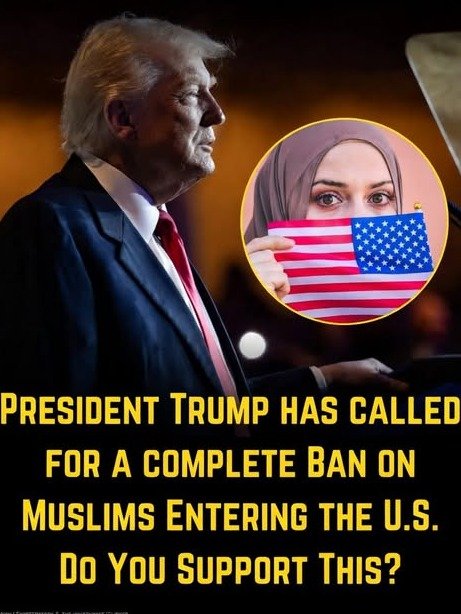
Imagine a policy so divisive, it sparked protests across the globe and ignited a fierce legal battle reaching the highest court in the land. This was the reality when President Donald Trump proposed a temporary travel restriction, framed as a critical national security measure. The question of its necessity, legality, and ultimate effectiveness continues to resonate, forcing us to confront complex issues of sovereignty, safety, and civil liberties.
From the moment of its announcement, this policy became a lightning rod for debate, polarizing opinions and challenging fundamental understandings of American values. Was it a bold, decisive move to protect the nation from genuine threats, or a discriminatory overreach that betrayed constitutional principles? To truly understand, we must peel back the layers of rhetoric and examine the facts, the arguments, and the lasting impact.
Understanding the National Security Justification
At its core, President Trump’s administration asserted that the temporary travel restriction was an indispensable national security measure. The argument was simple: certain countries posed elevated risks due to terrorism, inadequate information-sharing capabilities, or a combination of factors that made vetting processes insufficient. Therefore, a pause was necessary to review and enhance security protocols.
The administration pointed to Section 212(f) of the Immigration and Nationality Act (INA), which grants the President broad authority to suspend the entry of any class of aliens into the United States when he finds their entry would be detrimental to the interests of the United States. This legal provision became the bedrock of the executive orders, providing the statutory basis for the proposed restrictions.
The Evolution of the Policy: From ‘Ban’ to ‘Restriction’
The policy wasn’t a static decree but evolved through several iterations. The initial Executive Order 13769, signed in January 2017, temporarily suspended entry for citizens from seven Muslim-majority countries and all refugees. This order immediately triggered widespread confusion, protests, and legal challenges, leading to its swift blockage by federal courts.
A revised order, Executive Order 13780, followed in March 2017, removing Iraq from the list and clarifying some exemptions. This, too, faced legal hurdles. Ultimately, the administration issued Presidential Proclamation 9645 in September 2017, which meticulously outlined specific entry restrictions for nationals of several countries, based on a comprehensive global review of information-sharing practices and security risks. This final version was framed less as a blanket ban and more as a tailored, risk-based restriction.
Arguments in Favor: Protecting the Homeland
Supporters of the policy underscored the President’s constitutional duty to protect American citizens. They argued that in an age of global terrorism, proactive measures were essential. The administration highlighted intelligence failures and the potential for foreign adversaries to exploit vulnerabilities in immigration systems, making a temporary pause a responsible and necessary step.
Many proponents believed that the targeted countries, such as Iran, Libya, Somalia, Syria, and Yemen, either sponsored terrorism, harbored terrorist groups, or lacked stable governments capable of providing reliable traveler data. Therefore, the restrictions were presented not as discriminatory, but as a pragmatic response to verifiable security threats. It was about enhancing the vetting process, not about banning an entire religion.
“The President is acting to protect the American people. This is not a ban on a particular religion; it is a temporary pause to ensure our vetting procedures are robust and effective.” – Statement from the White House
Furthermore, proponents emphasized the “temporary” nature of the restrictions, asserting that they were designed to allow for a review and enhancement of security protocols rather than a permanent denial of entry. They saw it as a measured approach to address legitimate security gaps, ensuring that only individuals who could be properly vetted would be allowed into the country.
Arguments Against: Discrimination and Ineffectiveness
Opponents vehemently challenged the policy, labeling it a “Muslim ban” due to its disproportionate impact on Muslim-majority nations. They argued it violated the Establishment Clause of the First Amendment, which prohibits the government from establishing or favoring a religion. Critics pointed to President Trump’s past statements about a “total and complete shutdown of Muslims entering the United States” as evidence of discriminatory intent.
Beyond religious discrimination, opponents raised serious concerns about its humanitarian impact. Families were separated, refugees fleeing persecution were denied safe haven, and individuals with legitimate ties to the U.S. faced immense hardship. Critics also questioned the policy’s effectiveness, arguing that none of the individuals responsible for major terrorist attacks in the U.S. since 9/11 had originated from the listed countries.
Economic and International Repercussions
The travel restrictions also drew fire for their potential economic and international ramifications. Universities reported declines in international student applications, tourism industries braced for losses, and businesses expressed concerns about their ability to attract global talent. Critics argued that the policy projected an image of isolationism and xenophobia, damaging America’s standing on the global stage and alienating key allies.
International bodies and human rights organizations condemned the policy, viewing it as a breach of international law and humanitarian principles. The controversy strained diplomatic relations with several nations and fueled anti-American sentiment in various parts of the world. The perception of the U.S. as a welcoming nation for immigrants and refugees was significantly challenged.
The Legal Battle: From District Courts to the Supreme Court
The path of the travel restriction through the U.S. legal system was nothing short of epic. Federal district courts and circuit courts repeatedly blocked earlier versions of the policy, citing concerns about religious discrimination and the scope of presidential authority. These rulings often centered on the intent behind the policy, scrutinizing whether it targeted specific religions rather than genuine national security threats.
The legal challenges culminated in the landmark Supreme Court case, Trump v. Hawaii, in June 2018. In a 5-4 decision, the Supreme Court ultimately upheld the third iteration of the policy (Proclamation 9645). The majority opinion, authored by Chief Justice John Roberts, deferred to the President’s broad authority on national security and immigration, stating that the proclamation was within the President’s statutory power under INA 212(f) and did not violate the Establishment Clause.
The Supreme Court’s Rationale
The Court found that the proclamation was based on a legitimate national security justification, citing the administration’s global review of countries’ information-sharing practices. It concluded that the policy had a “facially legitimate and bona fide reason” for restricting entry, thereby rejecting the argument that it was primarily motivated by anti-Muslim animus. While acknowledging the President’s past statements, the Court focused on the neutrality of the final proclamation’s text and its stated national security rationale.
“The President has broad discretion to suspend the entry of aliens into the United States. We cannot substitute our own policy judgment for that of the Executive.” – Chief Justice John Roberts, Trump v. Hawaii
This ruling was a significant victory for the Trump administration, affirming presidential power in matters of national security and immigration. However, the dissenting justices, including Justice Sotomayor and Justice Breyer, strongly argued that the policy was indeed a “Muslim ban” and an affront to constitutional principles, highlighting the deep divisions even within the highest court.
The Lasting Impact and Legacy
The temporary travel restriction, regardless of one’s stance, left an indelible mark on American policy and discourse. It redefined the boundaries of presidential power in immigration, ignited a fierce debate about the balance between national security and civil liberties, and significantly impacted thousands of individuals and families.
While the policy was eventually rescinded by President Joe Biden on his first day in office, its legacy endures. It continues to influence discussions around vetting processes, the role of the executive branch in immigration, and the ongoing tension between security concerns and the principle of non-discrimination. The episode highlighted the deep ideological chasm within the country regarding its identity as a nation of immigrants versus a nation prioritizing border security above all else.
Lessons Learned and Future Implications
The intense public and legal scrutiny surrounding the travel restriction underscored the importance of clear communication, transparent justification, and careful consideration of humanitarian impacts when implementing broad policies. It also demonstrated the power of judicial review in challenging executive actions, even if the ultimate outcome favored the executive.
Ultimately, whether President Trump’s temporary travel restriction was a necessary national security measure or a deeply flawed policy remains a matter of perspective, heavily influenced by one’s interpretation of the facts, legal principles, and moral obligations. The debate it ignited continues to shape our understanding of national sovereignty, individual rights, and the complex challenges of global security in the 21st century.
About the Author




