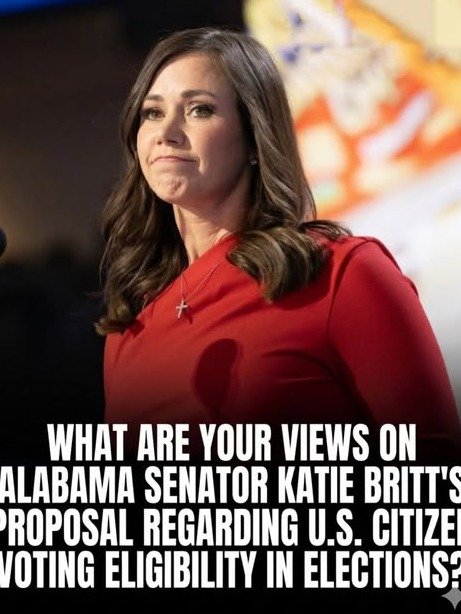
Imagine a scenario where the very foundation of American democracy — the right to vote — is being fiercely debated, potentially altering who can cast a ballot in our most crucial elections. This isn’t a hypothetical; it’s the urgent reality unfolding in Washington D.C. right now, sparking a national conversation about citizenship, sovereignty, and the future of our electoral process.
At the heart of this intense discussion is a significant proposal championed by Senator Katie Britt, aiming to unequivocally reinforce that only U.S. citizens are eligible to vote in federal elections. While this might seem like a given to many, the initiative has ignited a passionate debate, drawing strong opinions from both sides of the political spectrum about election integrity, voter access, and the very definition of American civic participation.
The Bedrock of American Democracy: A Brief History of Voting
The right to vote in the United States has a complex and often contentious history. Initially, suffrage was limited to a very narrow demographic: white, male property owners. Over centuries, through monumental struggles and landmark legislation, the franchise has expanded dramatically to include non-property owners, African Americans, women, Native Americans, and 18-year-olds.
Despite these expansions, one core principle has largely remained constant for federal elections: the requirement of U.S. citizenship. This isn’t a new concept, but rather a long-standing tradition and legal precedent. However, the exact mechanisms for verifying citizenship and the potential for non-citizen voting (even if rare or unintentional) have become a focal point for those advocating for stricter electoral safeguards.
The Current Landscape: What the Law Says (and Doesn’t Say)
Federal law, specifically the Help America Vote Act (HAVA) of 2002 and the National Voter Registration Act (NVRA), generally requires states to verify voter eligibility, including citizenship. However, the methods for verification can vary, and critics argue there are still potential loopholes or insufficient checks at the state level that could theoretically allow non-citizens to register or vote.
It’s important to note that while federal elections are strictly for citizens, some municipalities and states have historically allowed, or currently allow, non-citizens to vote in *local* elections, particularly for school board or city council positions. This historical context sometimes fuels the broader debate, even though Senator Britt’s proposal specifically targets *federal* elections.
Senator Katie Britt’s Proposal: Safeguarding the Ballot Box
Senator Katie Britt (R-AL) has been a leading voice in calling for more stringent measures to ensure that only U.S. citizens cast ballots in federal elections. Her proposal, often referred to in various legislative forms such as the ‘Safeguard American Votes Act,’ seeks to clarify and strengthen federal requirements for states to confirm citizenship during voter registration.
The core objective is to eliminate any ambiguity and to provide states with clearer mandates and potentially more robust tools to prevent non-citizens from participating in presidential, congressional, and other federal contests. Supporters argue this is a crucial step towards upholding the integrity of the electoral system and preserving national sovereignty.
“Voting is a sacred right and privilege reserved for American citizens,” Senator Britt has stated. “We must ensure that our elections reflect the will of our citizens and that every eligible vote counts, without dilution from those who are not legally entitled to participate.”
Arguments for the Proposal: Upholding Election Integrity and Sovereignty
Proponents of Senator Britt’s initiative articulate several compelling reasons why reinforcing citizen-only voting is not just desirable, but essential for the health of American democracy. Their arguments often center on foundational principles and perceived vulnerabilities within the current system.
One of the primary arguments is the imperative of election integrity. Advocates believe that any potential for non-citizens to vote, however small, undermines public trust in election outcomes. They contend that robust citizenship verification is a fundamental safeguard against fraud and ensures that the results truly reflect the decisions of the citizenry.
Another powerful point is the concept of national sovereignty. Voting is seen as a defining act of citizenship, a privilege earned through birth or naturalization, and a fundamental expression of allegiance to the nation. Allowing non-citizens to vote, even inadvertently, is viewed by some as an erosion of this sovereign right and a blurring of the lines of national identity.
Furthermore, supporters emphasize fairness to legal citizens. They argue that the votes of U.S. citizens are diluted if non-citizens are allowed to participate. This perspective frames the proposal as a way to protect the value and impact of each legitimate vote cast by an American citizen.
Finally, there’s the argument of public confidence. In an era where trust in institutions is often questioned, proponents believe that explicitly reinforcing citizen-only voting can help restore and maintain faith in the electoral process. Clear, unambiguous rules, they suggest, reduce suspicion and enhance the perceived legitimacy of elections.
Concerns and Criticisms: A Solution in Search of a Problem?
While the proposal garners significant support, it also faces considerable opposition and raises numerous concerns among civil rights groups, voter advocacy organizations, and some lawmakers. Critics often question the necessity, practicality, and potential negative consequences of such stringent measures.
A common counter-argument is that non-citizen voting in federal elections is an exceedingly rare phenomenon. Opponents contend that existing laws already prohibit it, and instances of deliberate non-citizen voting are statistically negligible. Therefore, they argue, the proposal is a ‘solution in search of a problem,’ potentially diverting resources and attention from more pressing election security issues.
There are significant concerns about practical implementation challenges. How would states verify citizenship without creating undue burdens for legitimate voters? Critics worry about the potential for new proof-of-citizenship requirements to disenfranchise eligible citizens who may lack easy access to birth certificates or naturalization papers, particularly among elderly, low-income, or minority populations.
The specter of voter purges and the potential for a ‘chilling effect’ on voter registration are also frequently raised. Opponents fear that overly aggressive verification processes could lead to eligible voters being wrongly removed from rolls or discouraged from registering altogether, thereby reducing overall voter participation.
Moreover, the debate often touches on the delicate balance between federal and state authority over elections. Critics argue that imposing blanket federal mandates on state election processes could infringe upon states’ traditional roles in administering elections and could lead to unfunded mandates or legal challenges.
The Broader Implications: Election Security vs. Voter Access
The debate surrounding Senator Britt’s proposal is emblematic of a larger, ongoing tension in American politics: the balance between ensuring election security and maximizing voter access. Both goals are vital for a healthy democracy, but the methods to achieve them often clash.
On one side, the emphasis is on preventing fraud, maintaining the integrity of the ballot, and ensuring that only eligible individuals participate. On the other, the focus is on making it as easy as possible for every eligible citizen to register and cast a vote, believing that higher participation strengthens democracy.
This discussion also carries significant political weight. Proposals like Senator Britt’s often resonate strongly with a particular political base, signaling a commitment to what they perceive as fundamental American values and a pushback against perceived threats to the nation’s identity. Conversely, opponents often view such measures as veiled attempts at voter suppression or as unnecessary obstacles to democratic participation.
What Lies Ahead: The Future of Voting Eligibility
As the debate continues to unfold, the future of voting eligibility in U.S. federal elections remains a central topic. Senator Britt’s proposal, whether passed in its current form or influencing future legislation, highlights a persistent concern among a segment of the electorate about who participates in our democratic process.
The outcome will likely shape not only how states administer elections but also the ongoing dialogue about what it means to be a voter in America. It forces a national reckoning with our values: how do we best protect the sanctity of the ballot while ensuring that every eligible voice is heard? The answers to these questions will undoubtedly define a crucial chapter in the story of American democracy.
Key Takeaways from the Debate:
- Citizenship is Key: Federal law already restricts voting in federal elections to U.S. citizens.
- Britt’s Proposal: Seeks to strengthen and clarify federal requirements for states to verify citizenship during voter registration.
- Pro-Arguments: Focus on election integrity, national sovereignty, public trust, and fairness to legal citizens.
- Con-Arguments: Cite rarity of non-citizen voting, potential for voter disenfranchisement, implementation challenges, and concerns about voter access.
- Broader Context: Reflects the ongoing tension between election security and voter access in U.S. politics.
The conversation is far from over, and its implications could be profound for every American voter. Stay informed, understand the arguments, and recognize the stakes as this vital debate continues to evolve.
About the Author




