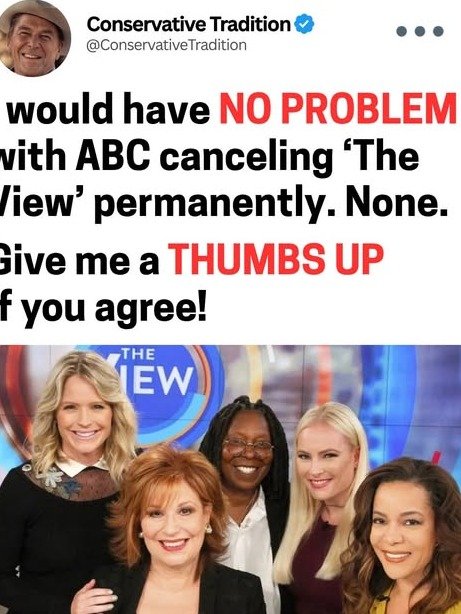
For decades, daytime television has offered a mix of entertainment, news, and discussion. Among its most prominent fixtures is ABC’s ‘The View,’ a show designed to bring together women from different backgrounds and perspectives for lively conversation. However, a growing chorus of critics argues that this once-diverse panel has strayed far from its original intent, transforming into something far more polarizing.
Many believe ‘The View’ has evolved into a daily platform where conservative viewpoints are routinely dismissed, mischaracterized, and even openly attacked. The accusations are stark: that the show frequently smears conservatives, spreads questionable information, and lectures millions of Americans on a narrow set of values. If these claims hold true, what does it mean for the integrity of mainstream media and the public discourse?
More Than Morning Banter: The View’s Evolving Role
When ‘The View’ first premiered, it was envisioned as a space for women to discuss current events, pop culture, and personal experiences from various angles. The idea was to foster a robust exchange of ideas, showcasing different opinions and allowing viewers to hear a spectrum of thought. Over the years, its influence has only grown, reaching a significant portion of the American public daily.
Yet, for many viewers, the show’s dynamic has shifted dramatically. What was once a forum for diverse opinions is now perceived by some as a highly partisan echo chamber. This transformation raises critical questions about the responsibility of a national broadcast platform and the messages it delivers to its vast audience, particularly when those messages touch upon deeply held political and social beliefs.
The Allegation of Smearing Conservatives
One of the most frequent and severe criticisms leveled against ‘The View’ is the accusation that it consistently ‘smears’ conservatives. This isn’t merely about disagreeing with conservative policies; it’s about the perceived deliberate misrepresentation of their positions, the questioning of their motives, and in some cases, outright personal attacks.
When prominent figures or entire political ideologies are painted in a consistently negative light, it can have profound implications for public perception. Such a narrative can contribute to the demonization of a significant segment of the population, making constructive dialogue and understanding increasingly difficult across the political divide.
“When a show with national reach consistently portrays one political group in a derogatory manner, it doesn’t just entertain; it shapes public opinion and deepens societal rifts.” – A concerned media observer.
Critics point to numerous instances where conservative guests or political figures are subjected to intense scrutiny, often interrupted, and sometimes openly ridiculed. This approach, they argue, goes beyond healthy debate and veers into a territory of character assassination, leaving little room for a fair hearing of opposing views.
Unpacking Claims of Misinformation
Beyond the perceived smearing, another serious charge against ‘The View’ is the alleged spreading of misinformation. In an era where accurate information is paramount, particularly from established news sources, any suggestion of broadcasting false or misleading claims is highly troubling. The speed at which information travels today means that errors, once aired, can quickly become entrenched beliefs.
Misinformation can take many forms: incomplete facts, out-of-context quotes, or even outright fabrication presented as truth. When such information is disseminated on a major network like ABC, it carries a veneer of credibility that can be difficult for the average viewer to challenge. This places a significant burden of responsibility on the hosts and the network itself to ensure the accuracy of their discussions.
- Incomplete Context: Presenting only partial information to support a particular viewpoint.
- Mischaracterization: Distorting the statements or positions of political opponents.
- Unverified Claims: Discussing rumors or unproven allegations as if they are established facts.
The consequences of misinformation are far-reaching. It can lead to an ill-informed public, create unnecessary panic or outrage, and ultimately erode trust in traditional media outlets. For a show that often tackles serious political and social topics, maintaining factual accuracy is not just good practice, it’s essential for a healthy democracy.
The “Lecture” Effect: Values and Opinions
Many viewers feel that ‘The View’ has become less about discussion and more about delivering lectures on what its hosts believe are the correct values and opinions. This ‘preaching’ approach can alienate those who hold different beliefs, creating a sense that their perspectives are not just disagreed with, but actively condemned.
When a show’s panelists consistently present a monolithic worldview, it stifles genuine debate. Instead of exploring the nuances of complex issues, the conversation can devolve into a one-sided presentation, leaving little room for viewers to form their own conclusions based on a balanced exchange of ideas. This is particularly noticeable when topics like social issues, religious freedom, or economic policy are discussed.
This ‘lecture’ dynamic can be frustrating for viewers who tune in hoping for a robust, multi-faceted discussion. Instead, they often encounter a scenario where dissenting opinions are either swiftly shut down or met with open disdain, reinforcing the idea that only certain viewpoints are acceptable or valid.
The Power of a National Platform
The fact that these alleged issues occur on ABC, a major national network, amplifies their impact significantly. ‘The View’ isn’t a niche cable show; it’s broadcast into millions of homes daily, giving its hosts an unparalleled platform to influence public opinion. With such reach comes immense responsibility, a responsibility that critics argue is not always upheld.
A national platform has the power to shape narratives, introduce new ideas, and influence political discourse. When that power is perceived to be used to push a specific agenda, to disparage certain groups, or to spread questionable information, it raises serious concerns about media ethics and the role of television in a democratic society. The daily nature of the show means these messages are reinforced consistently.
Unlike print media, which allows for careful reading and fact-checking, live television often presents information at a rapid pace, with little opportunity for immediate critical analysis by the viewer. This makes the accuracy and impartiality of the hosts even more crucial, as their words can have an immediate and lasting impression on the audience.
Erosion of Trust and Media Bias
The criticisms leveled against ‘The View’ are part of a broader conversation about media bias and the erosion of public trust in news and information sources. When a prominent show is accused of partisanship and misinformation, it contributes to a general skepticism towards all media outlets, making it harder for the public to discern reliable information from biased commentary.
This climate of distrust can lead to increased political polarization, as individuals retreat into media bubbles that only confirm their existing beliefs. The idea of a shared set of facts or a common ground for discussion becomes increasingly elusive when different media outlets are perceived to be actively working against each other or promoting specific partisan narratives.
- Increased Polarization: Audiences seek out only news that confirms their biases.
- Difficulty in Fact-Checking: Viewers struggle to identify credible sources amidst conflicting reports.
- Decline in Civic Discourse: Productive conversations across political lines become rare.
Ultimately, the health of a democratic society depends on an informed citizenry that can engage with diverse ideas. If influential shows like ‘The View’ are perceived to be undermining this process through bias and misinformation, it poses a significant threat to the fabric of public life.
What Can Viewers Do? Navigating the Media Landscape
In an environment where media bias is a constant concern, what can viewers do to ensure they are well-informed? The first step is to cultivate strong media literacy skills. This means not passively accepting information, but actively questioning sources, seeking out multiple perspectives, and verifying facts independently.
Encouraging critical thinking involves asking: “Who is presenting this information? What might their agenda be? Is this fact or opinion?” By adopting a skeptical yet open-minded approach, individuals can better navigate the complex world of news and commentary. Diversifying news sources is also crucial, seeking out outlets from across the political spectrum to gain a more complete picture.
Holding media accountable is another vital step. This can involve providing feedback to networks, supporting independent journalism, and engaging in respectful, informed discussions about media practices. The demand for ethical, unbiased reporting ultimately comes from the audience itself.
The Path Forward for Media Integrity
The accusations against ‘The View’ reflect a broader challenge facing mainstream media today: how to balance entertainment with journalistic integrity, and how to foster genuine discussion without succumbing to partisan impulses. For a show with such a massive platform, the stakes are incredibly high.
Whether ‘The View’ will address these long-standing criticisms remains to be seen. However, the ongoing debate serves as a powerful reminder of the profound influence television has on our society and the critical importance of fairness, accuracy, and genuine dialogue in shaping public understanding. As viewers, our vigilance and demand for higher standards are more crucial than ever.
About the Author




