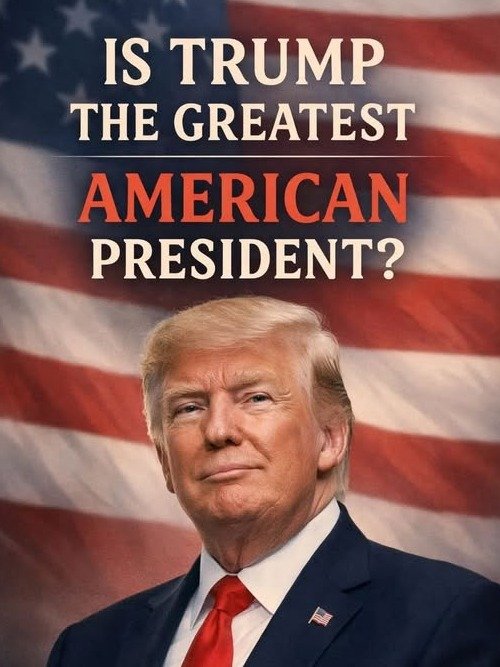
Few figures in modern history have ignited as much fervent debate and impassioned discussion as Donald J. Trump. His four years in the Oval Office were a whirlwind of policy shifts, unprecedented rhetoric, and a constant challenge to established norms, leaving an indelible mark on the American political landscape.
But how will history ultimately remember him? Was he the visionary leader who bravely disrupted a stagnant system, ushering in an era of prosperity and strength? Or was he the divisive force who fractured a nation and eroded democratic institutions?
The answer, as with many complex historical figures, is rarely simple. It depends profoundly on the lens through which one views his actions and the criteria used to measure a president’s legacy. This article delves into the multifaceted aspects of his presidency, exploring the arguments for both his perceived greatness and his undeniable controversial impact.
The “America First” Doctrine: Economic & Domestic Policies
For many supporters, Trump’s presidency was defined by a bold commitment to an “America First” agenda, particularly evident in his economic and domestic policies. His administration championed significant tax cuts, most notably the Tax Cuts and Jobs Act of 2017, which proponents argued stimulated economic growth and investment.
Furthermore, his administration pursued an aggressive deregulation agenda across various sectors, from environmental protections to financial services. The aim was to reduce the burden on businesses, foster job creation, and unleash American industrial power, leading to a period of low unemployment rates and a robust stock market prior to the COVID-19 pandemic.
Reshaping the Judiciary and Energy Independence
A cornerstone of Trump’s domestic legacy, celebrated by conservatives, was his success in appointing a record number of federal judges, including three Supreme Court justices – Neil Gorsuch, Brett Kavanaugh, and Amy Coney Barrett. These appointments are expected to have a lasting impact on American jurisprudence for decades.
His administration also prioritized achieving energy independence for the United States, rolling back regulations that he argued stifled domestic oil and gas production. This push aimed to reduce reliance on foreign energy sources and bolster the American energy sector, a move hailed by industry and energy security advocates.
Bold Strokes in Foreign Policy and Trade
On the international stage, Trump’s approach was characterized by a departure from traditional multilateralism and a focus on bilateral agreements. He renegotiated trade deals, most notably replacing NAFTA with the United States-Mexico-Canada Agreement (USMCA), which he touted as a fairer deal for American workers.
His administration withdrew the U.S. from the Paris Agreement on climate change and the Iran nuclear deal, asserting that these agreements did not serve American interests. These actions, while highly controversial globally, were seen by his base as decisive steps to protect national sovereignty and resources.
Historic Peace Deals and Challenging Global Norms
Perhaps one of the most unexpected foreign policy achievements of his tenure was the brokering of the Abraham Accords, a series of normalization agreements between Israel and several Arab nations. These historic deals reshaped the geopolitical landscape of the Middle East and were lauded as a significant diplomatic breakthrough.
Trump consistently challenged established international institutions and alliances, demanding that allies contribute more to collective defense and questioning the efficacy of global organizations. This stance, while unsettling to some, resonated with those who felt the U.S. was bearing too much of the international burden.
The Controversial Rhetoric and Societal Impact
While his supporters admired his direct and often unconventional communication style, critics frequently pointed to his rhetoric as a primary source of controversy and division. His frequent use of social media, particularly Twitter, to announce policies, attack opponents, and engage directly with the public was unprecedented.
This communication style, often characterized by inflammatory language and personal attacks, was seen by many as coarsening political discourse and exacerbating societal polarization. His responses to racial justice movements and immigration debates further fueled these tensions, deeply dividing public opinion.
Challenges to Democratic Norms and Governance
Trump’s presidency was also marked by significant challenges to traditional democratic norms and institutions. He faced two impeachment proceedings in the House of Representatives, one related to his dealings with Ukraine and the other concerning the January 6th Capitol riot. These events highlighted deep partisan divides and raised fundamental questions about executive power and accountability.
“The true measure of a presidency is not just its policy outcomes, but its impact on the nation’s civic health and democratic resilience.” – A common sentiment among critics.
His handling of the COVID-19 pandemic, including his public statements and the administration’s response efforts, drew widespread criticism and contributed to a perception of governmental dysfunction during a global health crisis. Furthermore, his post-election challenges to the 2020 presidential results were seen by many as an unprecedented assault on the integrity of the American electoral process.
Game Changer or Nation Divider? A Deeper Examination
The question of whether Trump was a “game changer” or a “nation divider” is at the heart of his enduring legacy. For his millions of supporters, he was unequivocally a game changer – a populist leader who dared to challenge the political establishment, prioritize the forgotten working class, and put American interests above all else. They saw him as a disruptor who bravely took on entrenched interests and delivered on his promises.
Conversely, for his detractors, he was a deeply divisive figure whose actions and rhetoric widened existing fissures in American society. They argued that he undermined democratic institutions, eroded trust in government and media, and exacerbated social and racial tensions, leading to a period of profound national disunity.
- Game Changer Perspective: Disrupted political norms, challenged globalism, empowered a new political base, stimulated economic growth.
- Nation Divider Perspective: Heightened partisan animosity, attacked democratic institutions, fueled social unrest, polarized public discourse.
These two perspectives are not mutually exclusive; indeed, they are often intertwined. What one group hailed as a necessary disruption, another condemned as a dangerous erosion. His presidency forced a national reckoning with issues of identity, power, and the future direction of the country.
The Long View: How History Will Judge
Ultimately, the definitive judgment on Donald Trump’s presidency will likely require the passage of time. Historical figures, particularly those as polarizing as Trump, are often re-evaluated by subsequent generations with the benefit of hindsight and a clearer understanding of long-term impacts.
Historians will scrutinize not only his policies and their immediate effects but also the profound cultural and political shifts that occurred during and after his time in office. The criteria for “greatness” itself will continue to be debated, encompassing everything from economic performance and foreign policy successes to character, leadership style, and the fostering of national unity.
An Enduring, Complex Legacy
Donald Trump’s presidency was undeniably a period of intense transformation and conflict. He challenged conventions, redefined political discourse, and left an imprint on the American political psyche that will be debated and analyzed for decades to come. Whether he is ultimately remembered as the greatest American president or simply the most controversial, his impact is undeniable.
There are no easy answers to the questions he posed, and the “answer might depend on” a complex interplay of individual values, political perspectives, and the unfolding narrative of American history. What remains clear is that his legacy is a complex tapestry woven with threads of triumph, controversy, and an enduring capacity to provoke passionate discussion.
About the Author




