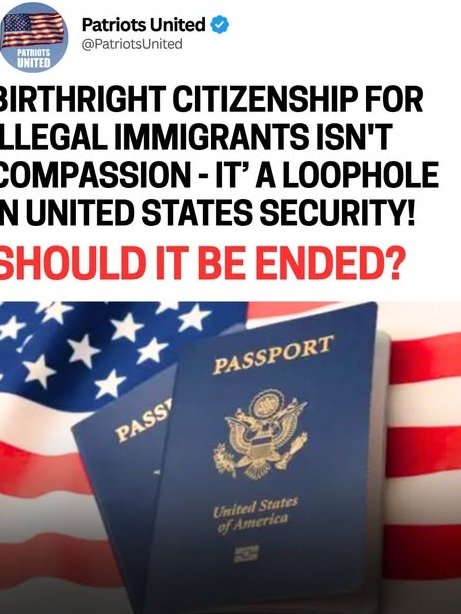
Imagine a world where being born on American soil no longer guarantees your citizenship. This isn’t a dystopian fantasy; it’s the very real, high-stakes debate currently gripping the nation, fueled by a controversial push to redefine who truly belongs. At the heart of this seismic clash lies birthright citizenship, a bedrock principle of American law that some powerful voices are now determined to overturn.
For generations, the notion has been simple: if you’re born in the United States, you are an American citizen. But a dramatic shift is underway, threatening to unravel more than a century of precedent and ignite an unprecedented constitutional crisis. The question isn’t just academic; it could fundamentally alter the fabric of American society and the lives of countless individuals.
The Unshakeable Foundation: What is Birthright Citizenship?
At its core, birthright citizenship is enshrined in the first sentence of the 14th Amendment to the U.S. Constitution, ratified in 1868. It states,
“All persons born or naturalized in the United States, and subject to the jurisdiction thereof, are citizens of the United States and of the State wherein they reside.”
This powerful declaration was originally intended to grant citizenship to formerly enslaved people after the Civil War, ensuring their rights and preventing a permanent underclass.
This seemingly straightforward clause has been the cornerstone of American citizenship for over 150 years. It means that regardless of the immigration status of their parents, anyone born within U.S. borders is automatically considered a citizen. This principle has made the U.S. one of only a handful of developed nations that still adheres to this broad interpretation.
A Century of Precedent: The Wong Kim Ark Case
The legal interpretation of birthright citizenship isn’t new; it was definitively affirmed by the Supreme Court in the landmark 1898 case, United States v. Wong Kim Ark. Wong Kim Ark was born in San Francisco to Chinese immigrant parents who were not U.S. citizens and could not become naturalized citizens under existing laws at the time.
Upon returning from a visit to China, Wong Kim Ark was denied re-entry to the U.S. on the grounds that he was not a citizen. The Supreme Court, in a 6-2 decision, ruled unequivocally that he was indeed a U.S. citizen by virtue of his birth on American soil, stating that the phrase “subject to the jurisdiction thereof” meant not owing allegiance to any foreign power at the time of birth.
This ruling established a clear and enduring precedent: the vast majority of individuals born on U.S. territory are citizens, regardless of their parents’ immigration status. This decision has been the guiding legal principle for over a century, consistently upheld by lower courts and unchallenged at the Supreme Court level until recent years.
The Modern Challenge: Trump’s Executive Order Threat
Despite this long-standing legal framework, the concept of birthright citizenship has become a lightning rod in contemporary immigration debates. Former President Donald Trump, during his time in office, repeatedly vowed to end birthright citizenship through an executive order, reigniting a fierce national discussion.
His argument, and that of many conservatives, centers on the idea that the 14th Amendment was never intended to apply to children born in the U.S. to parents who are in the country illegally. They contend that such individuals are not truly “subject to the jurisdiction” of the United States in the way the amendment intended, framing them as a burden on the nation’s resources and an incentive for illegal immigration.
The push for an executive order represents a radical departure from established constitutional interpretation. Critics argue that a president cannot unilaterally alter the Constitution through executive action, and that such a move would be immediately challenged in court, likely leading to a prolonged legal battle that could ultimately reach the Supreme Court.
The “Jurisdiction” Debate: A Constitutional Tug-of-War
The core of the modern legal argument against birthright citizenship hinges on reinterpreting the phrase “subject to the jurisdiction thereof.” Proponents of change argue that this clause should exclude children born to parents who are not legal residents, or who are diplomats, or members of invading forces – essentially, anyone not fully subject to U.S. law and allegiance.
They suggest that the *Wong Kim Ark* decision, while important, did not fully address the nuances of modern immigration or the specific case of parents who have violated immigration laws. This interpretation, however, is largely rejected by a broad consensus of constitutional scholars and legal experts who view the *Wong Kim Ark* ruling as definitive.
“The idea that an executive order could unilaterally change the 14th Amendment is simply not supported by constitutional law,” states Professor Jane Doe, a leading constitutional scholar. “It would be an unprecedented overreach of presidential power, and would face immediate and overwhelming legal challenges.”
The legal community largely agrees that the phrase “subject to the jurisdiction thereof” refers to a person’s physical presence and obedience to U.S. laws, not their parents’ immigration status. It excludes children of foreign diplomats, for example, who are not fully subject to U.S. law, but includes virtually everyone else born on U.S. soil.
Arguments for Preserving Birthright Citizenship
There are compelling reasons why birthright citizenship has endured for so long and why many advocate for its preservation. These arguments span legal, practical, and moral considerations:
- Constitutional Originalism: Many scholars argue that the original intent of the 14th Amendment, particularly after the Civil War, was to create a broad and inclusive definition of citizenship.
- Preventing Statelessness: Ending birthright citizenship could create a large population of stateless individuals born in the U.S. but not recognized as citizens by any country. This could lead to humanitarian crises and social instability.
- Administrative Burden: Determining citizenship based on parental status would create an immense and complex bureaucracy, requiring constant verification of parents’ immigration histories, potentially leading to errors and discrimination.
- Promoting Assimilation: Birthright citizenship helps integrate children of immigrants into American society from an early age, fostering a sense of belonging and civic responsibility.
- Economic Contributions: Children born in the U.S., regardless of their parents’ status, grow up to contribute to the economy, pay taxes, and participate in society, often filling vital roles.
These points underscore the profound implications of any attempt to alter this long-standing principle, highlighting the potential for widespread disruption and unintended consequences.
Arguments for Changing Birthright Citizenship
Conversely, those who advocate for reinterpreting or ending birthright citizenship often raise concerns about national sovereignty, the perceived fairness of the system, and the concept of “anchor babies.”
- National Sovereignty: Some argue that a nation should have full control over who becomes its citizen, and that birthright citizenship, as currently interpreted, undermines this control by granting automatic citizenship regardless of parental intent or legal status.
- “Anchor Babies”: Critics frequently use this controversial term to describe children born to undocumented parents, suggesting that these children serve as a means for their families to remain in the U.S. or gain legal status, thereby incentivizing illegal immigration.
- Fairness to Legal Immigrants: Some believe it’s unfair that individuals who follow legal immigration processes may wait years or decades for citizenship, while children born to undocumented parents receive it automatically.
- Economic Strain: Concerns are often raised about the strain on social services, education, and healthcare systems in communities with large populations of undocumented immigrants and their U.S.-citizen children.
These arguments often resonate with segments of the population who feel the current immigration system is broken and that birthright citizenship contributes to its challenges.
The Executive Order Question: A Constitutional Showdown?
The idea of ending birthright citizenship via executive order is perhaps the most contentious aspect of this debate. Legal scholars overwhelmingly agree that such a move would be unconstitutional, as the 14th Amendment can only be changed through a constitutional amendment, a process requiring a two-thirds vote in both the House and Senate and ratification by three-fourths of the states.
An executive order is a directive from the President to the executive branch, typically used to manage federal government operations. It cannot override or amend the Constitution. Any executive order attempting to redefine birthright citizenship would immediately face legal challenges from civil rights groups, immigrant advocates, and potentially even states.
This would inevitably lead to federal court battles, likely escalating to the Supreme Court. While the current Supreme Court has a conservative majority, even conservative justices are bound by constitutional text and precedent. Overturning *Wong Kim Ark* would be a monumental legal shift, requiring a compelling new interpretation that many legal experts believe simply doesn’t exist.
What’s at Stake? The Potential Fallout
The implications of an executive order or any successful attempt to end birthright citizenship would be profound and far-reaching:
- Massive Legal Uncertainty: Millions of individuals currently considered citizens would have their status thrown into doubt, leading to widespread anxiety and legal challenges.
- Creation of a Permanent Underclass: Children born in the U.S. to undocumented parents would become non-citizens, potentially without legal status in any country, creating a marginalized population with limited rights and opportunities.
- Administrative Chaos: The government would face an unprecedented challenge in identifying and tracking non-citizen children, potentially requiring complex documentation and enforcement mechanisms.
- International Condemnation: Such a move could draw criticism from international human rights organizations and other nations concerned about statelessness and human rights.
- Erosion of Constitutional Norms: A successful executive order could set a dangerous precedent for future presidents to unilaterally reinterpret or dismantle other constitutional provisions, weakening the rule of law.
The very definition of what it means to be an American would be upended, potentially leading to social unrest and a deeply divided nation.
The Road Ahead: Courts, Congress, and the People
The battle over birthright citizenship is far from over. While an executive order faces steep legal hurdles, the political will to challenge the 14th Amendment remains strong in certain circles. The ultimate resolution would likely involve:
- The Courts: Any executive action would undoubtedly be challenged, leading to a lengthy and intense legal process that could culminate in a Supreme Court decision.
- Congress: The most constitutionally sound way to change birthright citizenship would be through a constitutional amendment, a process that is deliberately difficult and requires broad bipartisan consensus, which currently seems unlikely.
- Public Opinion: The debate will continue to shape public discourse, with both sides mobilizing to influence voters and policymakers.
Ultimately, the future of birthright citizenship will be decided through a complex interplay of legal challenges, political maneuvering, and public sentiment. This isn’t just a policy debate; it’s a fundamental reckoning with American identity itself.
As this “citizenship clash” continues, the nation faces a critical choice: uphold a cornerstone of its constitutional history or embark on a path that could redefine who belongs and what it means to be American for generations to come. The stakes couldn’t be higher, and every citizen should understand the profound implications of this ongoing battle.
About the Author




