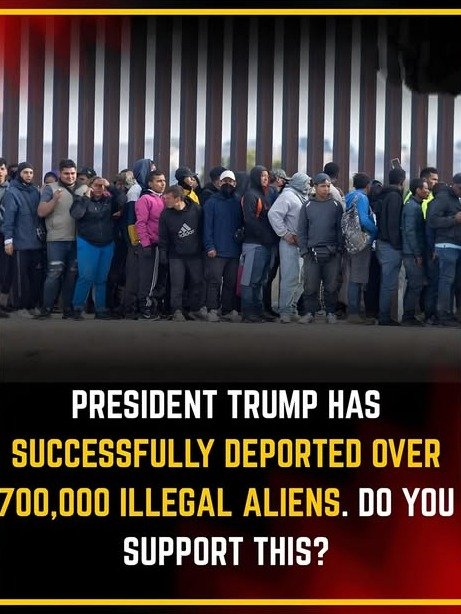
Imagine a house without a lock on its front door, or a bank vault left wide open. The very idea makes us uncomfortable, doesn’t it? Now, extend that thought to an entire nation.
What if the foundational laws designed to protect your country were routinely ignored, and the very gateway to your homeland was left vulnerable? This isn’t a hypothetical fear; it’s a pressing reality that demands our immediate attention, because the strength of our borders directly impacts the security, prosperity, and identity of our society.
The Unseen Foundation of National Identity
Borders are more than just lines on a map; they are the physical manifestation of a nation’s sovereignty, its identity, and its ability to govern itself. They represent the agreed-upon limits of a country’s jurisdiction, defining who belongs, who can enter, and under what conditions. Without clearly defined and effectively enforced borders, the very concept of a nation-state begins to unravel.
For centuries, civilizations have understood that secure perimeters are essential for survival and flourishing. From ancient city walls to modern-day checkpoints, the principle remains constant: a nation must control its entry points to protect its people, culture, and resources. This isn’t about isolation; it’s about orderly management and the fundamental right of a sovereign entity to determine its own future.
Why Strong Border Enforcement is Non-Negotiable
The argument for robust border enforcement isn’t born of xenophobia or fear, but from a clear understanding of national security, economic stability, and public safety. When borders are porous, the vulnerabilities multiply, affecting every citizen in tangible ways.
Protecting National Security
Perhaps the most critical function of strong borders is national security. In an increasingly complex global landscape, the threat of terrorism, espionage, and hostile state actors is ever-present. Weak borders provide easy pathways for individuals with malicious intent to enter undetected, potentially planning attacks, spreading disinformation, or engaging in illicit activities that undermine national stability.
Beyond direct threats, the uncontrolled movement of people can also mask the trafficking of illegal weapons, sensitive technologies, and other contraband that could be used to harm our communities. A nation’s intelligence and defense agencies rely heavily on controlled borders to monitor and mitigate these dangers effectively.
Safeguarding Economic Stability
The economic implications of unchecked borders are profound. Uncontrolled entry can strain public services like healthcare, education, and social welfare programs, which are funded by taxpayers. It can also impact labor markets, potentially depressing wages in certain sectors and creating unfair competition for legal residents and citizens.
Furthermore, strong borders are crucial for preventing the inflow of counterfeit goods, which harm legitimate businesses, stifle innovation, and can even pose health risks. They also help combat drug trafficking, a multi-billion-dollar industry that fuels crime, addiction, and puts immense pressure on law enforcement and public health resources.
Ensuring Public Safety and Health
Public safety is directly linked to border security. The illegal entry of individuals with criminal records, or those seeking to engage in illicit activities like human trafficking, poses a direct threat to the safety of our communities. Effective border enforcement allows authorities to vet individuals, identify potential risks, and uphold the rule of law.
Moreover, in a post-pandemic world, the importance of border controls for public health cannot be overstated. The ability to monitor and control who enters a country is vital for preventing the spread of infectious diseases, ensuring that public health protocols can be effectively implemented and maintained.
The Indispensable Role of Law
At the heart of any stable society lies the rule of law. Laws are not arbitrary suggestions; they are the agreed-upon frameworks that define rights, responsibilities, and the very fabric of our coexistence. When it comes to borders, specific laws dictate who may enter, how they may enter, and what processes must be followed. These laws exist for a reason: to manage migration, protect citizens, and maintain order.
As experts often remind us, ‘The moment a nation ceases to uphold its own laws, it begins to lose its legitimacy, both domestically and on the international stage.’ This sentiment underscores the critical importance of consistent enforcement.
Allowing laws to be selectively enforced, or worse, openly disregarded, sends a dangerous message. It undermines the legal system, erodes public trust, and creates a perception of inequity. If the laws governing national borders are not upheld, it questions the validity of all other laws, creating a slippery slope towards disorder.
Leadership: The Cornerstone of Enforcement
Laws, however well-crafted, are only as effective as the leadership committed to upholding them. Strong leadership means more than just articulating a policy; it involves providing the political will, allocating necessary resources, and ensuring that enforcement agencies are empowered and equipped to do their jobs effectively and humanely.
Effective leaders understand that border security is a complex, multifaceted challenge requiring a comprehensive strategy. This includes investing in advanced technology, deploying adequate personnel, fostering international cooperation, and developing clear, consistent policies that can adapt to evolving threats and circumstances. It also means holding individuals and institutions accountable for their roles.
Leadership also involves transparent communication with the public, explaining the rationale behind policies, and engaging in constructive dialogue. It’s about bridging divides and working towards solutions that serve the national interest while upholding humanitarian principles.
Navigating the Complexities: Beyond Simple Solutions
Modern border management is not a simple task. It involves balancing security imperatives with humanitarian concerns, economic needs with social impacts. There are no magic bullet solutions, but rather a continuous process of adaptation and improvement.
- Technological Advancements: Utilizing drones, sensor networks, and data analytics can significantly enhance surveillance and detection capabilities, making borders smarter and more efficient.
- Human Capital: Investing in well-trained, ethical border patrol agents and immigration officials is paramount. Their expertise, judgment, and dedication are irreplaceable.
- International Cooperation: Working with neighboring countries and international partners is crucial for addressing transnational crime, intelligence sharing, and managing migratory flows effectively.
- Addressing Root Causes: While securing borders, it’s also important to engage in diplomatic and economic efforts to address the underlying causes of irregular migration in originating countries, creating a more sustainable long-term approach.
These elements, when integrated into a cohesive strategy, allow a nation to exert control over its borders in a way that is both effective and responsible.
The Cost of Inaction: What Happens If We Fail?
The consequences of failing to maintain strong border enforcement are far-reaching and severe. We risk not only the immediate dangers of increased crime and instability but also the slow erosion of national identity and the fundamental principles upon which our society is built.
A nation that cannot control its borders ultimately loses control over its destiny. It becomes vulnerable to external pressures, its resources are strained, and the social contract between its government and its citizens can fracture. The sense of shared community and collective purpose diminishes when the rules designed to protect that community are perceived as meaningless.
Your Voice Matters: Supporting a Secure Future
The question then becomes: Do you support policies that secure our borders and uphold the law? This isn’t a rhetorical question; it’s a call to informed engagement. It asks whether you believe in the foundational principles of sovereignty, the rule of law, and the responsibility of leadership to protect the nation.
Supporting strong border enforcement means advocating for effective strategies, demanding accountability from leaders, and understanding the complex interplay of factors at play. It means recognizing that a secure border is not a barrier to progress, but rather the very prerequisite for a stable, prosperous, and free society.
Ultimately, the strength of our borders reflects the strength of our resolve as a nation. It’s about ensuring that the future we build is one of security, opportunity, and respect for the laws that bind us together.
About the Author




