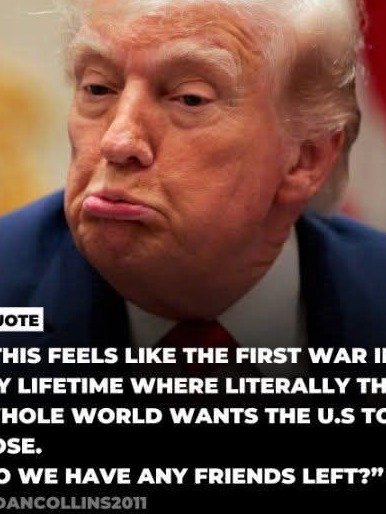
A chilling question is echoing across social media, amplified by a viral post that has ignited a firestorm of debate: is the United States, once the undisputed global superpower, becoming increasingly isolated on the world stage? This isn’t just idle chatter; it’s a growing sense of unease, a palpable anxiety that global tensions are reshaping alliances and challenging America’s traditional leadership.
This sentiment, bubbling beneath the surface for years, has now erupted into public consciousness, prompting citizens, policymakers, and pundits alike to scrutinize America’s current standing. The world feels more volatile than ever, and many are asking if the U.S. is truly prepared, or if its actions and perceived inaction are inadvertently pushing it towards an unprecedented solitude.
The Shifting Sands of Global Power
The geopolitical landscape is undeniably in flux, marked by a series of interconnected crises and the assertive rise of new powers. From the protracted conflict in Ukraine to simmering tensions in the Indo-Pacific and renewed instability across the Middle East, the world is a mosaic of flashpoints, each demanding attention and often straining existing international frameworks.
The traditional unipolar moment, where the United States stood as the sole superpower after the Cold War, appears to be fading into history. We are witnessing the emergence of a multipolar world, where multiple major powers, each with their own interests and spheres of influence, are vying for dominance and shaping global narratives.
A World on Edge: Key Geopolitical Flashpoints
Consider the devastating war in Ukraine, which has not only reshaped European security but also exposed deep divisions and dependencies globally. While the U.S. has provided significant support, the conflict has also highlighted the limits of intervention and the complex web of interests that prevent a unified global response, particularly from non-Western nations.
- Russia’s War in Ukraine: This conflict has fundamentally altered the European security architecture, forcing NATO to re-evaluate its role and commitment. It has also exposed the fragility of global supply chains and energy markets, creating ripple effects far beyond the immediate conflict zone.
- China-Taiwan Tensions: The escalating rhetoric and military posturing around Taiwan represent a potential flashpoint with immense global economic and strategic implications. The U.S. position, often described as ‘strategic ambiguity,’ is constantly tested, creating uncertainty for allies and adversaries alike.
- Middle East Volatility: The ongoing Israel-Hamas conflict and broader regional proxy battles continue to destabilize a critical region, impacting global energy supplies and fostering humanitarian crises. The U.S.’s long-standing role as a mediator is frequently challenged, and its influence is perceived differently by various regional actors.
These are just a few examples of the complex challenges that define our current era. Each crisis intertwines with others, creating a domino effect that makes global stability feel increasingly precarious. This constant state of unease naturally leads to questions about leadership and the efficacy of international cooperation.
Is America Standing Alone? A Question of Alliances
The viral post’s core concern about U.S. isolation isn’t just about the rise of other powers; it’s about the perceived weakening of America’s own network of alliances. For decades, these alliances have been the bedrock of U.S. foreign policy, providing collective security and economic stability. Yet, recent years have seen these bonds tested.
Policies perceived as
About the Author




